
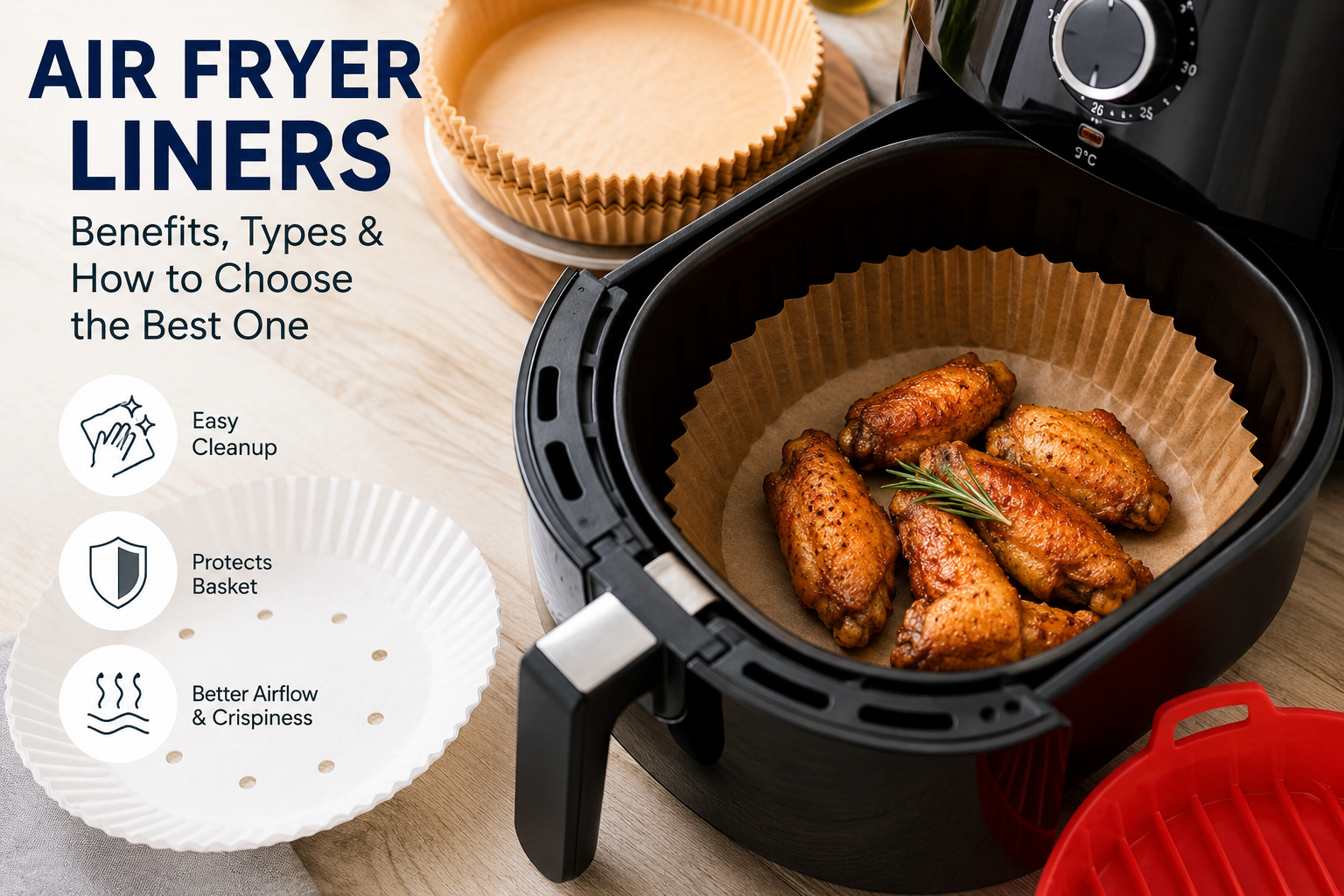
Air fryers have become a staple in modern kitchens because they make it easy to prepare crispy, flavorful meals with less oil. While these appliances are convenient, cleaning the basket after cooking greasy or sticky foods can be frustrating. That’s where air fryer liners come in. These simple accessories help reduce mess, protect the basket, and make cleanup much faster without changing your cooking routine.
Whether you’re cooking crispy chicken wings, roasted vegetables, or homemade cookies, choosing the right air fryer liners can improve your overall cooking experience. However, many people still wonder if they’re safe, whether they affect crispiness, or which type is best for their air fryer. This guide answers those questions and more, helping you make informed decisions while getting the most from your appliance.
What Are Air Fryer Liners?
Air fryer liners are specially designed sheets or trays placed inside an air fryer basket to catch grease, crumbs, and food residue during cooking. They help keep the basket cleaner while reducing the time needed for washing after each meal.
These liners are available in several materials, including disposable parchment paper, reusable silicone, and aluminum foil. Each option serves a slightly different purpose, allowing users to choose one based on their cooking style and maintenance preferences.
Unlike regular baking paper, many air fryer liners feature small perforations that allow hot air to circulate freely. This airflow is essential because it helps food cook evenly while maintaining the crispy texture air fryers are known for.
Common Foods Cooked with Air Fryer Liners
Air fryer liners work well with many everyday recipes, including:
- Chicken wings
- French fries
- Salmon fillets
- Bacon
- Roasted vegetables
- Frozen snacks
- Cookies
- Garlic bread
- Meatballs
- Shrimp
These foods often release grease or sticky sauces, making liners especially useful for easier cleanup.
Types of Air Fryer Liners
Not all liners perform the same way. Understanding the different types will help you choose the best option for your cooking habits.
Disposable Parchment Paper Liners
Disposable parchment paper liners are one of the most popular choices because they’re affordable and convenient. Most are made from food-grade parchment paper coated with heat-resistant silicone, allowing them to withstand temperatures commonly used in air fryers.
These liners are ideal for people who value quick cleanup. After cooking, simply discard the liner along with any collected grease or food residue.
Advantages
- Extremely convenient
- Affordable
- Non-stick surface
- Easy disposal
- Available in multiple sizes
Limitations
- Single-use only
- Creates more household waste
- Can burn if placed inside an empty preheated air fryer
Reusable Silicone Air Fryer Liners
Reusable silicone liners have gained popularity among environmentally conscious cooks. Made from food-grade silicone, they can be washed and reused hundreds of times.
Many silicone liners include raised ridges or grooves that help grease drain away from food while allowing hot air to circulate underneath.
Benefits
- Eco-friendly
- Cost-effective over time
- Dishwasher safe
- Durable
- Excellent basket protection
Although silicone liners require cleaning after each use, they eliminate the need for constant replacements and produce less waste.
Aluminum Foil
Some home cooks use aluminum foil as a temporary liner, especially when cooking fatty meats or marinated foods. While foil can simplify cleanup, it should be used carefully.
Foil should never completely block airflow inside the basket because restricted circulation can lead to uneven cooking.
It’s also important to follow your air fryer manufacturer’s recommendations before using foil, as some models have specific guidelines.
Perforated vs. Solid Liners
One important feature many buyers overlook is whether a liner is perforated or solid.
Perforated liners contain evenly spaced holes that allow hot air to circulate around the food. This helps maintain crispiness while still protecting the basket.
Solid liners provide better grease protection but may slightly reduce airflow if they cover the entire basket.
For most everyday cooking, perforated liners offer the best balance between cleanliness and cooking performance.
Air Fryer Liner Comparison
| Feature | Disposable Parchment | Reusable Silicone | Aluminum Foil |
| Reusable | No | Yes | Sometimes |
| Cleanup | Excellent | Very Good | Good |
| Airflow | Excellent (Perforated) | Excellent | Moderate |
| Cost | Low | Higher Initial Cost | Low |
| Eco-Friendly | Moderate | Excellent | Low |
| Best For | Daily Cooking | Frequent Use | Greasy Foods |
Benefits of Using Air Fryer Liners
Many people buy air fryer liners simply to reduce cleanup, but they offer several additional advantages.
Faster Cleanup
One of the biggest benefits is minimizing food residue inside the basket. Instead of scrubbing baked-on grease, you simply remove the liner after cooking.
This is particularly useful when preparing foods with marinades, melted cheese, or sugary sauces that tend to stick.
Protects the Air Fryer Basket
Repeated scrubbing can gradually wear down the basket’s non-stick coating. Liners create a protective barrier that helps preserve the basket and extend its lifespan.
This is especially valuable for expensive air fryers where replacement baskets can be costly.
Reduces Food Sticking
Certain foods naturally stick to metal baskets, even with non-stick coatings. Air fryer liners provide an extra layer of protection, making it easier to remove delicate foods such as fish, pastries, and baked desserts without breaking them apart.
Better Kitchen Hygiene
Food particles trapped inside basket holes can sometimes be difficult to clean completely. Using liners helps prevent grease buildup and reduces lingering food odors over time.
For households that frequently cook different types of meals, this contributes to a cleaner and more hygienic cooking environment.
Ideal for Meal Preparation
If you prepare multiple meals throughout the week, changing liners between batches is much quicker than washing the basket after every use.
Busy families and meal-prep enthusiasts often find this especially convenient.
Are Air Fryer Liners Safe?
Yes, air fryer liners are generally safe when used correctly. Most reputable liners are manufactured from food-grade materials designed to withstand temperatures commonly used in air fryers.
However, safe usage is essential.
Never place a lightweight parchment liner inside the basket during preheating unless food is holding it down. Without food to keep it in place, the circulating air may lift the liner into the heating element, creating a fire hazard.
Always ensure the liner fits properly inside the basket without folding excessively over the edges.
It’s also important to stay within the temperature limits recommended by the liner manufacturer. While many parchment liners tolerate temperatures up to approximately 425°F (220°C), checking the product packaging helps avoid damage during high-heat cooking.
Quick Safety Checklist
- Use only food-grade air fryer liners.
- Never preheat with an empty parchment liner.
- Keep liners below the maximum recommended temperature.
- Do not allow liners to touch the heating element.
- Avoid blocking all airflow openings inside the basket.
- Replace damaged or worn reusable silicone liners when necessary.
Following these simple practices ensures that air fryer liners remain both safe and effective while helping you enjoy easier cleanup and consistently delicious meals.
How Air Fryer Liners Affect Cooking Performance
One of the biggest concerns people have about air fryer liners is whether they reduce the crispiness of food. The answer depends on the type of liner you use and how it’s placed inside the basket.
Perforated parchment and silicone liners are designed to allow hot air to circulate around the food. This airflow helps maintain the crispy texture that makes air-fried meals so popular. Solid liners can slightly reduce airflow, especially if they completely cover the basket, but they still perform well for many recipes.
For the best results, avoid overcrowding the basket. Leaving enough space between food pieces allows hot air to circulate evenly, producing better browning and crispier textures.
Disposable vs. Reusable Air Fryer Liners
Choosing between disposable parchment paper and reusable silicone air fryer liners depends on your cooking habits, budget, and environmental preferences.
Disposable liners are ideal for occasional cooking or when preparing greasy foods that create a lot of mess. They’re inexpensive, require no cleaning, and can simply be thrown away after use.
Reusable silicone liners cost more upfront but become more economical over time. They can withstand hundreds of cooking cycles and are dishwasher-safe, making them a practical option for frequent air fryer users.
| Feature | Disposable Parchment | Reusable Silicone |
| Initial Cost | Low | Moderate |
| Long-Term Value | Moderate | Excellent |
| Reusability | No | Yes |
| Cleaning | None | Dishwasher Safe |
| Eco-Friendly | Moderate | Excellent |
| Best For | Occasional Use | Daily Cooking |
Best Foods to Cook with Air Fryer Liners
Not every recipe requires a liner, but certain foods benefit greatly from using one.
Meat and Poultry
Greasy foods such as chicken wings, drumsticks, bacon, sausages, and hamburgers release a lot of fat during cooking. Air fryer liners collect excess grease while making cleanup much easier.
Seafood
Fish fillets, salmon, shrimp, and scallops can stick to the basket without protection. A liner helps preserve delicate textures while preventing pieces from breaking apart.
Vegetables
Roasted vegetables such as potatoes, carrots, broccoli, zucchini, and Brussels sprouts cook well on perforated liners because they still receive good airflow while reducing sticking.
Frozen Foods
French fries, chicken nuggets, mozzarella sticks, onion rings, and spring rolls all cook successfully with properly placed liners.
Baked Goods
Cookies, cinnamon rolls, muffins, biscuits, and pastries are easier to remove when cooked on parchment air fryer liners.
Foods That May Not Need Air Fryer Liners
While liners are useful, they aren’t necessary for every recipe.
Avoid using liners when:
- Cooking very lightweight foods without enough weight to hold the liner down.
- Preheating an empty air fryer with parchment paper inside.
- Preparing recipes that require maximum airflow for extra crispiness.
- Cooking at temperatures higher than the liner’s recommended limit.
Sometimes placing food directly on the basket produces slightly crispier results, especially for breaded foods.
Common Mistakes to Avoid
Many problems people experience with air fryer liners come from improper use rather than the liners themselves.
Using the Wrong Size
A liner that’s too large may fold upward and block airflow, while one that’s too small won’t catch grease effectively.
Preheating with an Empty Paper Liner
This is one of the most common mistakes. Lightweight parchment can lift into the heating element if food isn’t holding it down.
Blocking Air Circulation
Completely covering ventilation holes reduces airflow, leading to uneven cooking.
Reusing Disposable Paper
Disposable parchment liners lose strength after cooking and shouldn’t be reused multiple times.
Ignoring Temperature Ratings
Always follow the maximum heat rating printed on the liner packaging to avoid scorching or burning.
How to Choose the Best Air Fryer Liners
With so many products available, choosing the right air fryer liners can feel overwhelming. Consider these factors before buying.
Basket Shape
Air fryer baskets come in different designs.
- Round
- Square
- Rectangular
- Dual-basket
- Oven-style trays
Choose liners that match your specific appliance for the best fit.
Material
Each material offers different advantages.
- Parchment paper for convenience
- Silicone for long-term use
- Foil for certain recipes requiring extra grease control
Size
Measure the inside dimensions of your basket before purchasing. Proper sizing ensures better airflow and cooking performance.
Heat Resistance
Most quality parchment liners tolerate temperatures up to around 425°F (220°C), while many silicone liners can withstand even higher temperatures.
Thickness
Thicker parchment generally resists tearing better, especially when cooking heavier foods.
Cleaning and Maintaining Reusable Air Fryer Liners
Reusable silicone liners require minimal maintenance.
Wash them with warm water and mild dish soap after each use. Most are also dishwasher-safe, making cleanup simple.
Allow the liner to dry completely before storing it to prevent moisture buildup.
Avoid using sharp utensils that could puncture or damage the silicone surface.
Air Fryer Liners vs. Cooking Without Liners
| Feature | Using Air Fryer Liners | Without Liners |
| Cleanup | Very Easy | More Scrubbing Required |
| Basket Protection | Excellent | Limited |
| Food Sticking | Minimal | More Likely |
| Grease Collection | Excellent | Stays in Basket |
| Airflow | Excellent (Perforated) | Maximum |
| Convenience | High | Moderate |
Eco-Friendly Considerations
Many people choose reusable silicone air fryer liners because they reduce household waste.
Although disposable parchment liners are convenient, replacing them after every meal generates more waste over time.
If sustainability is important to you, reusable silicone liners offer a practical balance between convenience and environmental responsibility.
Some parchment liners are also made from compostable materials, making them a better choice than conventional disposable alternatives.
Expert Tips for Better Results
Small adjustments can significantly improve your cooking results.
- Use perforated liners whenever possible for better airflow.
- Leave small gaps between food pieces to encourage even cooking.
- Turn food halfway through cooking for consistent browning.
- Remove excess grease after cooking fatty meats to improve texture.
- Replace damaged silicone liners if they begin to warp.
- Match liner size carefully to your air fryer basket.
- Read your air fryer manufacturer’s instructions before using foil.
Following these practical habits helps you get the best performance from both your air fryer and your liners.
Conclusion
Air fryer liners are a simple yet highly effective accessory that can make air frying cleaner, more convenient, and easier to maintain. Whether you choose disposable parchment paper for quick cleanup or reusable silicone for long-term value, the right liner helps protect your air fryer while reducing the time spent scrubbing after every meal.
By selecting the correct size, following safety guidelines, and matching the liner to your cooking style, you can enjoy delicious, evenly cooked meals with less mess and greater confidence. Investing in quality air fryer liners is a small upgrade that delivers lasting convenience for everyday cooking.
Frequently Asked Questions
Are air fryer liners worth buying?
Yes. Air fryer liners simplify cleanup, reduce food sticking, protect the basket, and save time, making them a worthwhile accessory for most users.
Do air fryer liners affect crispiness?
High-quality perforated air fryer liners have very little impact on crispiness because they allow hot air to circulate freely around the food.
Can reusable silicone liners go in the dishwasher?
Most reusable silicone air fryer liners are dishwasher-safe. Always check the manufacturer’s instructions before cleaning.
Can parchment air fryer liners catch fire?
Yes, if they’re placed inside an empty preheated air fryer or touch the heating element. Always weigh parchment liners down with food.
Which foods work best with air fryer liners?
Chicken wings, fish, bacon, vegetables, frozen snacks, baked goods, and marinated foods all cook well using air fryer liners.
How often should reusable air fryer liners be replaced?
Replace reusable silicone liners if they become cracked, warped, or damaged. With proper care, many last for years.