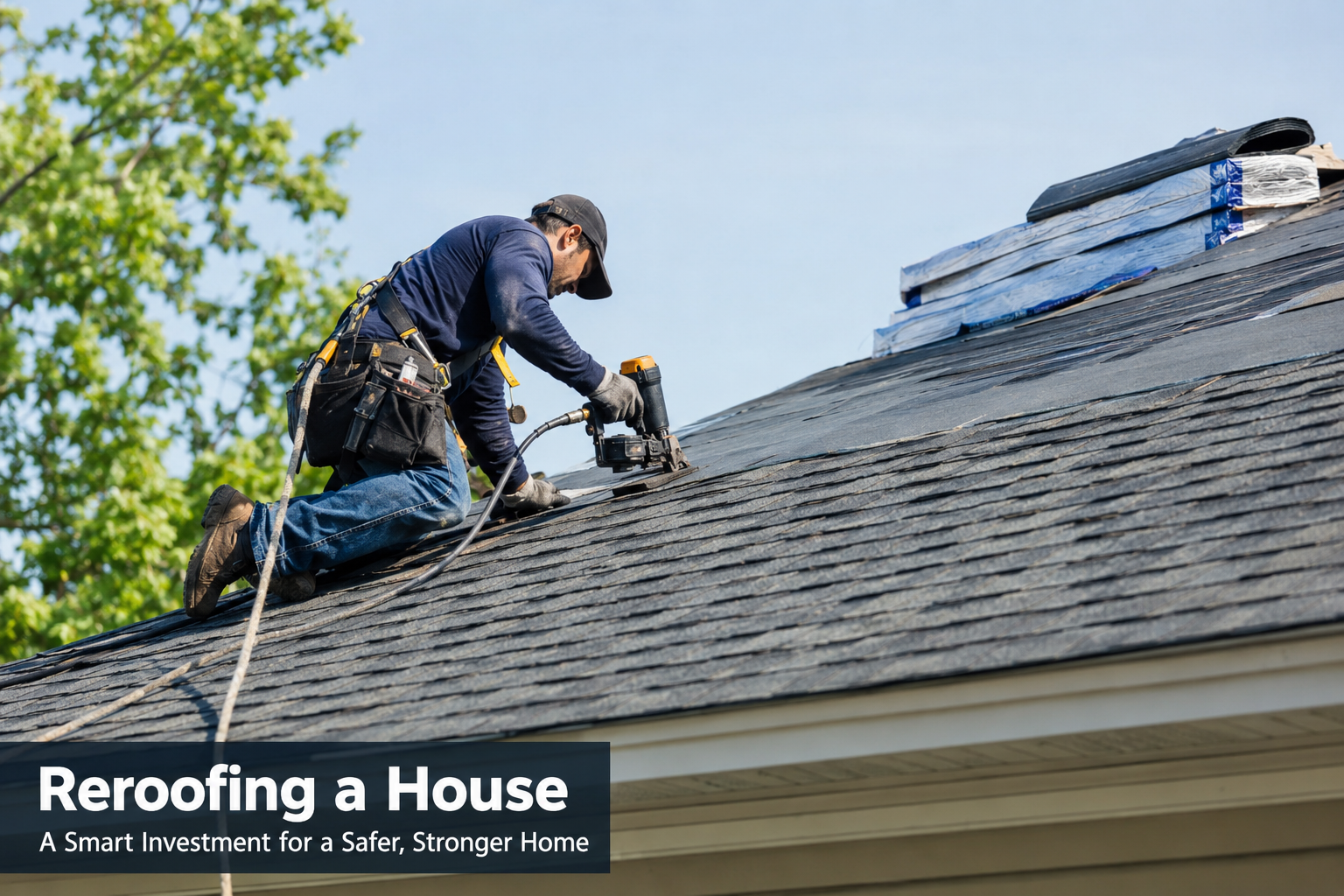
A roof is one of the most important protective systems in any home. Over time, however, exposure to sunlight, rain, wind, temperature changes, and storms can wear down roofing materials. When repairs are no longer enough, reroofing a house may become the next step.
Reroofing can be a major investment, so it is important to understand what the process involves before work begins. Depending on the condition of your existing roof, reroofing may involve installing a new roof covering over an eligible existing roof or removing the old materials and completing a full roof replacement.
This guide explains how to tell when reroofing is necessary, how the process works, which materials to consider, what affects the cost, and when it is best to hire a professional.
What Does Reroofing a House Mean?
Reroofing a house generally means installing a new roof covering on a home with an existing roof. The exact process can vary significantly depending on the condition of the current roofing system.
In some situations, a roof recover or overlay may be possible. This involves installing a new roof covering over an existing eligible layer. In other situations, the old roofing materials must be removed before the new roof can be installed.
It is important not to confuse reroofing with simple roof repair. Repair focuses on a specific problem, such as a damaged shingle or leaking flashing. Reroofing is a much larger project designed to renew most or all of the roof covering.
Reroofing vs. Roof Replacement vs. Roof Repair
| Option | What Happens | Best For | Main Limitation |
|---|---|---|---|
| Roof repair | A specific damaged area is repaired | Minor or isolated problems | May not solve widespread deterioration |
| Roof recover | New roofing is installed over an eligible existing roof | Structurally sound roofs with suitable existing materials | Underlying problems may remain hidden |
| Roof replacement | Old roofing is removed and a new system is installed | Aging, damaged, or structurally compromised roofs | Usually requires more labor and expense |
A professional roof inspection is often the best way to determine which option makes sense for your home.
How Do You Know if Your House Needs Reroofing?
A roof does not always fail suddenly. In many cases, homeowners notice warning signs long before major damage occurs.
Common signs that may indicate the need for reroofing include:
- Missing or damaged shingles
- Curling, cracking, or buckling shingles
- Excessive shingle granule loss
- Repeated roof leaks
- Water stains on ceilings or walls
- Damaged or deteriorated flashing
- Visible roof sagging
- Frequent repairs in multiple areas
- A roof that is reaching the end of its expected service life
Not every issue requires a completely new roof. A few missing shingles after a storm may be repairable, for example. However, widespread deterioration across the roof can make continued repairs less practical.
Example: If a homeowner has repaired several different leaks during the past few years and the shingles are also curling and losing granules, investing in reroofing may provide better long-term value than continuing with temporary repairs.
Can You Reroof Over Existing Shingles?
Installing a new roof covering over existing shingles can sometimes be an option, but it is not suitable for every home.
The existing roof should be in appropriate condition, and the roof structure should be able to support the new installation. Local building requirements, roofing material, manufacturer instructions, and the number of existing layers can also affect whether an overlay is permitted.
When Reroofing Over Existing Shingles May Be an Option
A roof recover may be considered when:
- The existing roof has an eligible number of layers
- The roof deck is structurally sound
- There is no widespread moisture damage
- The existing roofing surface is in suitable condition
- Local regulations allow the installation
- The selected roofing manufacturer permits the method
When a Complete Tear-Off Is Better
Removing the existing roofing materials is often the better choice when there are:
- Multiple existing roof layers
- Serious leaks
- Water-soaked materials
- Rot or deteriorated roof decking
- Sagging areas
- Major structural concerns
- Hidden damage that needs to be inspected
A new roof installed over existing problems may hide those problems rather than solve them. That is why a thorough inspection should come before deciding between a roof recover and a complete replacement.
Reroofing a House Step by Step
Understanding the reroofing process can help homeowners prepare for the project and communicate more effectively with their roofing contractor.
Step 1: Inspect the Existing Roof
The process starts with an assessment of the current roof. Important areas may include:
- Roofing materials
- Roof decking
- Flashing
- Vents
- Gutters
- Signs of moisture
- Structural concerns
This inspection helps determine whether the home is suitable for a roof recover or requires a complete tear-off.
Step 2: Decide Between an Overlay and Full Replacement
The roofing professional considers the roof’s condition, existing layers, structural integrity, local requirements, and long-term performance goals.
An overlay may save time in some situations, while a complete replacement allows the underlying roof deck to be fully inspected and repaired if necessary.
Step 3: Choose the Roofing Material
Homeowners should select materials based on more than appearance alone. Consider:
- Budget
- Expected durability
- Climate
- Home design
- Roof structure
- Maintenance requirements
Asphalt shingles are a common choice for many homes, while metal, clay tile, concrete tile, and slate may suit homeowners with different priorities.
Step 4: Obtain Required Permits
Some reroofing projects require permits or inspections. Requirements vary by location, so homeowners should confirm local rules before the project begins.
Step 5: Prepare the Property
Before installation, homeowners can:
- Move vehicles away from the work area
- Protect outdoor furniture
- Clear access to the home
- Secure fragile items
- Protect attic belongings from dust and debris
A roofing contractor may also provide instructions based on the specific project.
Step 6: Remove the Old Roof When Necessary
If a complete replacement is required, the existing roofing materials are removed. This allows the underlying structure to be inspected before new materials are installed.
Step 7: Inspect and Repair the Roof Deck
The roof deck provides the foundation for the new roofing system. Any damaged, soft, rotted, or deteriorated sections should be addressed before the new roof covering is installed.
Skipping this step can create serious problems later.
Step 8: Install Underlayment and Protective Components
Protective layers and components may include:
- Roof underlayment
- Drip edges
- Flashing
- Leak protection in vulnerable areas
- Ventilation components
These parts play an important role in managing water and protecting the roof structure.
Step 9: Install the New Roofing Material
The selected roofing material is installed according to applicable installation requirements. Proper installation is essential because even high-quality materials can perform poorly if they are incorrectly installed.
Step 10: Complete the Final Inspection and Cleanup
At the end of the project, the contractor should complete cleanup and inspect the finished work. Homeowners should also review warranty information and ask questions about future maintenance.
Best Roofing Materials for Reroofing a House
Different roofing materials offer different advantages. The best choice depends on your budget, climate, design preferences, and expected length of ownership.
| Roofing Material | Durability | Cost Level | Appearance | Best For |
|---|---|---|---|---|
| Asphalt shingles | Good | Lower | Highly versatile | Many residential homes |
| Metal roofing | High | Medium to high | Modern or traditional | Long-term performance |
| Clay tile | Very high | High | Distinctive | Homes suited to tile architecture |
| Concrete tile | High | Medium to high | Versatile | Durable architectural designs |
| Slate | Very high | Very high | Premium and natural | High-end, long-term applications |
How to Choose the Right Material
A homeowner focused on affordability may prefer asphalt shingles. Someone planning to stay in the home for many years may consider metal roofing for its durability.
Tile and slate can offer distinctive appearance and long service life, but their weight and cost should be considered carefully. In some cases, a structural evaluation may be necessary before installing heavier materials.
How Much Does Reroofing a House Cost?
The cost of reroofing a house varies widely. A simple roof with easy access will generally cost less than a large, complex roof with multiple slopes, structural repairs, or premium materials.
Major cost factors include:
- Total roof size
- Roof pitch and complexity
- Roofing material
- Existing roof layers
- Tear-off requirements
- Roof deck repairs
- Flashing replacement
- Ventilation improvements
- Labor rates
- Permit fees
- Disposal costs
- Geographic location
What Can Increase Reroofing Costs?
| Cost Factor | Lower-Cost Situation | Higher-Cost Situation |
|---|---|---|
| Roof size | Smaller roof | Larger roof |
| Roof design | Simple shape | Complex shape |
| Material | Standard shingles | Premium slate or metal |
| Existing roof | Suitable for simple work | Multiple damaged layers |
| Roof deck | Minimal repair | Extensive deterioration |
| Accessibility | Easy access | Difficult access |
When comparing estimates, do not focus only on the final number. Review what is actually included. A detailed written estimate should clearly identify labor, materials, tear-off work, disposal, flashing, potential repairs, and other major costs.
How Long Does It Take to Reroof a House?
The timeline depends on the size and complexity of the home.
A straightforward residential roof may be completed relatively quickly, while a larger or more complicated project can take longer. Factors affecting the schedule include:
- Weather conditions
- Roof size
- Number of slopes
- Tear-off requirements
- Roof deck repairs
- Material availability
- Crew size
- Accessibility
Unexpected issues can also affect the timeline. For example, discovering damaged roof decking after removing the old materials may require additional repairs before installation can continue.
Reroofing vs. Repair: Which Is Better?
The best option depends on the condition of the roof.
Repair May Be Better When
Repair can make sense when:
- Damage is isolated
- The roof is relatively new
- The problem has a clear cause
- The overall roofing system remains in good condition
Reroofing May Be Better When
Reroofing or replacement may be a better long-term investment when:
- Damage is widespread
- Repairs are becoming frequent
- The roof is approaching the end of its service life
- Leaks continue returning
- The roofing material has deteriorated across large areas
Continuing to patch an aging roof can sometimes become more expensive than addressing the larger problem.
Should You Reroof a House Before Selling It?
A new roof can improve a home’s appearance and give potential buyers greater confidence. It may also reduce concerns that could arise during a home inspection.
Potential benefits include:
- Improved curb appeal
- Fewer visible roofing concerns
- Better buyer confidence
- Reduced last-minute repair negotiations
- A stronger first impression
However, reroofing before selling is not automatically the best decision for every homeowner.
Example: If the roof has only minor cosmetic wear and the local housing market does not require roof upgrades to remain competitive, major replacement may not provide enough return to justify the cost.
Consider the roof’s condition, local market expectations, listing price, and available budget before making a decision.
Should You DIY Reroof a House or Hire a Professional?
Reroofing involves significant safety and technical considerations. Working at height, handling heavy materials, and installing flashing correctly can be challenging even for experienced homeowners.
Risks of DIY Reroofing
Potential risks include:
- Falls and injuries
- Incorrect installation
- Water intrusion
- Damaged roofing materials
- Code violations
- Voided warranties
- Improper ventilation
- Hidden structural problems
Benefits of Hiring a Professional
A qualified roofing contractor can provide:
- Experience with different roofing systems
- Proper safety procedures
- Knowledge of local requirements
- Access to appropriate equipment
- Professional installation
- Written warranties
- Project cleanup
Before hiring, request a detailed written estimate and confirm that the contractor can explain the scope of work clearly.
Common Reroofing Mistakes to Avoid
Avoiding a few common mistakes can help protect your investment.
Installing a New Roof Over Hidden Damage
Covering a damaged roof deck or moisture problem can allow the issue to continue.
Choosing Materials Based Only on Price
The cheapest material may not always provide the best long-term value for your climate and home.
Ignoring Roof Ventilation
Poor ventilation can contribute to moisture and heat problems.
Reusing Damaged Flashing
Flashing is critical for preventing water intrusion around vulnerable areas.
Skipping Required Permits
Local requirements should always be checked before major roofing work begins.
Hiring Only the Lowest Bidder
A very low estimate may exclude important work or materials. Compare the full scope of each proposal.
How to Maintain a Newly Reroofed House
A new roof still needs regular attention.
Good maintenance practices include:
- Inspecting the roof periodically
- Keeping gutters clear
- Removing excessive debris
- Trimming overhanging branches
- Checking flashing
- Addressing minor damage quickly
- Monitoring attic moisture and ventilation
Regular maintenance can help homeowners identify small problems before they become expensive repairs.
When Should You Call a Roofing Professional?
Contact a qualified roofing professional if you notice:
- Active leaks
- Roof sagging
- Widespread missing shingles
- Storm damage
- Repeated repair needs
- Water damage inside the home
- Uncertainty about whether your roof can be recovered
A professional inspection can help determine whether repair, reroofing, or complete replacement is the most appropriate solution.
Frequently Asked Questions About Reroofing a House
What does reroofing a house mean?
Reroofing a house means renewing the existing roof covering. Depending on the roof’s condition, this may involve installing a new covering over an eligible existing roof or removing the old roofing materials and installing a new system.
Can you reroof a house without removing the old shingles?
In some situations, yes. A roof recover may be possible when the existing roof, structure, local requirements, and selected materials allow it. A professional inspection can determine whether an overlay is appropriate.
Is reroofing cheaper than a complete roof replacement?
A roof recover can sometimes cost less because it may reduce tear-off and disposal work. However, a complete replacement may provide better long-term value when the existing roof has hidden damage or structural concerns.
How long does it take to reroof a house?
The timeline depends on roof size, complexity, weather, materials, repairs, and crew size. A simple project may take less time than a large or complex reroofing project.
What is the best roofing material for reroofing?
The best material depends on budget, climate, home design, durability goals, and maintenance preferences. Asphalt shingles are widely used, while metal, tile, and slate offer different benefits.
Do I need a permit to reroof my house?
Permit requirements vary by location and project scope. Check current local building requirements before work begins.
When should I replace my roof instead of repairing it?
Replacement may be the better choice when damage is widespread, repairs are frequent, the roof is nearing the end of its useful life, or underlying structural damage is present.
Conclusion
Reroofing a house is a significant project, but understanding your options can make the process easier. The first step is determining whether your roof needs a repair, a roof recover, or a complete replacement.
Consider the condition of the existing roof, the roof deck, local requirements, material choices, long-term costs, and the quality of installation. A thorough professional inspection can help identify hidden problems and prevent you from investing in the wrong solution.
By planning carefully and choosing the right approach, reroofing a house can improve protection, appearance, durability, and long-term confidence in your home.