
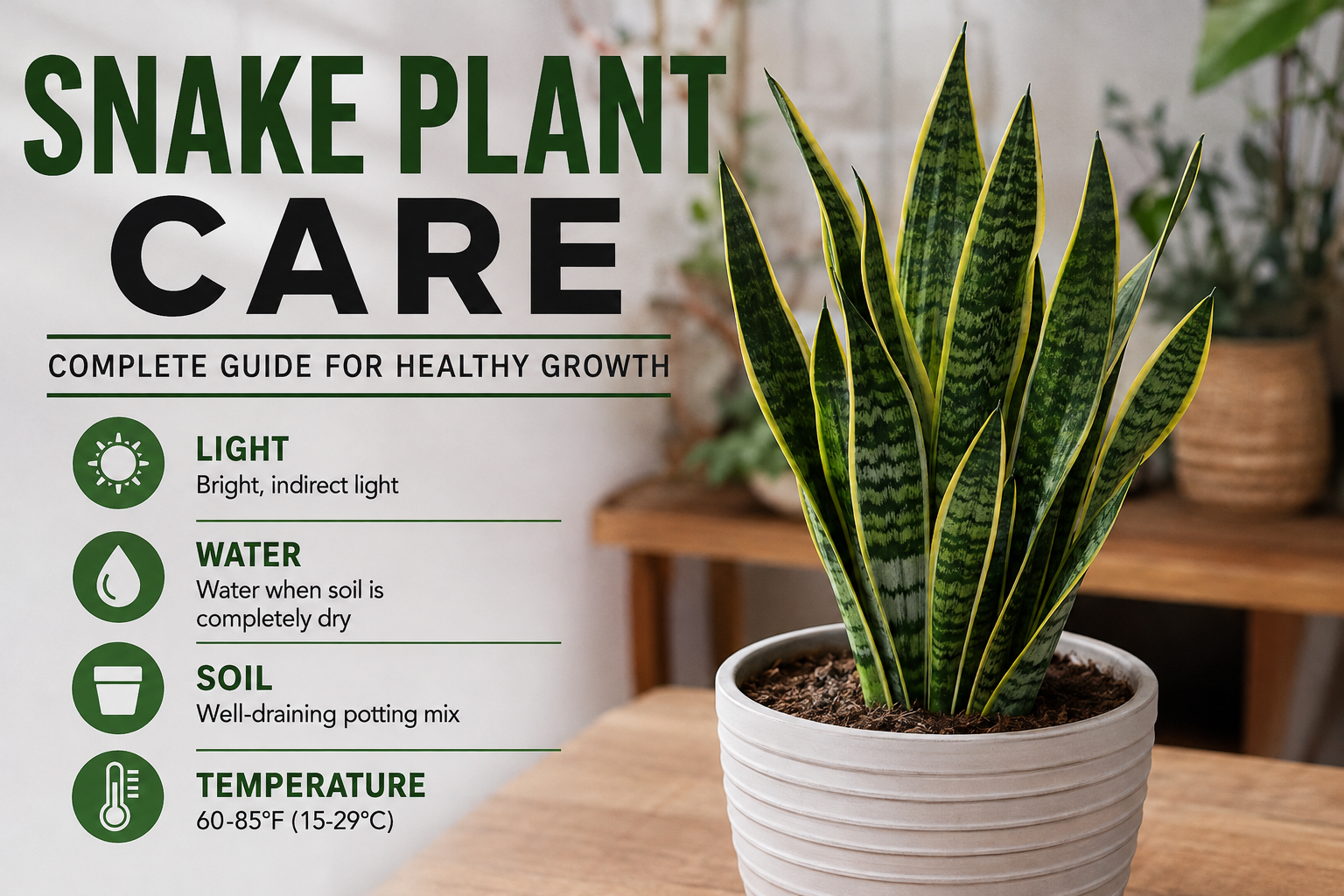
Snake plants are often described as some of the easiest houseplants to grow, but “low maintenance” does not mean “no maintenance.” The biggest mistake most owners make is giving their plant too much attention—especially too much water.
Successful snake plant care comes down to understanding a few basic needs: give the plant suitable light, use fast-draining soil, avoid overwatering, and protect it from prolonged cold. When these needs are met, a snake plant can remain attractive for years with relatively little effort.
Whether you have a classic upright variety, a compact bird’s nest snake plant, or a striking variegated cultivar, this guide explains how to keep it healthy and how to solve the most common problems.
Snake Plant Care at a Glance
| Care Factor | Best Conditions |
| Light | Bright indirect light; tolerates lower light |
| Water | Water after the soil has dried out |
| Soil | Loose, fast-draining mix |
| Pot | A container with drainage holes |
| Temperature | Warm indoor temperatures |
| Humidity | Low to average household humidity |
| Fertilizer | Light feeding during active growth |
| Repotting | Every few years or when root-bound |
The key to healthy growth is consistency rather than constant care. A snake plant does not need frequent watering or daily attention, but it does benefit from a stable environment.
Understanding Your Snake Plant
Snake plants are widely known by the botanical name Sansevieria, although they are now classified in the genus Dracaena. The common houseplant is generally known as Dracaena trifasciata.
You may also hear it called:
- Mother-in-law’s tongue
- Sansevieria
- Bowstring hemp
- Viper’s bowstring hemp
The plant is known for its stiff, upright leaves and ability to tolerate dry conditions. Its thick leaves and underground rhizomes help it store resources, which is one reason it can survive occasional neglect.
However, this drought tolerance also explains why overwatering is so dangerous. A plant adapted to relatively dry conditions can struggle when its roots remain wet for too long.
The Best Light for Snake Plants
Bright Indirect Light Supports Better Growth
Snake plants can grow in different lighting conditions, but bright indirect light is generally ideal. Place the plant near a bright window where intense sunlight is filtered by a curtain or where direct sun reaches the plant only briefly.
A brighter location can encourage:
- Faster growth
- Stronger leaves
- Better overall appearance
- More consistent variegation in some varieties
An east-facing window is often a good choice. A position near a west- or south-facing window can also work if intense afternoon sunlight is filtered.
Can Snake Plants Survive in Low Light?
Yes, but there is an important difference between surviving and thriving.
A snake plant can tolerate lower light, which is why it is popular in offices and darker rooms. However, very low light may lead to slower growth.
For example:
- A snake plant in a bright living room may produce new leaves more regularly.
- The same plant in a dim hallway may remain alive but grow very slowly.
- A dark, windowless room is generally not ideal for long-term growth without supplemental lighting.
If your snake plant is not growing but otherwise looks healthy, limited light may be one possible reason.
How Often Should You Water a Snake Plant?
The most important rule of snake plant care is simple: do not water on a fixed calendar schedule.
Instead, check the soil before watering.
Snake plants usually prefer their growing medium to dry out between waterings. The exact timing depends on your home environment.
How to Water a Snake Plant Properly
Follow these steps:
- Check whether the soil has dried out.
- Water thoroughly when the plant needs moisture.
- Allow excess water to drain completely.
- Do not let the pot sit in standing water.
- Check the soil again before watering in the future.
Repeated small amounts of water can sometimes keep portions of the root zone consistently damp. A more useful approach is to water properly when the plant needs it, then allow the growing medium to dry.
Watering Changes With the Environment
| Condition | How It Affects Watering |
| Bright light | Soil may dry more quickly |
| Low light | Plant uses water more slowly |
| Summer | Check soil more often |
| Winter | Water less frequently |
| Terracotta pot | Soil may dry faster |
| Plastic pot | Soil may stay moist longer |
| Small pot | Usually dries faster |
| Large pot | May retain moisture longer |
This is why a schedule such as “water every Sunday” is not always reliable.
Signs of Overwatering
Possible signs include:
- Yellow leaves
- Soft or mushy foliage
- A soft base
- Foul-smelling soil
- Drooping leaves
- Dark, damaged roots
If you suspect root rot, inspect the root system and correct the problem quickly.
Best Soil and Pot for a Snake Plant
Choose Fast-Draining Soil
Snake plants generally do best in a loose growing medium that drains efficiently. A cactus or succulent soil mix is often suitable.
You can also use regular potting soil amended with materials that improve drainage, such as perlite or coarse mineral components.
The goal is not to make the soil completely dry at all times. Instead, you want a mix that does not stay waterlogged around the roots.
Why Drainage Holes Matter
A drainage hole allows excess water to escape from the container.
Without drainage, water can collect at the bottom of the pot, increasing the risk that roots remain wet for too long.
If you use a decorative outer container, make sure excess water is not trapped around the nursery pot.
Terracotta vs. Plastic Pots
Terracotta is porous and may allow soil to dry more quickly. Plastic generally retains moisture for longer.
Neither is automatically better. The best choice depends on your watering habits and growing conditions.
If you tend to overwater, terracotta may provide a useful margin of safety. If your home is very warm and dry, you may need to monitor soil moisture more closely.
Temperature and Humidity Requirements
Snake plants generally adapt well to normal indoor conditions.
Avoid prolonged exposure to:
- Frost
- Cold outdoor temperatures
- Sudden cold drafts
- Extremely cold windowsills
High humidity is usually unnecessary. Most snake plants grow well in average household humidity.
Should You Mist a Snake Plant?
Routine misting is generally unnecessary.
Snake plants do not require the high humidity levels that some tropical houseplants need. Instead of misting, focus on the basics:
- Proper watering
- Suitable light
- Good drainage
- Reasonable indoor temperatures
How to Fertilize a Snake Plant
Snake plants do not require heavy feeding.
During the active growing season, a light application of a suitable houseplant fertilizer can support growth. Follow the product instructions carefully and avoid assuming that more fertilizer will produce a better plant.
Too much fertilizer can create salt buildup and stress the roots.
A simple approach is:
- Spring: Begin light feeding if the plant is actively growing.
- Summer: Continue only according to product directions.
- Fall: Reduce feeding as growth slows.
- Winter: Avoid routine fertilization if growth is minimal.
Seasonal Snake Plant Care
Spring
Spring is often a period of renewed growth. Check for:
- New leaves
- Root crowding
- Increased water use
This can also be a good time to repot or propagate a mature plant.
Summer
Warmer conditions and brighter light may cause the soil to dry faster.
Check the soil regularly, but do not automatically increase watering without confirming that the plant needs it.
Fall
As temperatures and light levels change, growth may slow. Begin reducing how often you water if the soil remains moist longer.
Winter
Snake plants often grow more slowly during winter.
This means they usually need less water. Cold temperatures combined with wet soil can create especially difficult conditions for the roots.
How to Repot a Snake Plant
Snake plants generally do not need frequent repotting.
Consider repotting when:
- Roots are severely crowded
- The pot becomes distorted or damaged
- The plant has outgrown its container
- The soil has become depleted or difficult to manage
Choose a new pot that is only moderately larger than the existing one.
An oversized pot can hold unnecessary amounts of soil around the root system, which may remain wet for longer.
Simple Repotting Steps
- Choose a pot with drainage.
- Prepare fresh, fast-draining soil.
- Remove the plant carefully.
- Inspect the roots and rhizomes.
- Remove clearly dead or rotten material with clean tools.
- Replant at the appropriate depth.
- Return the plant to suitable light.
How to Propagate a Snake Plant
Propagation by Division
Division involves separating a mature plant into smaller sections.
This method is often ideal when:
- The plant has several healthy clumps
- You want faster results
- You are repotting an overcrowded plant
Division can also be useful for preserving characteristics of a variegated plant.
Propagation From Leaf Cuttings
Leaf cuttings are another option, although they require patience.
A healthy leaf can be cut into sections and rooted in a suitable growing medium. New growth can eventually develop.
For variegated varieties, however, leaf propagation may not always produce plants with the same appearance as the parent.
| Propagation Method | Speed | Best For |
| Division | Usually faster | Mature, crowded plants |
| Leaf cuttings | Slower | Growing new plants from healthy leaves |
Common Snake Plant Problems and How to Fix Them
| Problem | Possible Cause | What to Do |
| Yellow leaves | Excess moisture | Check watering and root health |
| Soft leaves | Overwatering or rot | Inspect roots and improve drainage |
| Wrinkled leaves | Water imbalance | Check soil and watering habits |
| Drooping leaves | Root or watering problems | Review moisture, roots, and light |
| Brown tips | Environmental stress | Review water and growing conditions |
| Slow growth | Low light or seasonal slowdown | Move to better light if appropriate |
Why Are the Leaves Turning Yellow?
Yellow leaves are commonly associated with watering problems, particularly when the soil stays wet for too long.
Check:
- Soil moisture
- Root condition
- Pot drainage
- Recent watering habits
Why Are the Leaves Soft and Falling Over?
Healthy snake plant leaves are usually firm.
Soft, weak leaves can indicate excess moisture and possible root problems. Remove the plant from the pot if the condition is severe and inspect the roots.
Why Are the Leaves Wrinkled?
Wrinkled leaves may suggest that the plant is not maintaining the correct water balance.
Check the soil before assuming the cause. Very dry soil and root damage can sometimes produce similar symptoms.
How to Save an Overwatered Snake Plant
If you catch the problem early, recovery may be possible.
- Stop watering.
- Check whether the soil is saturated.
- Remove the plant from the pot if rot is suspected.
- Inspect the roots and rhizomes.
- Remove severely damaged material with clean tools.
- Repot healthy sections into fresh, well-draining soil.
- Resume watering cautiously based on the soil condition.
If the base of the plant is soft and foul-smelling, the damage may be advanced. Healthy sections may still be salvageable through division or propagation.
Common Snake Plant Care Mistakes
Watering Every Week Automatically
Watering needs change with the season and environment. Always check the soil first.
Using a Pot Without Drainage
Without proper drainage, water can collect around the roots.
Keeping the Plant in Complete Darkness
Snake plants tolerate lower light, but they still need light for healthy long-term growth.
Overfertilizing
More fertilizer does not necessarily mean faster growth.
Repotting Too Often
Snake plants generally do not need constant repotting.
Moving the Plant Suddenly Into Harsh Sunlight
A sudden environmental change can stress the foliage. If moving a plant into brighter light, allow it to adjust gradually.
Are Snake Plants Safe for Pets?
Snake plants should be kept away from pets that chew or eat houseplants.
If you have a curious dog or cat, place the plant in a location that is inaccessible to pets. If you believe your pet has eaten part of the plant and appears unwell, contact a veterinarian or an appropriate animal poison-control service promptly.
Snake Plant Myths vs. Reality
Myth: Snake Plants Can Live Without Light
Reality: They tolerate lower light, but they generally perform better with suitable light exposure.
Myth: Snake Plants Need Weekly Watering
Reality: Watering frequency depends on the soil, pot, season, temperature, and available light.
Myth: Misting Is Essential
Reality: Snake plants usually do not require routine misting.
Myth: Bigger Pots Always Help Plants Grow
Reality: A very large pot can keep excess soil wet for too long.
Myth: Snake Plants Are Impossible to Kill
Reality: They are resilient, but chronic overwatering, poor drainage, and cold conditions can seriously damage them.
Conclusion
Snake plant care is simple once you understand the plant’s basic needs. The most important steps are providing suitable light, using fast-draining soil, choosing a pot with drainage, and avoiding frequent watering.
Instead of following a rigid care schedule, observe your plant and its environment. Check the soil before watering, adjust care as the seasons change, and respond early to warning signs such as yellow or soft leaves.
With the right balance of light, water, and drainage, a snake plant can remain a healthy, attractive houseplant for many years.
Frequently Asked Questions
How often should I water a snake plant?
Water only after checking the soil and confirming that it has dried out sufficiently. The exact frequency varies by season, light, pot size, and indoor conditions.
Do snake plants need direct sunlight?
Snake plants can tolerate some direct sun, but bright indirect light is generally a reliable choice for healthy indoor growth.
Why is my snake plant turning yellow?
Yellow leaves are often associated with excess moisture or root problems. Check the soil, drainage, and root condition.
Can a snake plant grow in a dark room?
It can tolerate low light, but very dark conditions are not ideal for healthy long-term growth. Brighter indirect light usually supports better growth.
Should I mist my snake plant?
Routine misting is generally unnecessary because snake plants tolerate average household humidity.
When should I repot a snake plant?
Repot when the plant becomes severely root-bound, overcrowded, or difficult to manage in its existing container.
Can damaged snake plant leaves recover?
Damaged portions of an existing leaf usually do not return to their original appearance. However, healthy plants can continue producing new growth.