Living room rugs can do much more than cover an empty section of floor. The right rug helps define your seating area, add warmth, improve comfort, and bring furniture and colors together. But choosing one can be surprisingly difficult. A rug that looks perfect online may feel too small in your room, clash with your sofa, or become difficult to maintain.
The best living room rugs balance size, placement, material, style, comfort, and everyday practicality. Whether you’re furnishing a small apartment, refreshing a family room, or designing a spacious open-plan interior, understanding these factors will make the buying decision much easier.
This guide explains how to choose the right living room rug, where to place it, which materials work best, and what to consider before buying.
How to Choose the Right Living Room Rug
Start by looking at the room as a whole rather than choosing a rug based only on its color or pattern.
Consider the dimensions of the space, the size of your sofa, the position of your coffee table, and how much floor traffic the area receives. Your lifestyle matters too. A formal sitting room can accommodate a delicate decorative rug, while a busy family room may need something more durable and easy to clean.
Before shopping, ask yourself:
- How large is the seating area?
- Should the rug sit beneath the sofa?
- Do I need a low-maintenance material?
- Will pets or children use the room?
- Do I want the rug to stand out or blend in?
- How much can I realistically spend?
Answering these questions first can prevent an attractive but impractical purchase.
What Is the Best Rug Size for a Living Room?
Rug size is one of the most important decisions you will make. A rug that is too small can make a carefully arranged living room feel disconnected, while an appropriately sized rug can visually unite the furniture.
5×7 Rugs
A 5×7 rug can work well in a compact living room, apartment, or smaller seating area. It may fit beneath a coffee table while allowing the surrounding furniture to remain partly outside the rug.
This size is useful when floor space is limited, but measure carefully before buying.
6×9 Rugs
A 6×9 rug provides more coverage and can work well in medium-sized rooms. It offers greater flexibility for positioning the front legs of a sofa and chairs on the rug.
8×10 Rugs
An 8×10 rug is one of the most versatile choices for a typical living room. It can create a defined seating zone around a sofa, coffee table, and accent chairs without requiring an unusually large room.
9×12 Rugs
For larger living rooms, a 9×12 rug can provide enough coverage to bring most or all of the seating furniture together. It is especially useful in spacious rooms where a smaller rug might look undersized.
Living Room Rug Size Comparison
| Rug Size | Best For | Typical Use |
| 5×7 | Small rooms | Compact seating areas |
| 6×9 | Medium rooms | Sofa and coffee table zones |
| 8×10 | Average living rooms | Main seating arrangement |
| 9×12 | Large rooms | Larger furniture groupings |
| 10×14+ | Very large spaces | Open-plan or expansive rooms |
The exact choice depends on your room dimensions and furniture layout. Always measure the seating area before ordering.
How Should a Rug Be Placed in a Living Room?
Proper placement can make as much difference as the rug itself.
Put All Furniture on the Rug
If the room is large enough, placing the sofa and chairs completely on the rug creates a unified, intentional seating area.
This approach works particularly well in spacious living rooms.
Put the Front Legs on the Rug
For many homes, placing only the front legs of the sofa and chairs on the rug is the most practical option. It connects the furniture visually without requiring an enormous rug.
This is also useful when decorating a medium-sized room.
Place the Rug Under the Coffee Table
A smaller rug can sit beneath the coffee table when space is limited. However, avoid choosing a rug that looks like an isolated island in the middle of the room.
The surrounding furniture should still feel visually connected to it.
How to Place a Rug With a Sectional Sofa
Sectional sofas require special attention because of their larger footprint.
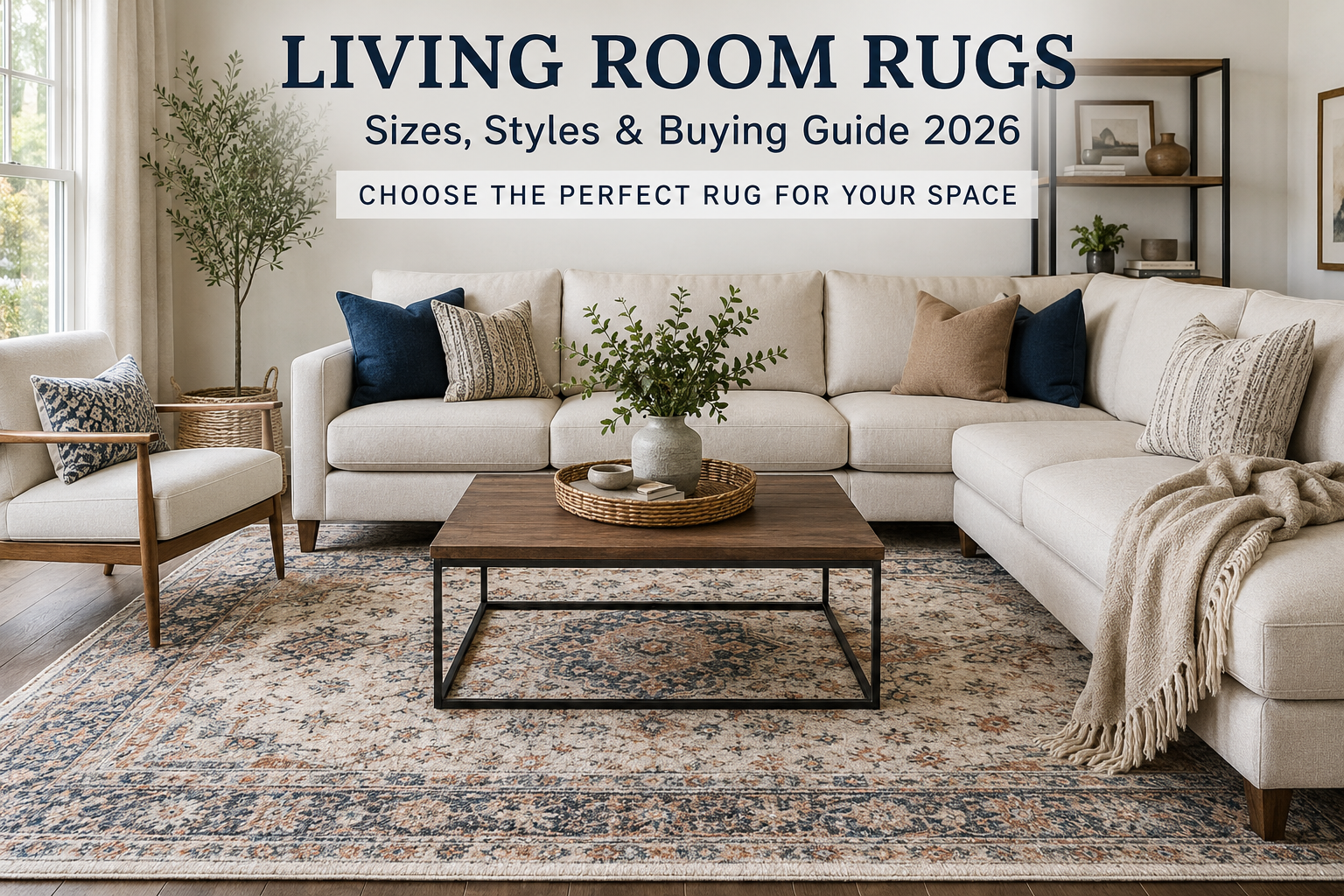
Ideally, the rug should extend far enough beneath the sectional to visually anchor the seating area. For a large L-shaped sectional, a larger area rug often creates a more balanced appearance than a small rug centered only beneath the coffee table.
In an open-plan home, the rug can also help separate the living room from dining or kitchen areas.
Best Materials for Living Room Rugs
The best rug material depends on how you use the room.
Wool Rugs
Wool is a popular choice for living rooms because it combines comfort, durability, and a naturally refined appearance. It can work especially well in rooms that receive regular foot traffic.
The main disadvantage is usually a higher price compared with many synthetic alternatives.
Cotton Rugs
Cotton rugs are lightweight and versatile. They can suit casual interiors and are often easier to move than heavier rugs.
They may not provide the same long-term durability as premium wool in heavily used spaces.
Jute and Natural-Fiber Rugs
Jute and similar natural fibers are ideal for earthy, organic interiors. Their texture adds visual interest without relying on bold colors.
They can be less suitable for people looking for an exceptionally soft surface or extremely easy maintenance.
Synthetic Rugs
Synthetic fibers such as polypropylene and polyester can be practical choices for busy households. Many offer affordability, durability, and easier maintenance.
They are particularly worth considering when children, pets, or frequent entertaining make spills and wear more likely.
Popular Living Room Rug Styles
There is no single style that works for every interior.
Modern Living Room Rugs
Modern rugs often feature abstract designs, geometric shapes, clean lines, or restrained color palettes. They pair naturally with contemporary furniture.
Traditional Rugs
Traditional designs can introduce detailed patterns and classic character. They work particularly well when the rest of the room has timeless or transitional furnishings.
Vintage-Inspired Rugs
Vintage-style rugs can add personality and visual depth. Their aged appearance can also make everyday marks less noticeable than they might be on a perfectly plain rug.
Minimalist Rugs
For minimalist interiors, look for subtle patterns, solid colors, and understated textures. The goal is to complement the room rather than compete with the furniture.
Textured and Natural Rugs
Textured rugs can add dimension to rooms built around neutral colors. Natural materials are especially effective in warm, relaxed interiors.
How to Choose the Right Rug Color
Your rug does not have to match your sofa exactly. In fact, coordinating colors usually creates a more sophisticated result.
If your sofa is neutral, you have more freedom to introduce pattern or color through the rug. If your sofa is already bold, a more restrained rug can keep the room balanced.
For example, a beige sofa can work beautifully with an earthy patterned rug, while a deep navy sofa may pair well with warm cream, tan, or muted terracotta tones.
Consider existing colors in your:
- Curtains
- Cushions
- Wall art
- Flooring
- Accent furniture
Choose a rug that connects several of these elements rather than attempting to match everything perfectly.
Living Room Rug Trends for 2026
Current interiors continue to favor rugs that feel warm, comfortable, and personal rather than overly coordinated.
Popular directions include warm neutrals, earthy shades, organic patterns, vintage-inspired designs, abstract artwork, natural textures, and layered visual details.
However, trends should not dictate every purchase.
If you expect to keep a rug for several years, prioritize a style you genuinely like over a short-lived trend. A neutral foundation with interesting texture or a subtle pattern can remain relevant even as other décor changes.
Best Living Room Rugs for Pets and Kids
Homes with children or pets require a slightly different approach.
Look for rugs that are durable, practical, and relatively easy to clean. A lower or medium pile can make regular vacuuming easier, while a forgiving pattern may help disguise minor everyday marks.
For pets, also consider how easily hair can become trapped in the rug fibers.
For children, stability is important. A suitable rug pad can help reduce movement and create a more secure surface.
Low-Pile vs. High-Pile Rugs
Pile height affects comfort, appearance, cleaning, and furniture stability.
| Feature | Low Pile | High Pile |
| Cleaning | Generally easier | Usually more demanding |
| Feel | Structured | Soft and plush |
| Furniture | More stable | Can feel less stable |
| Pet hair | Easier to manage | May become trapped |
| Best for | Busy rooms | Cozy spaces |
A low-pile rug is often practical for high-traffic living rooms, while a high-pile option can create a softer, more relaxed atmosphere.
Do You Need a Rug Pad?
A rug pad is more than an optional accessory. It can help keep the rug from sliding, provide additional cushioning, protect flooring, and reduce premature wear.
Choose a pad that is compatible with both the rug and your floor type. It should generally be slightly smaller than the rug so it remains concealed.
How to Clean and Maintain Living Room Rugs
Maintenance depends heavily on the rug’s material.
Vacuum regularly to remove dust and loose debris, but use the appropriate setting for delicate fibers. Clean spills promptly rather than allowing them to settle into the rug.
Do not assume every rug can be treated with the same cleaning products. Wool, jute, viscose, cotton, and synthetic rugs can have very different care requirements.
Always check the manufacturer’s cleaning instructions before using a cleaning solution or machine.
For valuable or delicate rugs, professional cleaning may be the safer option.
Common Living Room Rug Mistakes to Avoid
Buying a Rug That Is Too Small
This is one of the most common decorating mistakes. Measure the seating area before choosing a size.
Ignoring Furniture Placement
Don’t center the rug only according to the room’s walls. Consider how it relates to the sofa and chairs.
Choosing Style Before Function
A beautiful rug that cannot handle your household’s traffic is unlikely to remain beautiful for long.
Skipping the Rug Pad
A rug that constantly moves can become frustrating and potentially unsafe.
Following Trends Too Closely
Choose trends that suit your existing interior rather than replacing your entire decorating style every year.
Living Room Rug Ideas for Different Spaces
Small Living Rooms
Choose a rug that defines the seating area without overwhelming the available floor space. Lighter colors and restrained patterns can help maintain an open appearance.
Large Living Rooms
Larger rugs can unify multiple pieces of furniture and prevent the room from feeling visually fragmented.
Apartments
Prioritize versatile sizes, manageable materials, and designs that can adapt if you move.
Open-Concept Rooms
Use rugs to establish a clear living zone. This creates visual boundaries without requiring walls or partitions.
Living Room Rug Buying Checklist
Before purchasing, confirm:
- The room dimensions
- Furniture measurements
- Desired rug placement
- Appropriate rug size
- Suitable material
- Appropriate pile height
- Color and pattern
- Cleaning requirements
- Household traffic level
- Pet and child considerations
- Need for a rug pad
- Return policy and care instructions
Taking a few minutes to check these details can prevent an expensive decorating mistake.
Conclusion
The best living room rugs combine good design with practical performance. Start with your room measurements and furniture layout, then consider the right size, placement, material, pile height, color, and maintenance requirements.
Don’t choose a rug simply because it looks attractive in a photograph. Think about how your household actually uses the room. A carefully selected rug can define your seating area, add warmth, and make the entire living room feel more finished.
Whether you prefer a modern abstract design, a timeless traditional pattern, or a natural textured rug, the right choice is the one that fits both your space and your everyday life.
Frequently Asked Questions
What is the best rug size for a living room?
The best size depends on your room and furniture arrangement. An 8×10 rug is versatile for many standard living rooms, while 9×12 or larger rugs are often better suited to spacious seating areas.
Should a living room rug go under the sofa?
Yes. In many layouts, placing the entire sofa or at least its front legs on the rug helps connect the seating furniture and creates a more cohesive arrangement.
What color rug is best for a living room?
The best color depends on your existing décor. Neutral rugs provide flexibility, while patterned or colorful rugs can add a focal point to rooms with understated furniture.
What type of rug is best for a high-traffic living room?
Durable, relatively easy-care materials and practical pile heights are generally better suited to high-traffic spaces. Consider how much maintenance you are willing to perform before choosing a material.
Are wool rugs good for living rooms?
Wool can be an excellent living room choice because it is comfortable and durable. However, it typically costs more than many synthetic alternatives and still requires appropriate care.
Should all furniture sit on the living room rug?
Not necessarily. In large rooms, placing all furniture on the rug can create a unified look. In smaller rooms, putting the front legs of major furniture pieces on the rug is often more practical.
Do you need a rug pad under a living room rug?
A rug pad is strongly worth considering because it can improve stability, cushioning, and floor protection while helping the rug stay in place.