An epoxy garage floor is one of the most popular upgrades for homeowners looking to improve the durability and appearance of their garage. Besides giving concrete floors a sleek, polished finish, epoxy protects against stains, chemicals, moisture, and everyday wear. However, before starting a project, most homeowners want to know one thing: How much does an epoxy garage floor cost?
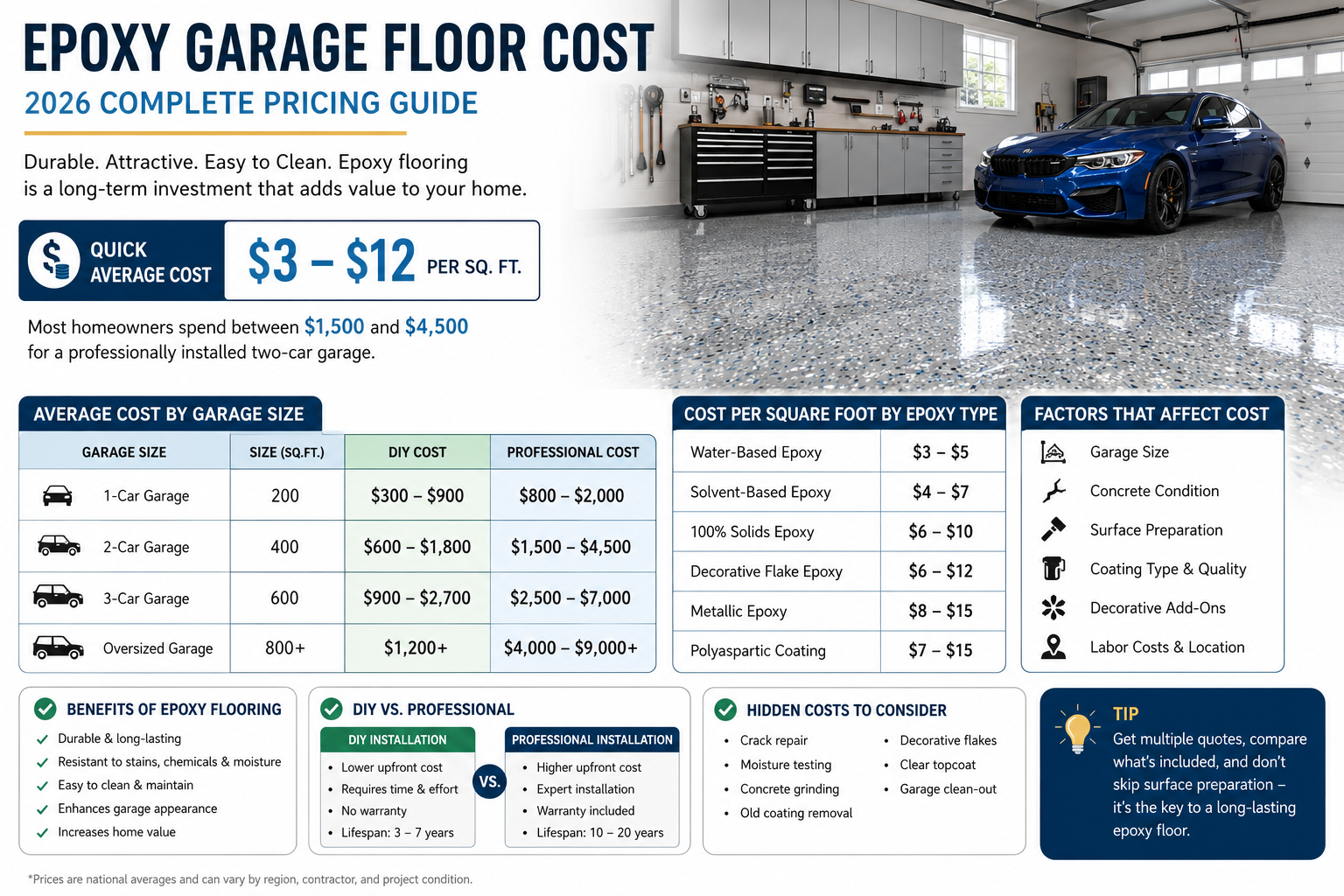
The average epoxy garage floor cost ranges from $3 to $12 per square foot, with most homeowners spending between $1,500 and $4,500 for a professionally installed two-car garage. The final price depends on several factors, including garage size, floor condition, coating type, and labor costs. This guide explains everything you need to know so you can budget your project confidently and choose the best option for your home.
Average Epoxy Garage Floor Cost
The cost of an epoxy garage floor varies based on whether you install it yourself or hire a professional.
| Garage Size | DIY Cost | Professional Cost |
| 1-Car Garage (200 sq. ft.) | $300–$900 | $800–$2,000 |
| 2-Car Garage (400 sq. ft.) | $600–$1,800 | $1,500–$4,500 |
| 3-Car Garage (600 sq. ft.) | $900–$2,700 | $2,500–$7,000 |
Professional installation usually includes surface preparation, crack repair, primer, multiple epoxy coats, and a protective topcoat. While the upfront investment is higher, professionally installed epoxy floors generally last much longer than DIY applications.
Cost Per Square Foot
One of the easiest ways to estimate epoxy garage floor cost is by calculating the price per square foot.
| Epoxy Type | Average Cost Per Sq. Ft. |
| Water-Based Epoxy | $3–$5 |
| Solvent-Based Epoxy | $4–$7 |
| 100% Solids Epoxy | $6–$10 |
| Decorative Flake Epoxy | $6–$12 |
| Metallic Epoxy | $8–$15 |
Higher-end systems often include decorative flakes or metallic pigments that improve appearance and increase durability. Although these options cost more, they also provide a premium finish that can last for many years.
What Affects Epoxy Garage Floor Cost?
Several factors influence the total project price.
Garage Size
Larger garages require more epoxy, longer installation times, and additional labor. A three-car garage naturally costs more than a one-car garage because more materials and preparation are needed.
Surface Preparation
Proper preparation is one of the most important parts of the installation process. Contractors usually grind the concrete to remove dirt, oil stains, and previous coatings. Skipping this step can cause peeling or bubbling later.
Concrete Condition
If the floor has cracks, uneven spots, or moisture issues, repairs must be completed before applying epoxy. These repairs add to the overall project cost but improve the lifespan of the coating.
Coating Quality
Basic epoxy systems cost less than premium coatings. High-performance epoxy with UV-resistant topcoats or decorative finishes increases the price but also offers better durability and a more attractive appearance.
Labor Costs
Professional labor rates vary by location and installer experience. Areas with higher labor costs generally have higher installation prices.
DIY vs. Professional Installation
Many homeowners consider installing epoxy themselves to save money. While DIY kits are less expensive, they also require careful preparation and proper application techniques.
| Feature | DIY Installation | Professional Installation |
| Initial Cost | Lower | Higher |
| Equipment | Must Rent or Buy | Included |
| Warranty | Usually None | Often Included |
| Lifespan | 3–7 Years | 10–20 Years |
| Finish Quality | Depends on Skill | Professional Grade |
If you have experience with home improvement projects, a DIY kit can be a budget-friendly solution. However, for larger garages or premium finishes, professional installation usually provides better long-term value.
Hidden Costs to Consider
Many homeowners focus only on the price of the epoxy coating and overlook additional expenses.
Common hidden costs include:
- Concrete crack repair
- Moisture testing
- Grinding or surface preparation
- Removing old paint or coatings
- Decorative flakes or metallic finishes
- Protective clear topcoat
- Garage cleaning before installation
Planning for these costs helps prevent unexpected surprises during your project.
Is an Epoxy Garage Floor Worth the Cost?
For most homeowners, an epoxy garage floor is a worthwhile investment. It not only improves the appearance of your garage but also protects the concrete from damage caused by oil spills, chemicals, road salt, and heavy vehicles.
Key benefits include:
- Long-lasting durability
- Easy cleaning and maintenance
- Resistance to stains and chemicals
- Improved garage appearance
- Reduced concrete dust
- Better moisture protection
- Increased appeal for potential home buyers
A professionally installed epoxy floor can last 10 to 20 years with proper maintenance, making it one of the most cost-effective garage flooring options available.
How to Save Money on an Epoxy Garage Floor
If you’re working with a limited budget, there are several ways to reduce costs without sacrificing quality.
- Get quotes from at least three contractors.
- Choose a standard color instead of metallic finishes.
- Remove garage items before installation.
- Repair small cracks if you have the necessary skills.
- Schedule installation during slower seasons when contractors may offer discounts.
- Focus on quality surface preparation instead of decorative upgrades.
Remember, choosing the cheapest contractor isn’t always the best decision. Proper installation prevents costly repairs later.
Choosing the Right Contractor
Hiring the right installer can make a significant difference in the lifespan of your epoxy floor.
Before hiring a contractor, ask these questions:
- Do you grind the concrete before installation?
- What type of epoxy products do you use?
- Is a warranty included?
- How long have you installed epoxy floors?
- Can you provide references or photos of completed projects?
- Are you licensed and insured?
A reputable contractor should provide a detailed written estimate outlining labor, materials, preparation work, and warranty coverage.
Conclusion
Understanding epoxy garage floor cost helps you make an informed decision before investing in your garage. While prices typically range from $3 to $12 per square foot, the final cost depends on garage size, floor condition, coating quality, and whether you choose DIY or professional installation.
Although a professional installation costs more upfront, it often delivers better durability, longer warranties, and a superior finish. By comparing quotes, choosing quality materials, and ensuring proper surface preparation, you can enjoy an attractive, low-maintenance garage floor that lasts for years.
Frequently Asked Questions
1. How much does an epoxy garage floor cost per square foot?
Most epoxy garage floors cost between $3 and $12 per square foot, depending on the coating type and installation method.
2. Is epoxy cheaper than polyaspartic flooring?
Yes. Epoxy is generally more affordable, while polyaspartic coatings cost more but cure faster and offer better UV resistance.
3. Can I install epoxy over damaged concrete?
Minor cracks can be repaired before installation, but significant damage should be fixed to ensure the epoxy bonds properly.
4. How long does an epoxy garage floor last?
A professionally installed epoxy floor typically lasts 10–20 years, while DIY applications usually last 3–7 years.
5. Does an epoxy garage floor increase home value?
Although it may not significantly raise a home’s appraised value, it improves curb appeal, protects the concrete, and makes the garage more attractive to potential buyers.
6. What is the most affordable epoxy option?
Water-based epoxy kits are the least expensive choice and are popular for DIY projects, though they are generally less durable than premium epoxy systems.