
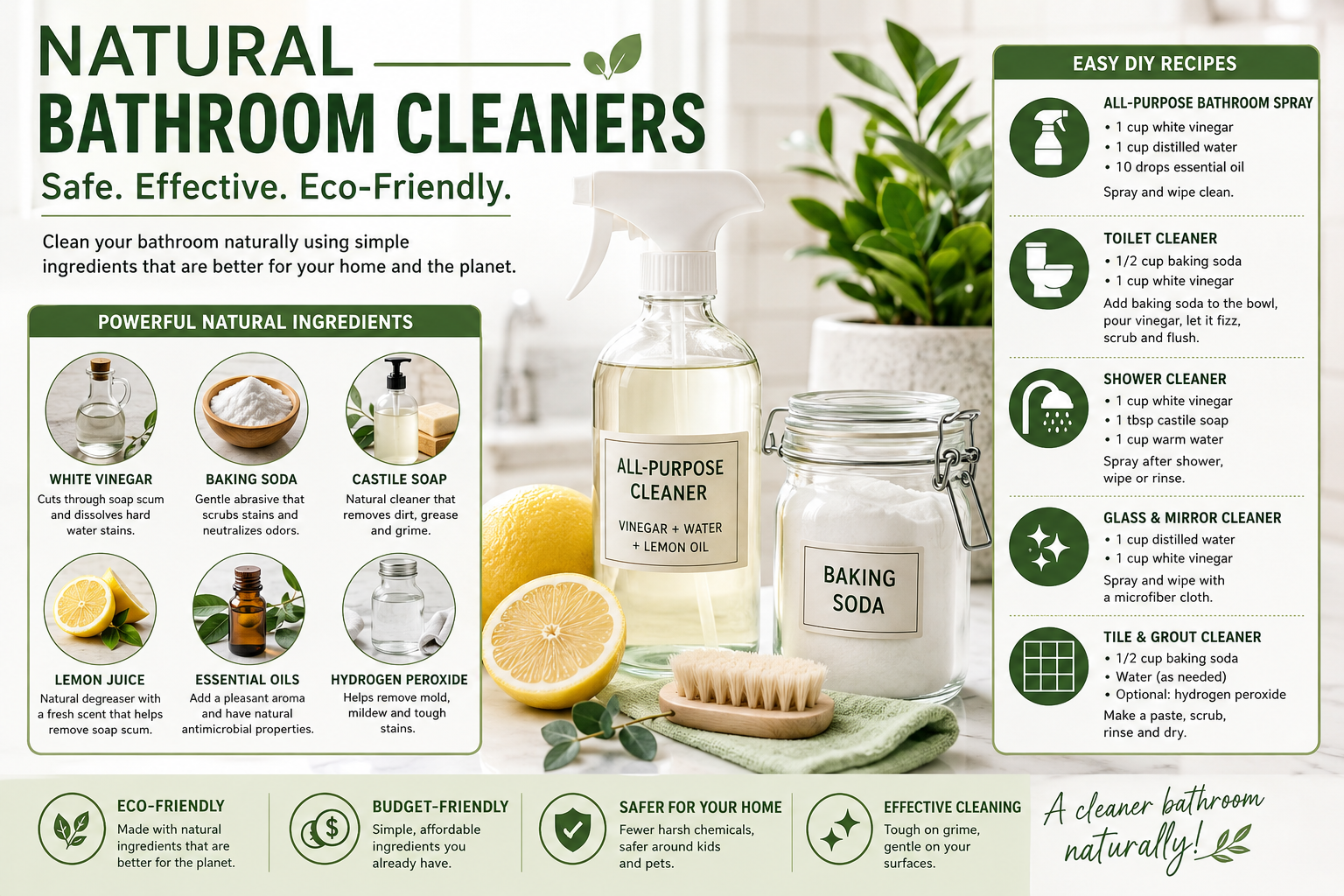
A clean bathroom doesn’t have to come at the expense of your health or the environment. Many conventional cleaning products contain harsh chemicals, synthetic fragrances, and ingredients that may irritate the skin or lungs. Fortunately, natural bathroom cleaners offer an effective alternative for removing soap scum, hard water stains, grime, and unpleasant odors without relying on aggressive chemicals.
Whether you’re looking to reduce your environmental impact, create a healthier home, or save money with DIY solutions, natural cleaning methods can help you achieve a spotless bathroom using simple household ingredients.
In this guide, you’ll learn what natural bathroom cleaners are, which ingredients work best, how to clean different bathroom surfaces safely, easy homemade recipes, and practical maintenance tips for keeping your bathroom fresh all year long.
What Are Natural Bathroom Cleaners?
Natural bathroom cleaners are cleaning solutions made from naturally derived or minimally processed ingredients instead of harsh synthetic chemicals. Common ingredients include white vinegar, baking soda, castile soap, lemon juice, citric acid, and hydrogen peroxide.
Unlike many conventional cleaners, natural alternatives often contain fewer artificial fragrances and harsh additives while still providing excellent cleaning power when used correctly.
Why More Homeowners Choose Natural Bathroom Cleaners
People are switching to natural bathroom cleaners for several reasons:
- Reduce exposure to harsh chemicals
- Lower household cleaning costs
- Minimize plastic waste
- Use biodegradable ingredients
- Improve indoor air quality
- Create safer cleaning routines around children and pets when used responsibly
Benefits of Natural Bathroom Cleaners
Natural cleaning products offer several advantages beyond simply keeping your bathroom clean.
Eco-Friendly Cleaning
Many natural ingredients break down more easily in the environment compared to conventional chemicals, making them a more sustainable choice.
Budget-Friendly
Most DIY recipes use affordable pantry staples that cost far less than specialty bathroom cleaners.
Multi-Purpose Use
One homemade cleaner can often be used on sinks, mirrors, countertops, tiles, and other bathroom surfaces, reducing the need for multiple products.
Effective Against Everyday Dirt
Natural ingredients work well for:
- Soap scum
- Hard water stains
- Mineral buildup
- Greasy residue
- Bathroom odors
- Mild mildew stains
Common Natural Cleaning Ingredients and Their Uses
Each ingredient has unique cleaning properties. Knowing when to use each one helps you achieve better results.
| Ingredient | Best For | Removes Limescale | Deodorizes | Safe on Natural Stone |
| White Vinegar | Hard water stains | ✔ | ✔ | ✘ |
| Baking Soda | Gentle scrubbing | Partial | ✔ | Usually |
| Castile Soap | Daily cleaning | ✘ | Partial | ✔ |
| Lemon Juice | Mineral deposits | ✔ | ✔ | ✘ |
| Hydrogen Peroxide | Mold stains | Partial | Partial | Use with care |
| Citric Acid | Heavy mineral buildup | ✔✔ | ✔ | ✘ |
How These Ingredients Work
- White vinegar dissolves mineral deposits because of its mild acidity.
- Baking soda acts as a gentle abrasive while neutralizing odors.
- Castile soap lifts grease and everyday grime.
- Hydrogen peroxide helps remove mold stains and brightens grout.
- Citric acid works well on stubborn limescale buildup.
Best DIY Natural Bathroom Cleaner Recipes
1. All-Purpose Bathroom Cleaner
Ingredients
- 1 cup distilled water
- 1 cup white vinegar
- 10 drops lemon essential oil (optional)
Directions
Mix ingredients in a spray bottle, shake gently, spray on bathroom surfaces, let sit for a few minutes, then wipe clean with a microfiber cloth.
Best for:
- Bathroom counters
- Ceramic tiles
- Glass shower doors
- Sinks
2. Natural Toilet Bowl Cleaner
Ingredients:
- ½ cup baking soda
- 1 cup white vinegar
Sprinkle baking soda into the toilet bowl, slowly add vinegar, allow the mixture to fizz for 10–15 minutes, scrub with a toilet brush, and flush.
3. Shower Cleaner
Mix:
- 1 cup white vinegar
- 1 tablespoon castile soap
- 1 cup warm water
Spray after each shower to reduce soap scum and mineral buildup.
4. Tile and Grout Cleaner
Create a thick paste using:
- Baking soda
- Small amount of water
Apply to grout lines, scrub with a soft brush, rinse thoroughly, and allow to dry.
5. Mirror Cleaner
Mix equal parts distilled water and white vinegar.
Spray lightly and wipe with a lint-free microfiber cloth for a streak-free finish.
Which Natural Cleaner Works Best?
Different bathroom problems require different solutions.
| Bathroom Problem | Best Natural Cleaner | Why It Works |
| Soap scum | Vinegar + Castile Soap | Breaks down residue |
| Hard water stains | White Vinegar | Dissolves mineral deposits |
| Toilet stains | Baking Soda + Vinegar | Loosens buildup |
| Bathroom odors | Baking Soda | Neutralizes odors |
| Mold spots | Hydrogen Peroxide | Helps lift mold stains |
| Glass streaks | Vinegar + Water | Leaves a clear finish |
Bathroom Surface Compatibility Guide
Not every natural cleaner is safe for every surface.
| Surface | Vinegar | Baking Soda | Castile Soap |
| Ceramic Tile | ✔ | ✔ | ✔ |
| Porcelain | ✔ | ✔ | ✔ |
| Glass | ✔ | ✔ | ✔ |
| Chrome | ✔ | ✔ | ✔ |
| Stainless Steel | Limited | ✔ | ✔ |
| Marble | ✘ | Gentle use | ✔ |
| Granite | ✘ | Gentle use | ✔ |
| Quartz | Limited | ✔ | ✔ |
| Acrylic Tubs | Limited | Gentle use | ✔ |
| Fiberglass | Limited | Gentle use | ✔ |
Always test any cleaner on a small, hidden area before cleaning the entire surface.
Ingredients You Should Never Mix
While natural cleaners are generally safe when used properly, some combinations should be avoided.
Never mix:
- Vinegar and bleach
- Hydrogen peroxide and vinegar in the same container
- Ammonia with bleach
- Different commercial cleaners unless the label specifically says they are compatible
These combinations can produce harmful gases or unstable chemical reactions.
Daily, Weekly, and Monthly Bathroom Cleaning Routine
Consistency makes cleaning easier and prevents stubborn buildup.
Daily
- Wipe bathroom sink
- Dry shower walls
- Spray shower with a daily cleaner
- Empty trash if needed
Weekly
- Clean toilet
- Scrub shower
- Clean mirrors
- Mop bathroom floor
- Disinfect frequently touched surfaces when appropriate
Monthly
- Deep clean grout
- Remove hard water deposits
- Wash shower curtain
- Clean exhaust fan
- Check for mold or mildew
Homemade vs. Store-Bought Natural Bathroom Cleaners
| Feature | Homemade | Store-Bought Natural |
| Cost | Low | Moderate |
| Eco-Friendly | High | Varies |
| Customizable | Yes | Limited |
| Convenience | Moderate | High |
| Packaging Waste | Minimal | More |
| Shelf Life | Shorter | Longer |
Homemade cleaners are ideal for regular maintenance, while commercial natural cleaners may be more convenient for those with busy schedules or specific cleaning needs.
Common Mistakes to Avoid
Many people unknowingly reduce the effectiveness of natural bathroom cleaners.
Avoid these mistakes:
- Using vinegar on marble or granite
- Scrubbing delicate surfaces too aggressively
- Mixing incompatible ingredients
- Forgetting to rinse after cleaning
- Storing homemade cleaners without labels
- Using dirty microfiber cloths
- Skipping regular maintenance
How to Store Homemade Bathroom Cleaners
Proper storage helps maintain effectiveness.
Best practices include:
- Store in clearly labeled spray bottles.
- Keep away from direct sunlight and heat.
- Prepare small batches to maintain freshness.
- Keep cleaning products out of reach of children and pets.
- Replace homemade mixtures if they develop an unusual odor or appearance.
Expert Tips for Better Results
Small changes in your cleaning routine can make a noticeable difference.
- Use warm water to loosen soap scum before cleaning.
- Wipe surfaces dry after every shower to reduce mineral deposits.
- Ventilate the bathroom to reduce moisture and mold growth.
- Clean spills immediately to prevent staining.
- Replace sponges and cloths regularly to avoid spreading bacteria.
- Pair natural cleaners with microfiber cloths for better cleaning performance.
Conclusion
Natural bathroom cleaners offer an affordable, eco-friendly, and effective way to maintain a clean, healthy bathroom without relying on harsh chemicals. Ingredients such as white vinegar, baking soda, castile soap, and hydrogen peroxide can tackle common cleaning challenges like soap scum, hard water stains, and everyday grime when used appropriately.
The key to success is choosing the right cleaner for each surface, following safe mixing practices, and maintaining a regular cleaning routine. With consistent care, your bathroom can stay fresh, hygienic, and sparkling while reducing your environmental impact and saving money over time.
Frequently Asked Questions
Are natural bathroom cleaners really effective?
Yes. They work well for everyday dirt, soap scum, hard water stains, and odors when matched to the right cleaning task.
Can I use vinegar on every bathroom surface?
No. Avoid vinegar on marble, granite, and other natural stone surfaces because its acidity may damage the finish.
How long do homemade bathroom cleaners last?
Most water-based DIY cleaners are best used within a few weeks to maintain freshness and effectiveness.
Do natural bathroom cleaners disinfect?
Some ingredients help reduce microbes, but homemade cleaners are not always suitable replacements for EPA-registered disinfectants when true disinfection is required.
Which natural ingredient removes hard water stains best?
White vinegar and citric acid are among the most effective natural options for dissolving mineral deposits.
Can essential oils replace cleaning ingredients?
No. Essential oils may add fragrance and some mild antimicrobial properties, but they should not replace the primary cleaning ingredients.