Toy clutter can quickly take over your home, making it difficult to find favorite items and creating unnecessary stress. Whether you have a dedicated playroom or a small apartment, the right toy storage system can help you keep toys organized while teaching children valuable cleanup habits. Instead of simply hiding toys away, a thoughtful storage plan makes playtime more enjoyable and your home safer and easier to maintain.
In this guide, you’ll discover practical toy storage ideas, organization strategies, and expert tips to help you create a clutter-free space that works for your entire family.
Why Toy Storage Is Important
A well-organized toy storage system offers benefits beyond keeping your floors clear.
Some of the biggest advantages include:
- Reduces daily cleanup time
- Makes toys easier to find
- Encourages children to clean up independently
- Protects toys from damage
- Creates a safer living environment
- Helps reduce stress caused by clutter
When every toy has a designated place, children learn responsibility while parents spend less time organizing.
How to Choose the Best Toy Storage
Before buying storage furniture or containers, consider your family’s needs.
Think About Your Child’s Age
Different ages require different storage solutions.
Babies
Soft fabric baskets are ideal for plush toys, rattles, and sensory items. Avoid heavy storage furniture with lids that could create safety hazards.
Toddlers
Open bins and low shelves encourage toddlers to access and return toys independently. Picture labels make cleanup even easier.
Preschoolers
Children at this age benefit from storage that separates toys into categories like blocks, dolls, puzzles, and art supplies.
School-Age Children
Older kids often have board games, STEM kits, books, and craft materials that require labeled drawers or shelving systems.
Consider Available Space
Choose storage that fits your room.
- Playrooms benefit from open shelving.
- Bedrooms work well with under-bed storage.
- Living rooms look cleaner with decorative baskets and storage ottomans.
- Apartments benefit from vertical storage and multi-functional furniture.
Organize Toys by Category
Grouping similar toys together keeps everything easier to manage.
Separate categories such as:
- Building blocks
- Stuffed animals
- Dolls
- Toy vehicles
- Books
- Board games
- Arts and crafts
- Musical toys
Children quickly learn where each category belongs, making cleanup faster.
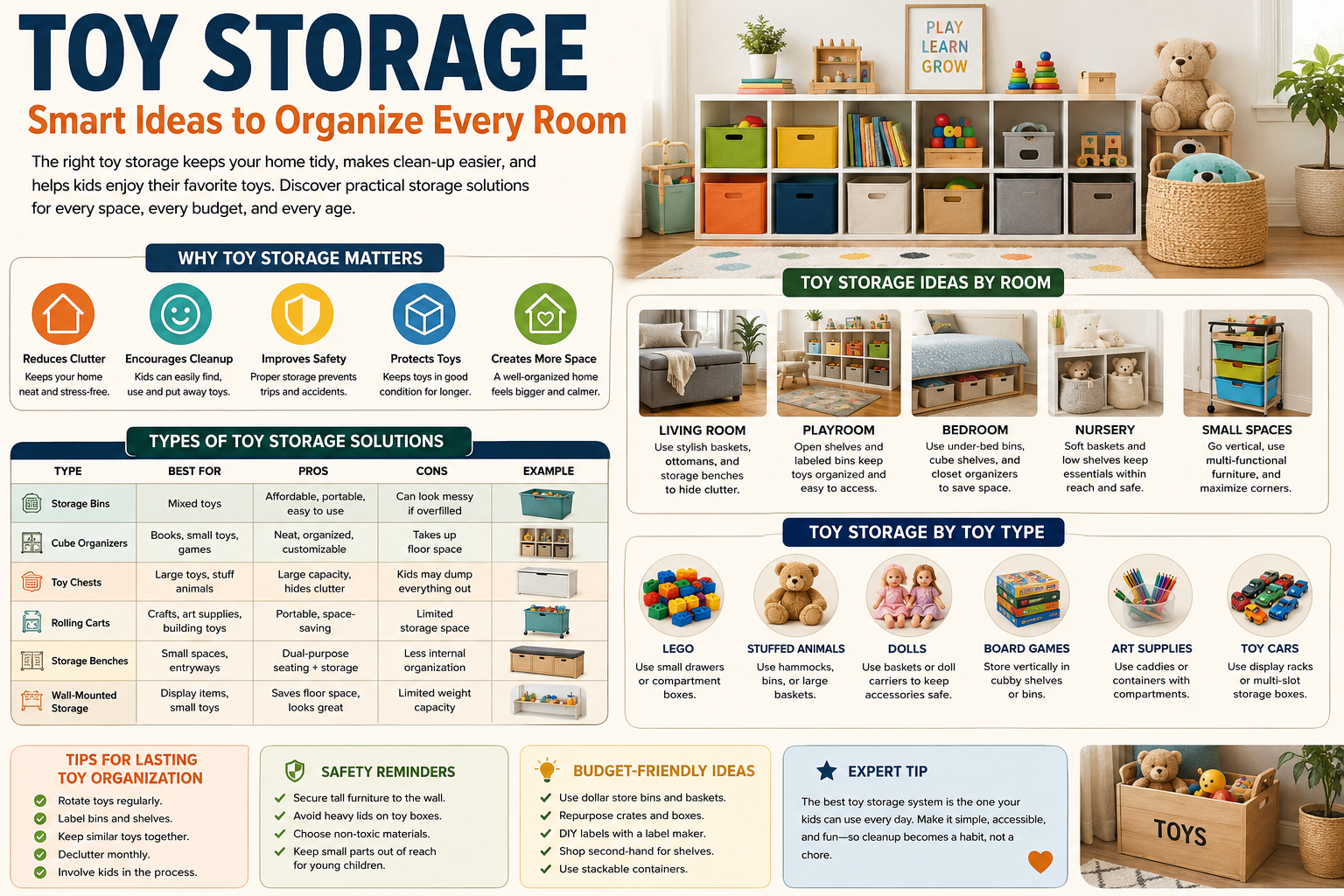
Comparison of Popular Toy Storage Options
| Storage Type | Best For | Advantages | Drawbacks |
| Storage Bins | Mixed toys | Affordable and portable | Can become messy if overfilled |
| Cube Organizers | Daily use | Easy to label | Requires floor space |
| Toy Chest | Large toys | High capacity | Hard to organize small items |
| Storage Bench | Bedrooms and living rooms | Seating and storage combined | Limited capacity |
| Wall Shelves | Books and décor | Saves floor space | Less accessible for toddlers |
Best Toy Storage Ideas for Every Room
Every room has different storage needs.
Living Room
Many families spend the majority of their day here, so attractive storage matters.
Great options include:
- Decorative baskets
- Storage ottomans
- Coffee tables with hidden compartments
- Built-in cabinets
- Floating shelves
These solutions keep toys nearby without making the room appear cluttered.
Bedroom
Bedrooms often need to balance sleeping, studying, and playing.
Consider using:
- Under-bed storage containers
- Storage benches
- Cube shelving
- Bookshelves
- Hanging organizers
These options maximize available space while keeping toys organized.
Playroom
A dedicated playroom should encourage both creativity and organization.
Create separate activity zones such as:
- Reading area
- Building station
- Art corner
- Puzzle shelf
- Pretend play area
Open shelving allows children to see toys easily without emptying every container.
Use labels with words or pictures to make cleanup simple.
Nursery
Nurseries require safe, accessible storage.
Choose:
- Fabric baskets
- Toy hampers
- Low shelving
- Small storage cubes
Displaying only a few toys at a time helps prevent overstimulation while keeping the room tidy.
Organize Toys by Type
Sorting toys by category creates a much more efficient storage system.
LEGO and Building Blocks
Store building pieces in:
- Clear bins
- Drawer organizers
- Stackable containers
- Portable carrying cases
Label containers by color or set for easy rebuilding.
Stuffed Animal
Soft toys often occupy the most space.
Storage ideas include:
- Hanging hammocks
- Decorative baskets
- Bean bag storage covers
- Corner nets
- Toy zoos
These options keep stuffed animals visible while freeing floor space.
Dolls and Action Figures
Small accessories disappear easily.
Use:
- Drawer dividers
- Small labeled baskets
- Display shelves
- Clear storage boxes
Arts and Crafts
Keep creative supplies organized with:
- Rolling carts
- Plastic drawers
- Pencil organizers
- Small containers
Separate crayons, markers, paints, glue, and paper into individual sections.
Books
Children are more likely to read when books remain visible.
Forward-facing bookshelves and reading nooks encourage independent reading while keeping books neatly organized.
Toy Storage Ideas for Small Spaces
Even compact homes can stay organized with smart storage solutions.
Go Vertical
When floor space is limited, use your walls.
Install:
- Floating shelves
- Pegboards
- Wall baskets
- Hooks
- Tall bookshelves
Vertical storage keeps toys accessible while freeing valuable floor space.
Use Under-Bed Storage
Rolling containers fit neatly under beds and work well for:
- Seasonal toys
- Board games
- Building blocks
- Extra stuffed animals
Clear containers make finding toys much easier.
Closet Organization
Closets provide valuable hidden storage.
Use:
- Hanging shelves
- Stackable bins
- Shelf dividers
- Over-the-door organizers
Assign each shelf to a different toy category for easier organization.
Multi-Functional Furniture
Furniture that doubles as storage is perfect for small homes.
Examples include:
- Storage benches
- Ottomans
- Coffee tables with storage
- Beds with built-in drawers
These pieces help maximize every square foot.
Budget-Friendly Toy Storage Ideas
You don’t need to spend hundreds of dollars on organization.
Affordable ideas include:
- Laundry baskets for stuffed animals
- Wooden crates as bookshelves
- Shoe organizers for dolls
- Plastic tubs for outdoor toys
- Mason jars for craft supplies
Repurposing household items saves money while reducing waste.
Conclusion
Creating an effective toy storage system is about more than buying containers—it’s about building a routine that keeps your home organized and helps children develop lifelong habits. By choosing storage based on your child’s age, available space, and toy collection, you can reduce clutter, improve safety, and make cleanup much easier.
Whether you use labeled bins, cube organizers, under-bed storage, or decorative baskets, consistency is the key to long-term success. Start small, organize toys by category, and involve your children in the process. With the right system in place, you’ll enjoy a cleaner home and a more enjoyable play environment for the whole family