
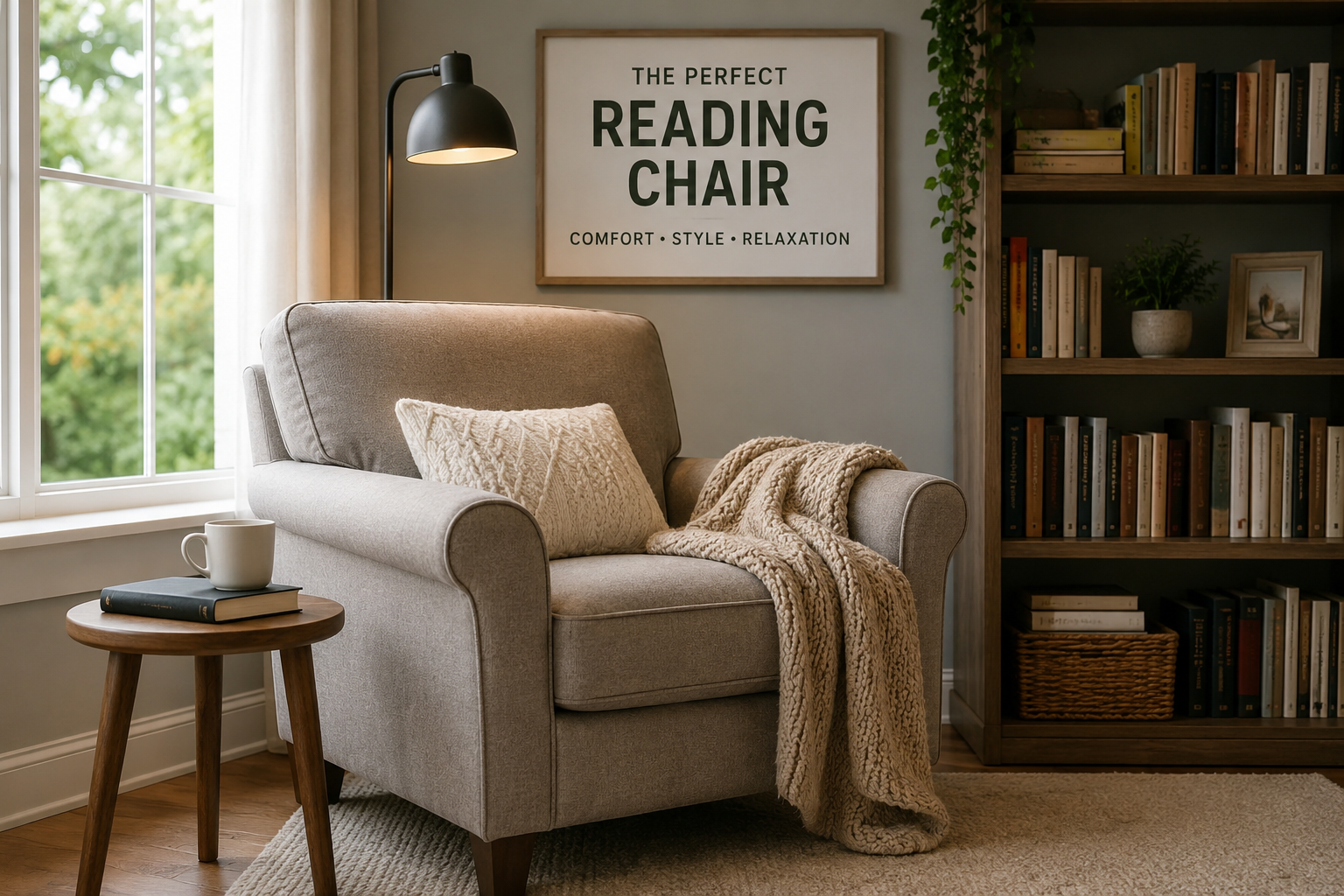
A good reading chair should do more than look attractive in a living room or bedroom. It should support your back, keep you comfortable through long chapters, fit naturally into your space, and suit the way you actually like to read.
The wrong chair can be too deep, too upright, too soft, or simply too large for the room. The right one can turn an unused corner into a relaxing reading nook where you can comfortably spend an hour—or an entire afternoon—with a book.
Whether you prefer an upright armchair, a reclining chair, an oversized lounge chair, or a compact swivel design, the best choice depends on your body, reading position, room size, and budget. This guide explains what to look for so you can choose a comfortable reading chair with confidence.
What Makes a Good Reading Chair?
The most comfortable reading chair isn’t necessarily the softest or most expensive. Good design comes from balancing support, proportions, cushioning, and usability.
Comfortable Seat
The seat should provide enough cushioning without allowing you to sink so deeply that getting up becomes difficult. A medium-firm cushion is often a practical choice for readers who spend extended periods in the chair.
Pay attention to the usable seat area rather than the chair’s overall dimensions. Thick back cushions can make a chair look spacious while leaving less room for your legs.
Supportive Backrest
A supportive backrest helps you maintain a comfortable reading position. High-back chairs can provide additional support around the shoulders and upper back, while lower-back designs may work well for shorter reading sessions or more relaxed spaces.
Practical Armrests
Armrests are particularly useful when you’re holding a hardcover book, e-reader, or tablet. They should allow your arms to rest naturally without forcing your shoulders upward.
Appropriate Recline
Some readers prefer sitting upright, while others enjoy leaning back with their feet elevated. A recliner or lounge chair can be particularly useful if you like changing positions while reading.
Types of Reading Chairs to Consider
Different chair styles suit different readers. Think about how you use the chair before choosing one based purely on appearance.
| Chair Type | Best For | Main Advantage | Potential Drawback |
| Armchair | Everyday reading | Balanced support | Can take up moderate space |
| Recliner | Long relaxing sessions | Adjustable position | Requires extra clearance |
| Swivel chair | Flexible spaces | Easy movement | May have a more contemporary look |
| Wingback chair | Upright reading | High-back support | Can look bulky |
| Lounge chair | Relaxed reading | Deep comfort | May encourage slouching |
| Oversized chair | Curling up | Generous seating | Large footprint |
| Rocking chair | Relaxation | Gentle movement | Needs rear clearance |
Armchair
A traditional armchair is one of the most versatile choices. It works in bedrooms, living rooms, home offices, and dedicated libraries.
Choose one with a supportive back, comfortable seat depth, and armrests that allow you to hold a book naturally.
Recliner
A recliner is ideal if you like to lean back or elevate your legs. It can be particularly comfortable for long reading sessions.
Before buying, however, measure the space behind and in front of the chair. A reclining mechanism needs more room than a stationary chair.
Swivel Chair
A swivel reading chair can be useful in an open-plan room. You can turn toward a window, bookshelf, floor lamp, or another part of the room without moving the entire chair.
Wingback Chair
Wingback chairs combine a distinctive traditional appearance with substantial back support. They’re a good choice when you want your reading corner to have a strong visual presence.
Oversized Reading Chair
If you enjoy sitting cross-legged, curling up, or changing positions frequently, an oversized chair can provide plenty of room.
The trade-off is size. Measure your room carefully before bringing one home.
How to Choose the Right Reading Chair Size
Chair dimensions can make the difference between genuine comfort and a chair that looks good but feels awkward.
Seat Height
Seat height affects how easily your feet rest on the floor and how naturally your knees are positioned.
Rather than looking for one universal measurement, consider your height and leg length. A chair that works beautifully for one person may feel too high or too low for another.
Seat Depth
Seat depth is especially important.
If the seat is too shallow, you may not receive enough thigh support. If it’s too deep, shorter users may have trouble sitting against the backrest while keeping their feet comfortably supported.
When testing a chair, sit all the way back. Ideally, your back should contact the backrest while your legs remain comfortably supported.
Seat Width
A wider seat gives you more freedom to move, particularly if you like sitting cross-legged. However, excessive width isn’t always beneficial. A chair that’s much wider than necessary can take up valuable floor space.
Back Height
A low-back chair may suit casual reading, while a high-back reading chair can provide greater upper-body support.
Consider whether you want support around your shoulders and upper back or prefer a more open, lightweight appearance.
Armrest Height
Armrests should let your elbows and forearms rest comfortably. If they’re too high, your shoulders may feel tense. If they’re too low, they may provide little useful support.
How to Choose a Reading Chair for Your Body Type
Your body proportions matter just as much as the chair’s design.
For Tall People
Tall readers often benefit from:
- Deeper usable seats
- Higher backrests
- Adequate leg support
- Comfortable arm height
- Sufficient overall seat width
Don’t assume a large-looking chair automatically provides enough usable space. Check the actual seat measurements.
For Shorter People
Shorter readers should be particularly careful with excessive seat depth. If your feet don’t sit comfortably on the floor when your back is against the backrest, the chair may be too deep or tall.
A properly sized footrest can sometimes improve comfort, but it shouldn’t compensate for a fundamentally poor fit.
For Broader Body Types
Look for generous seat width, sturdy construction, appropriately positioned arms, and a clearly stated weight capacity.
Avoid focusing only on the cushion. The frame and overall construction are equally important.
Choose a Reading Chair Based on How You Read
Your reading habits can tell you more about the right chair than its appearance.
If You Sit Upright
Choose a supportive armchair with moderate seat depth, a stable backrest, and comfortable armrests.
This setup is especially suitable for readers who prefer traditional books and a more structured posture.
If You Like to Curl Up
Look for a wider, deeper seat. An oversized reading chair can provide enough space to sit cross-legged or shift positions.
An ottoman can also make a compact chair more versatile.
If You Read for Hours
Prioritize fit over softness. Look for supportive cushioning, appropriate seat depth, a comfortable backrest, and enough room to change positions.
A chair that feels wonderfully soft for five minutes may not necessarily remain comfortable after several hours.
If You Read on a Tablet
Arm support becomes particularly valuable. A slightly reclined chair can also provide a comfortable viewing angle.
Keep a side table nearby for the tablet, charger, water bottle, and other essentials.
Best Materials for a Reading Chair
The upholstery you choose should reflect how frequently you’ll use the chair and how much maintenance you’re willing to perform.
Fabric
Fabric chairs are available in countless colors and textures. They’re often a comfortable choice for bedrooms and cozy reading corners.
Check the manufacturer’s cleaning instructions before purchasing.
Performance Fabric
Performance upholstery can be a practical option for busy households. It’s worth considering if the reading chair will regularly encounter pets, children, food, or drinks.
Leather
Leather can be durable and relatively easy to wipe clean. It also develops a distinctive appearance over time.
However, leather can feel different from fabric depending on the room temperature and finish, so try it before buying if possible.
Velvet and Boucle
These materials can make a reading nook feel luxurious and visually interesting. Their maintenance requirements vary, so check the manufacturer’s care instructions before making a decision.
Reading Chair vs. Recliner vs. Accent Chair
These terms are sometimes used interchangeably, but they describe different things.
A reading chair is primarily defined by its intended use. An accent chair is usually selected to add seating and visual interest to a room. A recliner is defined by its adjustable reclining mechanism.
If reading comfort is your priority, don’t assume an attractive accent chair will automatically work well for long sessions.
How to Choose a Reading Chair for a Small Space
A small room doesn’t mean you need to give up your reading corner.
Start by measuring the complete area available for the chair. Then account for the side table, floor lamp, ottoman, and walking space.
Compact armchairs, slipper chairs, and smaller swivel chairs can work well in apartments, bedrooms, and home offices.
Avoid judging size from photographs. Thick arms and oversized cushions can significantly increase a chair’s footprint.
Practical example: In a small bedroom corner, a compact upholstered chair paired with a narrow side table and adjustable floor lamp can create a functional reading nook without consuming the entire room.
How to Create a Comfortable Reading Nook
A great reading chair is only the foundation.
Add the Right Lighting
Natural light is excellent during the day, but you’ll need dedicated lighting after sunset. An adjustable floor lamp or reading lamp can direct light toward the page without illuminating the entire room.
Add a Side Table
Keep essentials within easy reach:
- Book
- E-reader
- Glasses
- Drink
- Phone
- Reading light
Choose a table that doesn’t interfere with your arm movement.
Consider an Ottoman
An ottoman can improve relaxation by supporting your feet. It’s particularly useful with a stationary armchair.
For very small spaces, consider a compact footstool that can slide underneath a table when not in use.
Use a Rug
A small rug can visually define the reading area and make a chair feel more connected to the rest of the room.
Common Reading Chair Buying Mistakes
Buying Only for Appearance
A beautiful chair isn’t useful if you can’t comfortably sit in it for an extended period.
Ignoring Seat Depth
This is one of the easiest specifications to overlook. Always check usable seat depth rather than overall chair depth.
Choosing a Chair That’s Too Large
Oversized furniture can make a small room feel crowded and can interfere with natural walking paths.
Forgetting Recliner Clearance
Measure the chair in both its upright and reclined positions.
Ignoring Maintenance
Light-colored or textured upholstery may require more care than expected. Consider your household before choosing a fabric.
Assuming Soft Means Comfortable
Excessive softness can reduce support. Comfort comes from the relationship between cushioning, structure, dimensions, and your body.
How Much Should You Spend on a Reading Chair?
There’s no single ideal budget.
Entry-Level
Focus on basic comfort, sturdy construction, and practical upholstery.
Mid-Range
You may gain better cushioning, stronger construction, improved fabrics, and more style options.
Premium
Higher-priced chairs may offer superior materials, customization, craftsmanship, and longer-lasting construction.
When spending more, prioritize the parts you actually use: the frame, cushioning, upholstery, and overall fit.
How to Test a Reading Chair Before Buying
If possible, spend several minutes testing the chair rather than sitting down for only a few seconds.
- Sit all the way back. Does your back contact the backrest comfortably?
- Check your feet. Can they rest naturally?
- Hold a book. Are your arms and shoulders relaxed?
- Lean back. Does the chair remain supportive?
- Change positions. Can you move comfortably?
- Check the armrests. Do they support your arms without raising your shoulders?
If you’re buying online, compare the published dimensions with a chair you already own. This gives you a more realistic idea of the new chair’s proportions.
Reading Chair Maintenance Tips
Regular care can help preserve both comfort and appearance.
For fabric upholstery, vacuum regularly and clean spills promptly according to the manufacturer’s instructions.
For leather, remove dust regularly and use only products recommended for the specific finish.
For removable cushions, follow the manufacturer’s guidance about rotating or fluffing them.
For swivel or reclining chairs, keep moving parts clear and follow the manufacturer’s maintenance instructions.
Conclusion
The best reading chair is the one that fits your body, reading habits, room, and lifestyle—not necessarily the most expensive or fashionable option.
Start with the fundamentals: seat height, usable seat depth, seat width, back support, armrest position, and overall footprint. Then consider whether you prefer an armchair, recliner, swivel chair, wingback, or oversized design.
Finally, complete the experience with good lighting, a practical side table, and enough space to relax. When comfort and function come first, even a small corner can become a reading nook you’ll genuinely want to use.
Frequently Asked Questions
What is the most comfortable type of reading chair?
The most comfortable type depends on your preferred reading position and body proportions. A supportive armchair works well for upright reading, while a recliner or oversized lounge chair may suit people who prefer to lean back or curl up.
What size should a reading chair be?
There is no universal size. Pay particular attention to seat height, usable seat depth, seat width, and back height. The chair should fit both your body and the available floor space.
Is a recliner good for reading?
Yes. A recliner can be an excellent reading chair if you enjoy adjustable positioning or elevated legs. Make sure there is enough space for the mechanism to operate safely and comfortably.
What is the best reading chair for a small space?
Compact armchairs, slipper chairs, and smaller swivel chairs are good options. Measure the entire reading area, including clearance for a side table, lamp, and walking path.
Should a reading chair have a high back?
A high back can provide more upper-body support, but it isn’t essential for everyone. Your height, preferred posture, and the length of your reading sessions should influence the decision.
Is a deep chair good for reading?
A deep chair can be comfortable for taller people or readers who like to curl up. However, excessive depth can make it difficult for shorter users to sit against the backrest while keeping their feet comfortably positioned.
Do I need an ottoman with a reading chair?
Not necessarily. An ottoman is useful if you enjoy elevating your feet, but a reading chair can be perfectly comfortable without one. In a small room, a compact footrest may be a better choice.