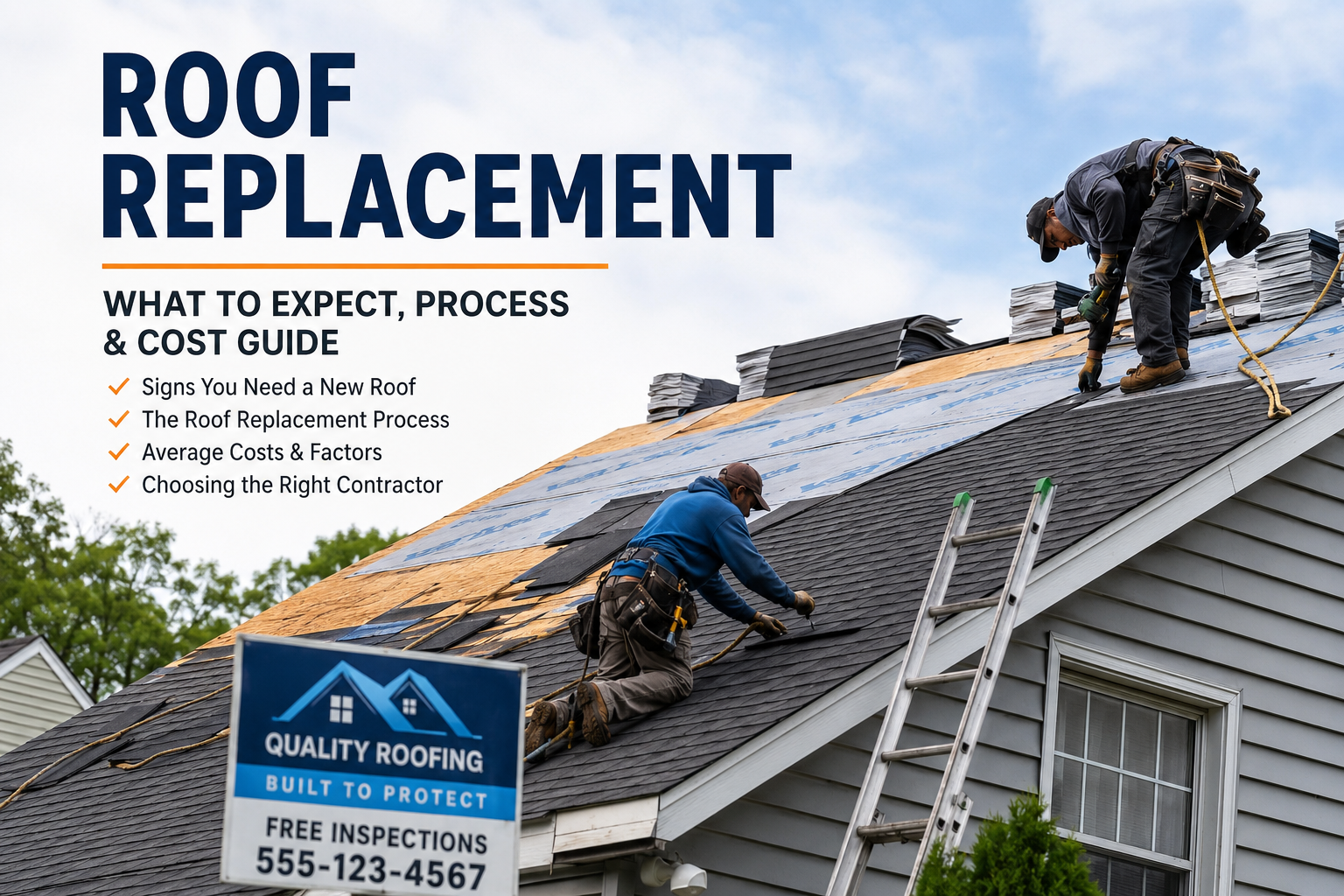
A roof replacement is one of the most important investments you can make in your home. Your roof protects the structure, interior, insulation, and belongings from rain, wind, heat, and other weather conditions. When it begins to fail, delaying action can lead to leaks, water damage, mold, and costly structural repairs.
However, deciding to replace a roof is not always straightforward. Homeowners often wonder whether a repair is enough, how much a new roof will cost, how long the project will take, and what happens during installation.
This guide explains everything you need to know about roof replacement, from recognizing the warning signs to choosing materials, comparing estimates, preparing your home, and inspecting the finished work.
What Is Roof Replacement?
A roof replacement involves removing and replacing some or all of the existing roofing system. While many people think of a roof as simply a layer of shingles, a complete roofing system may include several important components.
These can include:
- Roofing materials, such as shingles, metal, tile, or slate
- Underlayment
- Flashing around vulnerable areas
- Drip edges
- Ventilation components
- Roof decking when damaged
The exact scope of a roof replacement depends on the condition of the existing roof and the materials being installed.
Roof Replacement vs. Roof Repair
A roof repair addresses a specific problem, while replacement is usually considered when damage is widespread or the roof is approaching the end of its useful life.
| Factor | Roof Repair | Roof Replacement |
| Best for | Localized damage | Widespread or recurring problems |
| Upfront cost | Usually lower | Usually higher |
| Project time | Often shorter | More extensive |
| Effect on lifespan | Extends the existing roof | Provides a new roofing system |
| Best for an aging roof | May be temporary | Often a better long-term solution |
For example, replacing a few damaged shingles may be practical after a minor storm. If the roof has repeated leaks, extensive shingle damage, or widespread wear, a full roof replacement may provide better long-term value.
Signs You May Need a Roof Replacement
A roof does not always fail suddenly. In many cases, it provides warning signs before a major problem develops.
Your Roof Is Near the End of Its Expected Lifespan
Different roofing materials have different expected service lives. Climate, installation quality, maintenance, ventilation, and storm exposure can also affect how long a roof lasts.
If your roof is older and beginning to show multiple signs of deterioration, replacement may be worth considering.
Frequent Roof Leaks
One isolated leak may be repairable. Repeated leaks in different areas, however, can indicate that the roofing system is reaching the end of its useful life.
Water stains on ceilings, damp insulation, or moisture in the attic should be inspected promptly.
Missing, Curling, or Cracked Shingles
Damaged shingles can allow water to reach underlying layers. A few affected shingles may be repaired, but widespread cracking, curling, or loss can indicate a larger problem.
Granule Loss
Asphalt shingles contain protective granules. Finding excessive amounts in gutters or around downspouts may indicate advanced wear.
Sagging Roof Areas
A sagging roof can point to serious problems involving the decking or supporting structure. This should be evaluated by a qualified professional as soon as possible.
Repeated Repairs Are Adding Up
Consider a homeowner who has paid for several roof repairs over the past few years. Each repair may temporarily solve a problem, but the combined cost can eventually make a new roof the more practical choice.
A professional inspection can help determine whether continued repairs make financial sense.
When Should You Repair Instead of Replace Your Roof?
Roof replacement is not always necessary.
A repair may be appropriate when:
- Damage is limited to one small area
- The roof is relatively new
- A few shingles are missing or damaged
- Flashing needs localized repair
- A minor leak has a clearly identifiable cause
Replacement may be the better option when:
- Damage is widespread
- Leaks continue to return
- The roof is near the end of its expected lifespan
- Large areas require repair
- Underlying materials have significant damage
- Repair costs are becoming excessive
The best decision should be based on the overall condition of the roof rather than a single visible problem.
The Roof Replacement Process: Step by Step
Understanding the process can help homeowners prepare for a smoother project.
Step 1: Professional Roof Inspection
The process usually begins with a detailed assessment. A professional may inspect the exterior roofing material, flashing, gutters, attic space, ventilation, and areas showing signs of moisture.
This inspection helps determine whether repair or replacement is the appropriate solution.
Step 2: Choosing a Roofing Material
Material selection can affect the appearance, durability, maintenance requirements, and overall cost of your roof replacement.
Important factors include:
- Budget
- Local climate
- Roof slope
- Architectural style
- Maintenance preferences
- Weight limitations
Step 3: Receiving and Comparing Estimates
A detailed estimate should clearly explain the scope of work.
Look for information about:
- Roofing materials
- Tear-off and disposal
- Underlayment
- Flashing
- Ventilation
- Decking repairs
- Permits
- Cleanup
- Labor
- Warranty coverage
Avoid comparing estimates based only on the final price. A lower quote may exclude important work or use different materials.
Step 4: Permits and Scheduling
Depending on local requirements, permits may be necessary before work begins. Your contractor should clearly explain who is responsible for permits and inspections.
Scheduling can also depend on weather, material availability, and project complexity.
Step 5: Preparing Your Property
Before work begins, homeowners should:
- Move vehicles away from the work area
- Remove or protect outdoor furniture
- Secure fragile items in the attic
- Prepare pets for noise and activity
- Inform nearby neighbors
- Make sure the crew can access the property
Step 6: Removing the Old Roofing Materials
The existing roofing material may be removed to expose the underlying roof deck.
This stage can be noisy and may create vibration inside the home.
Step 7: Inspecting the Roof Deck
Once the old roofing material is removed, the contractor can inspect the decking.
Damaged or deteriorated areas may need repair before the new roof is installed. This is why unexpected issues can sometimes affect the final project cost.
Step 8: Installing Underlayment and Flashing
Underlayment provides an additional layer of protection beneath the visible roofing material.
Flashing is installed around vulnerable areas, such as:
- Chimneys
- Roof valleys
- Vents
- Skylights
- Roof-to-wall intersections
Step 9: Installing the New Roof
The new roofing material is installed according to the product specifications and the roof design.
Proper installation is just as important as choosing a high-quality material.
Step 10: Cleanup and Final Inspection
After installation, the work area should be cleaned and debris removed.
A final inspection should confirm that the roof system, flashing, ventilation, and surrounding areas have been completed properly.
How Much Does Roof Replacement Cost?
There is no single price for every roof replacement. Costs can vary significantly depending on the home and project requirements.
Factors That Affect Roof Replacement Cost
The main cost factors include:
- Roof size
- Roof pitch
- Roof complexity
- Roofing material
- Labor costs
- Number of existing roofing layers
- Decking repairs
- Flashing and ventilation work
- Permit requirements
- Geographic location
- Debris disposal
Understanding Roofing Squares
Roofing contractors may measure roof area in squares.
One roofing square equals 100 square feet of roofing area.
This measurement helps estimate the amount of materials and labor required.
Potential Additional Costs
Some expenses may not be fully known until the existing roof is removed.
Examples include:
- Rotted decking
- Hidden water damage
- Structural repairs
- Additional roofing layers
- Flashing replacement
- Permit costs
A clear written estimate should explain how unexpected work will be handled.
How Long Does a Roof Replacement Take?
The timeline depends on several factors.
These include:
- Roof size
- Roof slope
- Roof complexity
- Material type
- Weather conditions
- Crew size
- Decking repairs
A simple residential project may be completed relatively quickly, while a large or complex roof can require additional time.
For example:
Day 1: Material delivery and removal of old roofing
Day 1–2: Deck inspection and preparation
Day 2 or later: New material installation
Final stage: Cleanup and inspection
Actual schedules vary, and weather can cause delays.
Choosing the Best Roofing Material
The right material depends on your budget, climate, design preferences, and long-term goals.
Asphalt Shingles
Asphalt shingles are widely used because they offer a balance of affordability, appearance, and availability.
Metal Roofing
Metal roofing is known for durability and can be a strong option for homeowners focused on long-term performance.
Tile Roofing
Tile offers a distinctive appearance and can provide excellent durability, but it may require a structure capable of supporting its weight.
Slate Roofing
Slate is a premium material known for its appearance and potential longevity. Installation and structural requirements can be more demanding.
Wood Shakes
Wood shakes provide a natural appearance but may require more maintenance and may not be suitable for every climate or location.
Synthetic Roofing
Synthetic materials can offer alternatives designed to resemble slate, wood, or other premium roofing products.
| Roofing Material | Cost Level | Durability | Maintenance | Best For |
| Asphalt shingles | Low to medium | Moderate | Low | Many residential homes |
| Metal | Medium to high | High | Low | Long-term durability |
| Tile | High | High | Moderate | Architectural styles requiring tile |
| Slate | Very high | Very high | Low | Premium homes |
| Wood shakes | Medium to high | Moderate | High | Natural appearance |
| Synthetic | Varies | High | Low to moderate | Alternative material options |
How to Choose a Roof Replacement Contractor
Choosing the right contractor is one of the most important parts of the project.
Verify Licensing and Insurance
Ask the contractor about required licensing and insurance coverage.
Insurance may include:
- General liability coverage
- Workers’ compensation coverage
Requirements vary by location, so homeowners should verify what applies in their area.
Compare Multiple Written Estimates
A written estimate should clearly identify the materials and scope of work.
Compare the full project, including:
- Material quality
- Tear-off
- Underlayment
- Flashing
- Ventilation
- Cleanup
- Permits
- Warranty coverage
Ask Who Will Perform the Work
Ask whether the contractor uses employees, subcontractors, or both.
You should also know who will supervise the project.
Understand the Warranty
Roof warranties may include manufacturer coverage and workmanship coverage.
Read the terms carefully to understand what is covered, what is excluded, and how long coverage lasts.
How to Compare Roof Replacement Estimates
The lowest quote is not always the best value.
Use a comparison checklist when reviewing estimates:
| Estimate Item | What to Verify |
| Roofing material | Exact brand and product |
| Tear-off | Whether old materials will be removed |
| Underlayment | Product type and installation |
| Flashing | Whether replacement is included |
| Ventilation | Whether upgrades are recommended |
| Decking | How additional repairs are priced |
| Permit | Who is responsible |
| Cleanup | Debris and nail removal |
| Warranty | Manufacturer and workmanship coverage |
| Total cost | Full project price |
Be cautious if an estimate is vague, lacks material details, or does not clearly define the scope of work.
Does Insurance Cover Roof Replacement?
Insurance coverage depends on the policy and the cause of the damage.
Coverage may vary based on:
- Storm damage
- Wind damage
- Hail
- Fire
- Roof age
- Policy exclusions
- Maintenance history
- Deductibles
A claim may be handled differently depending on whether the damage resulted from a covered event or gradual deterioration.
Review your policy carefully and contact your insurance provider if you believe you have a covered loss.
How to Prepare Your Home for Roof Replacement
Good preparation can help protect your property and make the project easier for the installation crew.
Inside Your Home
- Secure fragile wall decorations
- Remove valuable items from the attic
- Prepare for noise and vibration
- Keep children away from work areas
Outside Your Home
- Move vehicles away from the driveway
- Protect or relocate outdoor furniture
- Secure valuable outdoor items
- Make access easier for the crew
Prepare Pets
Roofing work can be loud and stressful for pets. Consider keeping them in a quiet room or arranging another location during the noisiest stages.
Inform Your Neighbors
Let nearby neighbors know when work is scheduled. This is particularly helpful when parking, noise, or material delivery may temporarily affect the area.
What to Expect After Your Roof Replacement
Once installation is complete, conduct a final walkthrough with the contractor when possible.
Confirm that:
- The work area has been cleaned
- Debris has been removed
- Nails have been collected
- Gutters are free from construction debris
- Warranty information has been provided
- Required inspections have been completed
Keep all project documents, including the contract, invoices, permits, inspection records, and warranty information.
How to Make Your New Roof Last Longer
A new roof still needs regular care.
Good maintenance practices include:
- Cleaning gutters
- Removing debris
- Checking for visible damage after storms
- Maintaining proper attic ventilation
- Scheduling periodic inspections
- Addressing minor problems before they become larger
Routine maintenance can help protect your investment and identify problems early.
Common Roof Replacement Mistakes to Avoid
Choosing a Contractor Based Only on Price
The lowest bid may not include the same materials, workmanship, or scope as a higher estimate.
Ignoring Ventilation
A roofing system should be evaluated as a whole. Poor ventilation can contribute to moisture and heat problems.
Accepting a Vague Estimate
Make sure the estimate identifies the exact work being performed.
Ignoring the Warranty Terms
Ask questions before signing the contract rather than discovering limitations after the project is complete.
Delaying Necessary Replacement
Waiting too long can allow water damage and other problems to spread beyond the roof.
Conclusion
A roof replacement is a major home improvement project, but understanding the process can help you make a confident decision. Start by determining whether replacement is truly necessary, compare detailed estimates, choose a material that suits your home and climate, and work with a qualified contractor.
The best approach is to look beyond price alone. A clear scope of work, quality installation, appropriate materials, proper ventilation, and reliable warranty coverage can all affect the long-term performance of your new roof.
Roof Replacement FAQs
How do I know if I need a roof replacement?
Common warning signs include repeated leaks, widespread shingle damage, sagging areas, extensive granule loss, and a roof approaching the end of its expected lifespan. A professional inspection can help determine whether repair or replacement is appropriate.
How much does a roof replacement cost?
The cost depends on factors such as roof size, slope, complexity, materials, labor, tear-off requirements, and any necessary structural repairs.
How long does it take to replace a roof?
The timeline varies depending on the roof size, materials, weather, crew size, and unexpected repairs. Smaller, straightforward projects may take less time than large or complex roofs.
Can I stay in my house during a roof replacement?
In many cases, homeowners can remain in the home. However, the work can be noisy and create vibration, which may be difficult for young children, pets, or people sensitive to noise.
What is included in a full roof replacement?
The project may include removing old roofing materials, inspecting the decking, replacing damaged components, installing underlayment and flashing, installing the new roofing material, and completing cleanup and inspection.
Should I repair or replace my roof?
Repairs may be appropriate for localized damage on a relatively healthy roof. Replacement may provide better long-term value when the roof is old, repeatedly leaking, or experiencing widespread deterioration.
Does homeowners insurance cover roof replacement?
Coverage depends on the policy and cause of the damage. Some policies may cover damage from specific events, while normal aging and lack of maintenance may not be covered. Always review your individual policy.