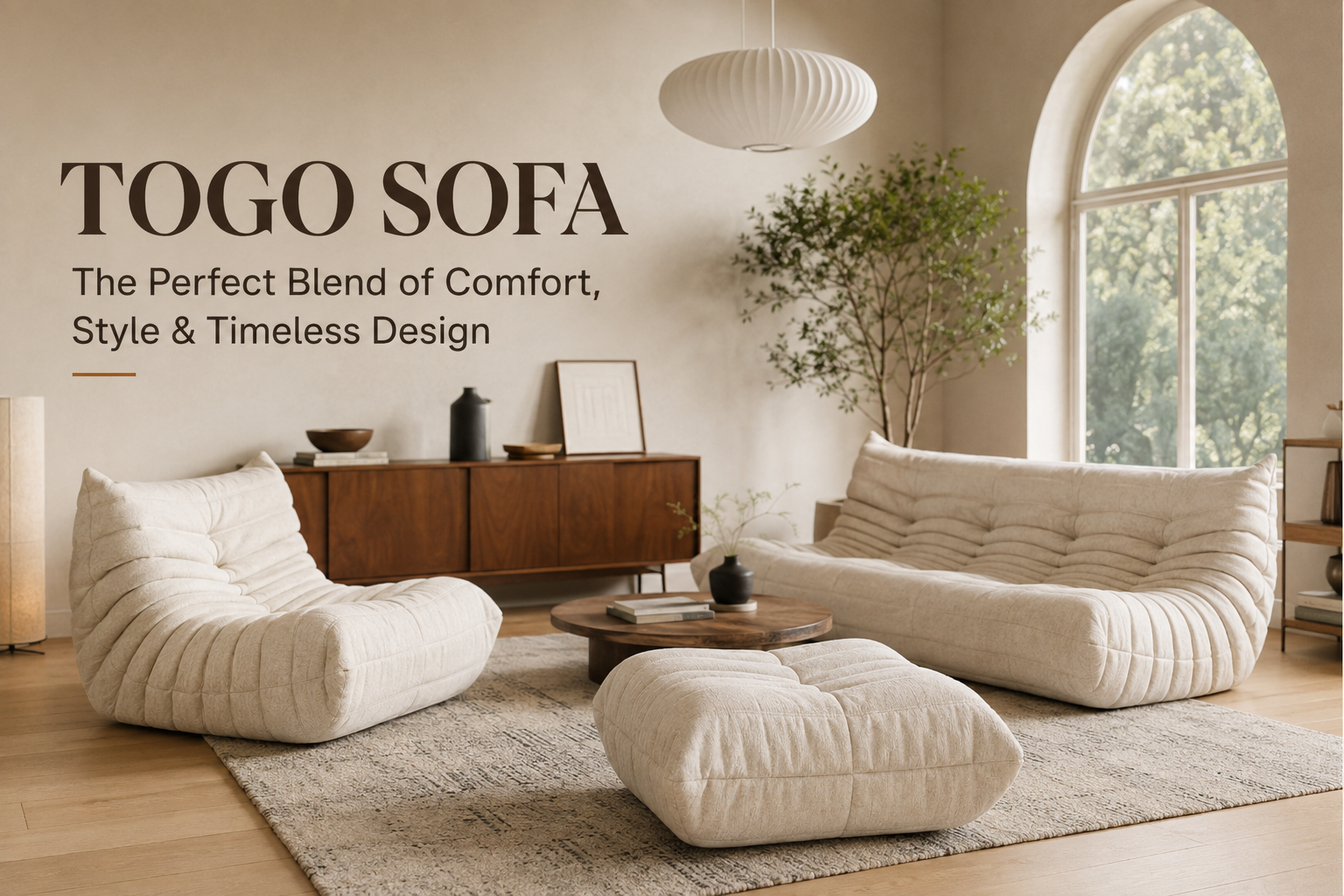
A Togo sofa is more than a recognizable piece of furniture. With its low profile, deep seat, soft curves, and distinctive quilted upholstery, it has become one of the most recognizable designs in modern interiors. Originally introduced in the 1970s, the Togo continues to appear in contemporary homes because it combines sculptural design with a relaxed, lounge-focused feel.
But is a Togo sofa actually practical? Is it comfortable for everyday use? How much space does it need, and how can you tell an authentic piece from a Togo-style replica?
This guide covers the essentials, from its history and construction to styling ideas, maintenance, buying considerations, and the pros and cons you should know before making a decision.
What Is a Togo Sofa?
The Togo is a low-slung, soft-sided sofa known for its unconventional shape. Unlike many traditional sofas that rely on a rigid frame, the original design uses layered foam to create its structure and cushioning.
Its most recognizable characteristics include:
- Very low seating
- Deep, relaxed cushions
- Curved, sculptural contours
- Quilted upholstery
- A frameless or foam-based construction
- Modular seating options
- A casual, lounge-oriented appearance
The result is furniture that looks almost as comfortable as it feels. Instead of encouraging formal, upright sitting, a Togo sofa is designed around relaxation.
Its unusual proportions are also part of its appeal. In a room filled with conventional furniture, the Togo can immediately become the focal point.
The History of the Togo Sofa
Who designed the Togo sofa?
The Togo was designed by French designer Michel Ducaroy and introduced in 1973 through French furniture company Ligne Roset.
Ducaroy was interested in experimenting with new materials and alternative approaches to furniture construction. Rather than simply modifying the traditional framed sofa, he created a design based heavily on foam and flexible upholstery.
The result was something very different from the structured sofas common at the time.
Why does the Togo look like a tube of toothpaste?
One of the most famous stories surrounding the design is that its unusual shape was inspired by a partially squeezed tube of toothpaste.
That inspiration helps explain the Togo’s rounded, folded appearance. Its deliberately relaxed form became one of its defining visual characteristics.
The design was unconventional when it first appeared, but its originality helped it become a lasting piece of furniture design.
Why Is the Togo Sofa Still Popular?
The Togo sofa has experienced renewed interest as homeowners and designers have embraced low-profile, comfortable furniture.
Several factors contribute to its popularity.
First, it looks distinctive. The sofa doesn’t disappear into a room like an ordinary sectional. Its sculptural form can serve as an architectural element.
Second, it suits today’s emphasis on relaxed living. Many modern living rooms are designed around movie nights, conversation, reading, and casual entertaining rather than formal sitting.
Finally, the Togo works with several interior styles. It can complement minimalist, contemporary, retro, eclectic, and organic-modern spaces depending on its upholstery and surrounding furniture.
Is a Togo Sofa Comfortable?
For many people, comfort is one of the biggest reasons to choose a Togo sofa.
Its deep, soft seating encourages a relaxed posture. Instead of sitting upright with your feet firmly on the floor, you can sink into the cushions and lounge.
This makes a Togo particularly appealing for:
- Watching movies
- Reading
- Casual conversations
- Relaxing after work
- Family lounging
- Informal entertaining
However, comfort is subjective.
The very low seat can be difficult for someone who prefers a higher sitting position. People with mobility concerns or those who frequently need to stand and sit may prefer a more traditionally structured sofa.
Is a Togo sofa comfortable for everyday use?
It can be, especially if your household prioritizes lounging over formal seating. Before buying one, however, consider the height and depth of the seat rather than judging comfort from photographs alone.
If possible, test the sofa in person or carefully review its measurements.
Togo Sofa Sizes and Configurations
One of the most useful features of the Togo concept is its modularity. Instead of being limited to one fixed arrangement, different pieces can be combined to create a larger seating configuration.
Depending on the specific collection or seller, configurations can include individual seats, larger sofas, corner pieces, and ottomans.
How do you choose the right configuration?
Start with your room rather than the sofa.
Measure:
- Available floor space
- Doorways and hallways
- Walking paths
- Existing furniture
- Distance from the television or coffee table
- The number of people who will regularly use the sofa
A large modular arrangement may look spectacular in an open-plan room but overwhelm a compact apartment.
| Space | Practical Approach | Main Goal |
| Small living room | Compact piece or limited configuration | Preserve circulation |
| Medium room | Two- or three-piece arrangement | Balance seating and space |
| Large room | Larger modular setup | Create a defined lounge zone |
| Media room | Deep, relaxed configuration | Maximize comfort |
Don’t forget to measure the route into the room. A sofa that fits the floor plan can still be difficult to deliver through narrow doors or stairways.
How to Style a Togo Sofa
A Togo sofa has enough personality to become the centerpiece of a room. The key is to complement its distinctive shape rather than competing with it.
Togo sofa in a modern living room
Pair it with simple furniture, clean lines, and a restrained color palette. A minimal coffee table and uncluttered walls can allow the sofa’s shape to stand out.
Togo sofa in an organic-modern room
Natural materials work particularly well with the sofa’s soft silhouette.
Consider combining it with:
- Wood
- Stone
- Textured rugs
- Natural fabrics
- Plants
- Warm neutral colors
Togo sofa in a small living room
A small space doesn’t automatically rule out a Togo. The trick is controlling visual clutter.
Choose appropriately scaled pieces and leave enough space for people to walk around the seating area. Avoid filling every available corner with additional furniture.
What coffee table works with a Togo sofa?
Low-profile coffee tables are a natural match. Round, oval, organic-shaped, or simple wooden tables can soften the room while maintaining the relaxed character of the sofa.
Togo Sofa Materials and Upholstery
The upholstery you choose affects both appearance and maintenance.
Fabric upholstery
Fabric can emphasize the Togo’s casual, tactile character. It is available in many colors and textures, making it easier to adapt the sofa to different interior schemes.
However, fabric requires appropriate care, particularly in homes with children or pets.
Leather upholstery
Leather can give the sofa a more sophisticated appearance and develops its own character over time. It may also require a different maintenance routine from fabric.
There is no universally “best” upholstery. Consider your lifestyle, cleaning preferences, room design, and expected level of use.
How to Clean and Maintain a Togo Sofa
Because the Togo is designed around soft upholstery and foam, proper maintenance matters.
For everyday care:
- Vacuum the upholstery regularly.
- Remove crumbs and dust before they accumulate.
- Deal with spills promptly.
- Follow the care instructions for the specific upholstery.
- Avoid soaking the cushions.
- Test any cleaning method in an inconspicuous area when appropriate.
Don’t assume that a cleaning method suitable for one fabric will work for another. Upholstery materials can respond very differently to moisture and cleaning products.
For valuable vintage or authentic furniture, professional upholstery or cleaning advice may be preferable when dealing with significant stains or damage.
Authentic Togo Sofa vs Replica: What’s the Difference?
This is an important consideration because many products are marketed as Togo-style sofas, replicas, dupes, or inspired designs.
An authentic Togo has a specific design history and manufacturer provenance. A Togo-style sofa may borrow its low profile, curves, quilting, or foam construction without being the original product.
When evaluating a vintage or secondhand piece, consider:
- Manufacturer labeling
- Seller reputation
- Provenance
- Upholstery condition
- Stitching and construction
- Foam condition
- Overall wear
- Documentation where available
Be cautious about sellers who make strong authenticity claims without evidence.
A low price alone doesn’t prove that something is fake, just as a high price doesn’t automatically prove authenticity.
How Much Does a Togo Sofa Cost?
There isn’t one universal price for a Togo sofa.
Cost can vary based on whether you’re purchasing an authentic new piece, a vintage example, or a Togo-inspired alternative. Size, configuration, upholstery, condition, and seller can also affect the price.
| Type | General Positioning | What to Consider |
| Authentic new | Premium | Design provenance and investment |
| Vintage authentic | Variable | Condition and authenticity |
| Togo-inspired | More accessible | Materials and construction |
| Budget replica | Lower cost | Quality can vary substantially |
Because prices change, check current listings and manufacturer or retailer information before making a purchase rather than relying on an outdated price estimate.
Togo Sofa Pros and Cons
Pros
- Iconic and distinctive design
- Excellent for relaxed lounging
- Flexible modular configurations
- Works with many interior styles
- Strong design heritage
- Can become a room’s focal point
Cons
- Very low seating position
- May not suit people who prefer upright seating
- Authentic versions can be expensive
- Upholstery requires appropriate care
- Large configurations need significant space
- Deep seating isn’t ideal for every user
The biggest mistake is assuming that because a sofa is fashionable, it will automatically work for your lifestyle.
Is a Togo Sofa Right for You?
A Togo sofa could be a good fit if you value comfort, informal living, distinctive furniture, and flexible interior design.
It may be less suitable if you prefer a firm, upright seat or need furniture that is especially easy to get in and out of.
Before purchasing, ask yourself:
- Do I enjoy low seating?
- Will I mainly lounge or sit upright?
- Does my room have enough space?
- Who will use the sofa every day?
- Can I maintain the upholstery properly?
- Do I want an authentic piece or a Togo-inspired design?
These questions can tell you more than a trend or social-media photograph.
Common Togo Sofa Buying Mistakes
Avoid choosing a Togo sofa based purely on appearance.
Common mistakes include:
- Ignoring seat height
- Not measuring the room
- Forgetting doorway and stairway dimensions
- Buying upholstery without considering daily use
- Assuming every Togo-style sofa is authentic
- Ignoring cleaning requirements
- Choosing a configuration that’s too large
- Focusing only on the purchase price
- Not researching the seller
- Failing to consider how the sofa will work with existing furniture
A few minutes of planning can prevent an expensive furniture mistake.
Conclusion
The Togo sofa has remained relevant because it combines two qualities that don’t always come together: strong visual identity and genuine lounging appeal. Its low profile and unusual foam construction make it unlike a conventional sofa, while its modular nature allows it to adapt to different living spaces.
But it isn’t the right choice for everyone. Its low seating position, premium pricing for authentic versions, and upholstery-care requirements deserve careful consideration.
If the design fits your room and your lifestyle, a Togo sofa can serve as both comfortable everyday furniture and a defining element of your interior.
Togo Sofa FAQs
What is a Togo sofa?
A Togo sofa is a low-profile, soft, sculptural seating design created by French designer Michel Ducaroy. Its distinctive shape, foam-based construction, deep seating, and quilted upholstery make it instantly recognizable.
Why is the Togo sofa so expensive?
Authentic Togo sofas can command premium prices because of their design heritage, construction, materials, craftsmanship, and brand provenance. Vintage condition, upholstery, and configuration can also affect value.
Is a Togo sofa comfortable?
Many people find the Togo extremely comfortable because of its deep, soft, lounge-oriented seating. However, its low profile isn’t ideal for everyone, particularly people who prefer upright or higher seating.
Are Togo sofas good for small living rooms?
They can work in smaller rooms if the configuration is appropriately scaled. Careful measurements and sufficient walking space are essential because the sofa’s deep proportions can quickly dominate a compact room.
How do you clean a Togo sofa?
Cleaning depends on the upholstery. Regular vacuuming and prompt attention to spills are good general practices, but always follow the specific care instructions for the fabric or material before applying cleaning products.
How can you tell if a Togo sofa is authentic?
Check manufacturer labeling, provenance, construction, upholstery, seller information, and supporting documentation when available. Don’t rely on one visual feature or price alone to establish authenticity.
Is a Togo sofa worth buying?
It can be worthwhile for someone who values iconic design and relaxed comfort. Whether it’s worth the investment depends on your budget, room, seating preferences, maintenance expectations, and whether you want an authentic or inspired version.