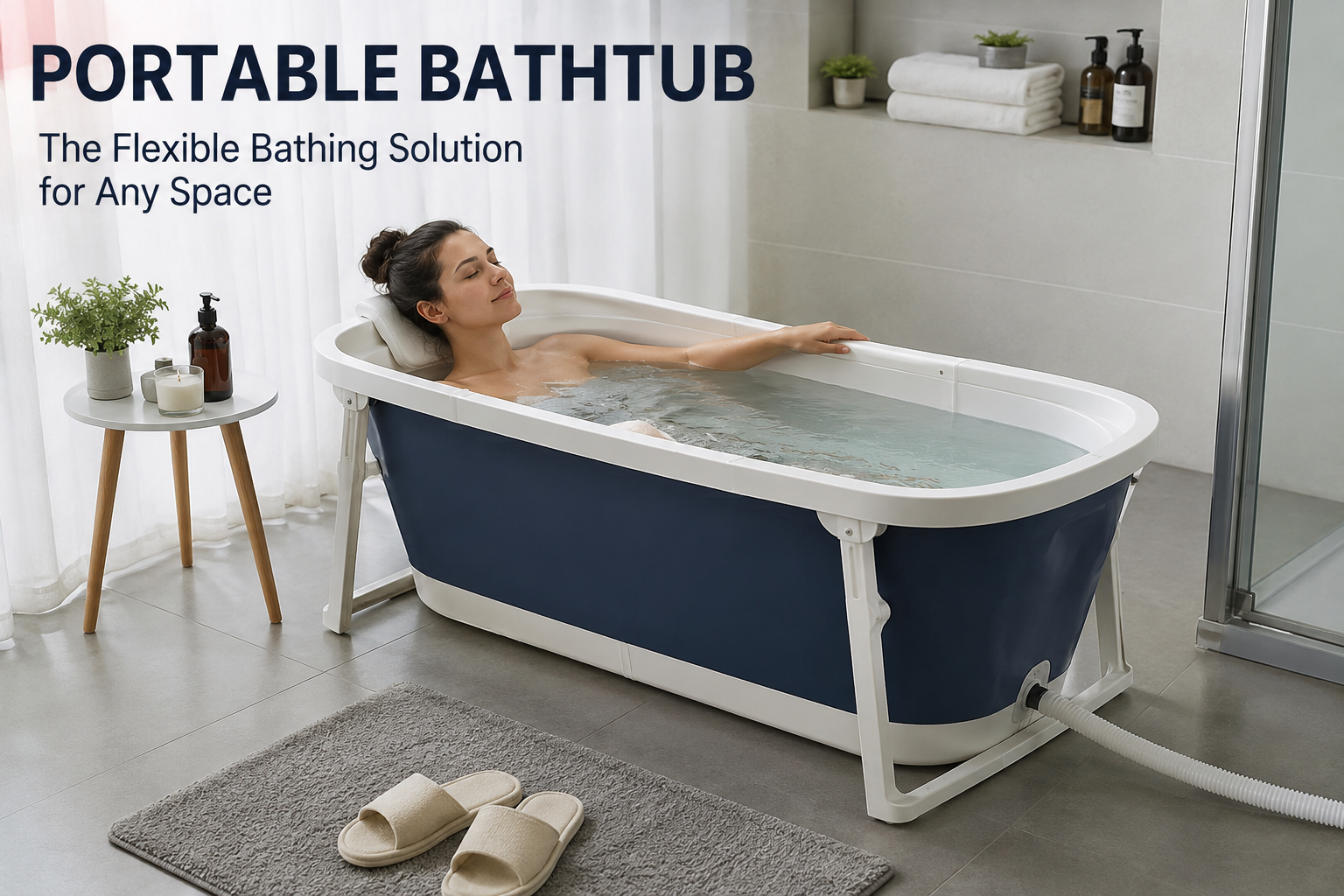
A portable bathtub can be a practical solution when your home does not have a traditional tub, your bathroom is too small for permanent installation, or you simply want a bathing option that can be stored when not in use. Unlike a conventional bathtub, a portable model can generally be folded, collapsed, or deflated and moved when necessary.
However, choosing the right one involves more than finding a tub that fits your budget. You need to consider its interior dimensions, weight capacity, water requirements, drainage, stability, storage size, and how easily you can get in and out.
This guide explains the different types of portable bathtubs, their advantages and drawbacks, safety considerations, and the most important features to check before buying.
What Is a Portable Bathtub?
A portable bathtub is a temporary or movable bathing container designed to provide a bathtub-like experience without permanent bathroom installation. Depending on the design, it may fold flat, collapse into sections, or deflate for storage.
Portable bathtubs are particularly useful for apartments, rental properties, compact bathrooms, homes without conventional bathtubs, and temporary living arrangements.
How Does a Portable Bathtub Work?
Most models are relatively simple to use. You position the tub on a suitable, level surface, unfold or inflate it if necessary, and fill it with water. After bathing, the water is emptied through the built-in drain or a connected drain hose.
The important point is that portable does not necessarily mean lightweight when filled. Water adds substantial weight, so the floor, drainage arrangement, and tub’s maximum capacity should always be considered.
Who Can Benefit From a Portable Bathtub?
A portable bathtub may be useful for:
- Renters who cannot install a permanent tub
- People living in apartments without bathtubs
- Homes with limited bathroom space
- Adults who prefer soaking rather than showering
- People who need an occasional bathing solution
- Temporary accommodation
- Certain home-care situations
Types of Portable Bathtubs
Portable bathtubs come in several designs. Each has different strengths, so the best choice depends on how and where you plan to use it.
Folding Portable Bathtubs
Folding bathtubs use flexible or hinged sections that allow the tub to collapse when it is not being used. They generally offer more structure than inflatable models and can be convenient for regular bathing.
They are a good choice when you want a relatively stable tub but still need to store it afterward.
Inflatable Bathtubs
Inflatable bathtubs use air-filled chambers to create the tub’s structure. They can be particularly convenient where storage space is limited because they can be deflated when not needed.
The trade-off is that they may require inflation before use and need careful handling around sharp objects.
Collapsible Bathtubs
Collapsible designs are made to compress vertically or fold into a smaller footprint. They can be useful in compact bathrooms because they combine a reasonably structured bathing area with easier storage.
Portable Soaking or Plunge Tubs
Some portable tubs are designed primarily for deep soaking or cold-water use rather than a conventional warm bath. Their construction, insulation, and dimensions can differ significantly from standard portable bathtubs.
Before purchasing one, make sure its intended purpose matches how you plan to use it.
Portable Bathtub vs. Traditional Bathtub
| Feature | Portable Bathtub | Traditional Bathtub |
| Installation | Usually minimal | Permanent installation |
| Portability | Can be moved | Fixed in place |
| Storage | Required | Not required |
| Space flexibility | High | Low |
| Rental-friendly | Often suitable | Usually unsuitable |
| Customization | Limited | More options |
| Long-term integration | Limited | Excellent |
A traditional bathtub is generally better for a permanent bathroom, while a portable bathtub offers flexibility.
For example, a renter may not want to spend money modifying a bathroom. A folding bathtub can provide occasional bathing without permanently changing the property.
Benefits of a Portable Bathtub
Saves Space
The biggest advantage is flexibility. When the tub is not being used, many models can be folded, collapsed, or deflated.
This can make a difference in a small apartment or bathroom where every square foot matters.
Useful for Homes Without Bathtubs
If your bathroom only has a shower, a portable bathtub can provide another bathing option without the expense and disruption of remodeling.
Rental-Friendly
Portable designs are often attractive to renters because they do not normally require permanent plumbing or structural changes.
Easy to Store
A collapsible or inflatable design can be stored in a closet, utility area, or other suitable location, provided it is completely dry first.
Flexible for Temporary Use
Portable bathtubs can be useful during temporary accommodation, home renovations, or other situations where a permanent bathtub isn’t practical.
What Are the Downsides?
A portable bathtub isn’t perfect for every household.
Setup and takedown can become inconvenient if you want to bathe several times a day. Some models also require significant storage space despite being described as portable.
Drainage can be another challenge. A large tub may hold a substantial volume of water, and you need somewhere appropriate for that water to go.
Durability also varies. Inflatable designs may be vulnerable to punctures, while folding models can have hinges, seams, or moving components that require proper care.
Most importantly, getting into and out of a deep portable bathtub may be difficult for some users. Portability should never be confused with accessibility.
How to Choose the Right Portable Bathtub
1. Measure Your Available Space
Measure the exact area where you intend to use the tub.
Check:
- Floor width
- Floor length
- Door clearance
- Shower opening
- Drain location
- Faucet or shower reach
- Available storage space
Don’t rely solely on the manufacturer’s external dimensions.
2. Check Interior Dimensions
A large exterior footprint does not necessarily mean a spacious bathing area.
If you are tall, pay particular attention to interior length and usable legroom. Also check the interior width and depth to determine whether the tub will actually be comfortable.
3. Check Weight Capacity
Every portable bathtub should have a specified maximum load or user capacity.
Never assume that a larger-looking tub automatically supports more weight.
4. Consider the Total Filled Weight
Water is surprisingly heavy.
The overall load can be thought of as:
Tub weight + water weight + user’s weight = total load
This matters when deciding where to use the tub. Never place a filled portable bathtub on an unsuitable or elevated surface simply because the empty tub is lightweight.
5. Consider the Material
Common materials include PVC, plastic, TPE, fabric composites, and other flexible or rigid materials.
Flexible materials can improve portability, while more rigid construction may provide greater structure and stability. Always consider durability alongside convenience.
6. Check the Drainage System
Look carefully at the drain location before purchasing.
Ask:
- Is a drain hose included?
- Where does the water exit?
- Can the drain reach your bathroom outlet?
- Will gravity be enough to empty the tub?
- Could the water spill onto the floor?
A great tub becomes inconvenient if you have no practical way to empty it.
Can You Use a Portable Bathtub in a Shower?
In many cases, a portable bathtub may be placed inside a suitable shower area, but you should never assume that every shower can accommodate one.
Measure the shower’s length, width, door opening, and drain location. Consider how much room you need to enter and exit safely.
You should also consider the combined weight of the tub, water, and user, along with the condition and suitability of the floor.
For example, someone with a walk-in shower might be able to use a compact collapsible bathtub, while a small enclosed shower may simply not have enough space.
Portable Bathtub Safety Guide
Safety should be a priority, particularly when using a deep adult portable bathtub.
Check the Weight Limit
Never exceed the manufacturer’s recommended capacity.
Use a Level Surface
Place the tub on a stable, level surface that is appropriate for the filled load.
Prevent Slips
Keep the surrounding bathroom floor as dry as possible. Follow the manufacturer’s guidance regarding non-slip surfaces and accessories.
Don’t Overfill
Use the recommended water level. Overfilling can increase the risk of spills and instability.
Check for Leaks
Inspect seams, drain connections, valves, and flexible sections regularly.
Think About Entry and Exit
A deep tub may be difficult to enter and exit, particularly for older adults or people with limited mobility. Consider whether assistance or a different bathing solution would be more appropriate.
Portable Bathtubs for Seniors and Limited Mobility
A portable bathtub can sometimes provide an alternative bathing arrangement, but accessibility needs should be evaluated carefully.
Look for features such as:
- Stable construction
- Appropriate tub height
- Manageable water depth
- Easy-to-access drainage
- Suitable entry and exit
- Adequate space for assistance when required
For home-care situations, the most important question isn’t simply whether the tub fits the bathroom. It is whether the user can safely transfer into and out of it.
Best Features to Look For
| Feature | Why It Matters |
| Strong construction | Improves stability |
| Adequate interior length | Provides better legroom |
| Suitable depth | Supports comfortable soaking |
| Reliable drainage | Makes emptying easier |
| Durable seams | Helps reduce leaks |
| Foldable design | Simplifies storage |
| Appropriate weight capacity | Supports safe use |
| Good insulation | Can help retain water temperature |
| Easy-clean surfaces | Simplifies maintenance |
How Much Water Does a Portable Bathtub Use?
Water capacity varies according to the tub’s size, shape, depth, and recommended fill level.
A larger adult portable bathtub can require considerably more water than a compact soaking model. This affects not only water consumption but also filling time, hot-water availability, drainage, and total weight.
Always check the manufacturer’s stated capacity and recommended fill line rather than estimating based solely on external dimensions.
How to Set Up a Portable Bathtub
A typical setup involves:
- Choose a suitable, level location.
- Confirm that the drainage arrangement works.
- Unfold, assemble, or inflate the tub according to instructions.
- Check the seams, drain, and fittings.
- Position the tub correctly.
- Fill it to the recommended level.
- Confirm stability before entering.
- Drain the water completely after use.
- Clean and dry the tub before storing it.
Manufacturer instructions should always take priority because construction and setup procedures vary between models.
How to Clean and Store a Portable Bathtub
Cleaning a portable bathtub after every use can help prevent odors, mold, and mildew.
Drain the water completely, rinse the interior, wipe away moisture, and pay special attention to folds, seams, valves, and drain areas.
Before folding or storing the tub, make sure it is completely dry. Storing a damp bathtub in a closed space can create an environment where mold and mildew develop.
For long-term storage, keep the clean, dry tub away from sharp objects, excessive heat, and anything that could damage its material.
Common Portable Bathtub Buying Mistakes
Avoid these common mistakes:
- Choosing based only on exterior dimensions
- Ignoring interior legroom
- Forgetting the maximum weight capacity
- Not planning where the water will drain
- Assuming every portable tub fits inside a shower
- Forgetting where the tub will be stored
- Buying without checking material quality
- Ignoring drying and maintenance requirements
- Assuming portable automatically means accessible
Taking a few minutes to evaluate these factors can prevent an expensive and frustrating purchase.
Portable Bathtub Use Cases
Apartment Without a Bathtub
Prioritize compact dimensions, easy storage, and straightforward drainage.
Small Bathroom
Choose a model that fits comfortably without blocking access to the toilet, sink, or shower.
Tall Adult
Focus on interior length, width, depth, and legroom rather than exterior measurements.
Rental Property
A foldable or inflatable design may be more practical because it doesn’t require permanent remodeling.
Home-Care Situation
Focus first on stability, safe entry and exit, appropriate depth, and the user’s individual mobility needs.
Portable Bathtub Buying Checklist
Before purchasing, check:
- Exterior dimensions
- Interior dimensions
- Maximum weight capacity
- Tub weight
- Water capacity
- Drain location
- Drain hose
- Folded or deflated dimensions
- Material
- Stability
- Cleaning requirements
- Warranty
- Return policy
- Manufacturer instructions
Conclusion
A portable bathtub can be an excellent solution for people who want the comfort of soaking without installing a permanent bathtub. Folding, inflatable, and collapsible designs offer different combinations of portability, stability, comfort, and storage convenience.
The smartest purchase isn’t necessarily the largest or cheapest option. Measure your available space, check the interior dimensions, verify the weight capacity, plan how the water will drain, and consider how easily the tub can be cleaned and stored.
Most importantly, choose a portable bathtub based on your actual bathroom, bathing needs, and safety requirements. A little planning before purchase can make the difference between a convenient bathing solution and a product that spends most of its time unused in storage.
FAQs About Portable Bathtubs
What is a portable bathtub?
A portable bathtub is a movable bathing container that can usually be folded, collapsed, or deflated for storage. It can provide a bathing option where a permanent bathtub isn’t available or practical.
Are portable bathtubs safe for adults?
They can be safe when used according to the manufacturer’s instructions and placed on an appropriate, stable surface. Always follow weight limits and consider entry and exit safety.
Can you put a portable bathtub in a shower?
Some can fit inside suitable shower areas, but you must measure the available space, check drainage, and consider the combined weight of the tub, water, and user.
Are portable bathtubs comfortable for tall people?
Some are, but comfort depends heavily on the interior dimensions. Tall users should check internal length and usable legroom rather than relying on the advertised exterior size.
How do you drain a portable bathtub?
Most use a drain opening, valve, or drain hose. The drainage system should be compatible with the location where you plan to use the tub.
How do you prevent mold in a portable bathtub?
Drain the tub completely, clean it after use, and allow every surface, fold, and seam to dry thoroughly before storing it.
What is better: an inflatable or folding bathtub?
An inflatable bathtub can offer excellent compact storage, while a folding model may provide a more structured feel. The better option depends on your space, storage needs, desired stability, and intended frequency of use.