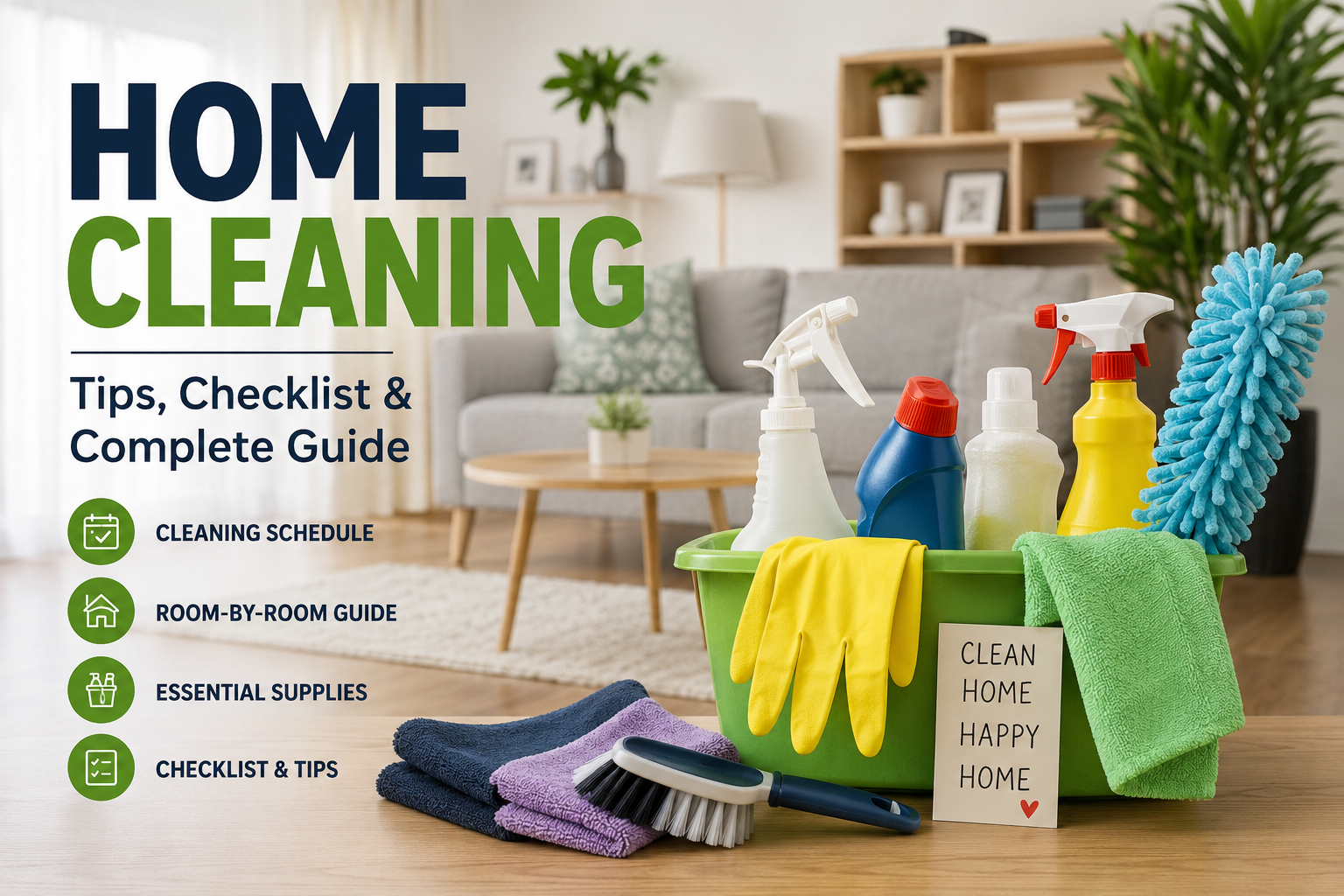
A clean home is easier to enjoy, easier to organize, and generally more comfortable to live in. But effective home cleaning is not about spending an entire weekend scrubbing every surface. The key is knowing what needs attention, how often to clean it, and which tasks deserve priority.
A simple routine can prevent dust, grime, odors, and clutter from building up. Daily maintenance keeps frequently used areas under control, while weekly and monthly tasks handle areas that need more attention. Occasional deep cleaning then takes care of the places that are easy to overlook.
This guide explains how to create a practical home cleaning routine, clean each major room efficiently, choose essential supplies, avoid common mistakes, and decide when professional cleaning may be worthwhile.
What Does Home Cleaning Include?
Home cleaning involves much more than vacuuming and wiping countertops. It includes removing dirt, dust, hair, food residue, stains, and other debris from the surfaces and spaces you use every day.
Common home cleaning tasks include:
- Dusting furniture and surfaces
- Vacuuming carpets and floors
- Sweeping and mopping hard floors
- Cleaning kitchens and bathrooms
- Washing bedding and towels
- Cleaning appliances
- Wiping high-touch surfaces
- Removing trash
- Cleaning windows and mirrors
- Maintaining less frequently used areas
It is also useful to understand the difference between cleaning, sanitizing, and disinfecting. Cleaning removes dirt and debris, while sanitizing and disinfecting are intended to reduce microorganisms under specific conditions. Always follow the instructions on cleaning and disinfecting products rather than assuming that more product or more frequent use is better.
How Often Should You Clean Your Home?
There is no single schedule that works for every household. A home with children, pets, heavy foot traffic, or frequent cooking may need more frequent cleaning than a small household with limited activity.
A practical approach is to divide tasks into daily, weekly, monthly, and seasonal routines.
Daily Home Cleaning Tasks
Daily cleaning does not need to take hours. Focus on areas that quickly become messy or unhygienic.
Typical tasks include:
- Washing dishes or loading the dishwasher
- Wiping kitchen counters
- Cleaning obvious spills
- Making beds
- Putting clutter back where it belongs
- Wiping frequently used surfaces when necessary
- Emptying trash when full
- Quickly sweeping high-traffic areas
A 10- to 20-minute daily reset can make weekly cleaning much easier.
Weekly Cleaning Tasks
Weekly home cleaning should address the areas that accumulate dust, dirt, and household grime.
Consider:
- Vacuuming carpets and floors
- Mopping hard floors
- Cleaning toilets, sinks, showers, and tubs
- Dusting furniture
- Cleaning mirrors
- Changing bed linens
- Wiping kitchen appliances and surfaces
- Emptying household bins
- Cleaning frequently touched handles and switches
Monthly Cleaning Tasks
Monthly tasks can target areas that don’t require weekly attention.
Examples include:
- Cleaning inside selected appliances
- Wiping cabinet fronts
- Dusting vents and light fixtures
- Cleaning baseboards
- Cleaning under furniture
- Washing or cleaning less-used surfaces
- Checking corners and areas behind furniture
- Cleaning storage areas
Seasonal and Deep Cleaning
Seasonal cleaning is a good opportunity to tackle larger projects such as windows, curtains, upholstery, storage spaces, and accumulated clutter.
You don’t have to complete everything in one day. Breaking larger jobs into smaller projects makes deep home cleaning much more manageable.
The Best Order to Clean a House
Cleaning in the right order can prevent unnecessary work.
A useful sequence is:
Declutter → dust high areas → clean surfaces → clean bathrooms and kitchen → vacuum → mop → final inspection
Start by removing items that don’t belong in the room. Next, work from higher surfaces toward lower ones so falling dust doesn’t land on areas you’ve already cleaned.
For example, dust ceiling fans and shelves before vacuuming the floor. If you vacuum first, you may have to do the floor again.
A Simple Cleaning Sequence
| Step | Task | Why It Helps |
| 1 | Declutter | Makes surfaces accessible |
| 2 | Gather supplies | Reduces interruptions |
| 3 | Dust high areas | Prevents dust from falling onto clean surfaces |
| 4 | Clean surfaces | Removes grime and residue |
| 5 | Clean kitchen and bathroom | Handles high-use areas |
| 6 | Vacuum | Removes loose debris |
| 7 | Mop | Finishes hard floors |
| 8 | Final check | Catches missed spots |
Room-by-Room Home Cleaning Guide
A room-by-room approach makes home cleaning easier because you can focus on one area at a time.
How to Clean the Kitchen
The kitchen deserves frequent attention because food residue, grease, and moisture can accumulate quickly.
Start by clearing the countertops. Wipe food-preparation surfaces using an appropriate cleaner, then clean the sink, faucet, stovetop, cabinet fronts, and appliance exteriors.
Don’t forget frequently overlooked areas such as:
- Handles
- Cabinet edges
- Appliance seals
- Backsplashes
- Trash-can lids
- Areas underneath small appliances
Finish by sweeping or vacuuming and then mopping the floor.
How to Clean the Bathroom
Bathrooms benefit from consistent cleaning because moisture and frequent use create ideal conditions for buildup.
Clean the sink, countertop, toilet, shower or tub, mirrors, fixtures, and floor. Pay attention to areas around faucets and other places where moisture can remain.
Use products according to their labels and never mix cleaning chemicals. Ventilation is also important when using products that recommend it.
How to Clean the Bedroom
Start by making the bed and removing unnecessary items from surfaces.
Dust furniture, clean mirrors, change bedding, vacuum or sweep the floor, and pay attention to areas underneath the bed.
Bedrooms are also a good place to periodically clean curtains, blinds, mattresses, and closet areas.
How to Clean the Living Room
Begin by putting away clutter. Dust tables, shelves, electronics, lamps, and other surfaces.
Vacuum carpets and upholstery according to the manufacturer’s recommendations. Don’t forget cushions, remote controls, light switches, and areas underneath furniture.
If you have pets, vacuuming may need to happen more frequently because hair and dander can accumulate quickly.
Don’t Forget the Laundry Room
The laundry room itself needs cleaning too.
Wipe down the washer and dryer exterior, clean detergent compartments when necessary, remove lint safely, dust shelves, and keep the floor free of debris.
Following appliance manufacturers’ maintenance instructions is particularly important for washers and dryers.
Essential Home Cleaning Supplies
You don’t need dozens of specialized products to maintain a clean home. A basic cleaning kit can handle many routine tasks.
Useful supplies include:
- Microfiber cloths
- Vacuum cleaner
- Mop
- Bucket
- Sponges
- Scrub brushes
- Cleaning gloves
- All-purpose cleaner
- Glass cleaner
- Appropriate bathroom cleaner
- Appropriate disinfectant
- Trash bags
Choose products based on the surface you’re cleaning. A product designed for glass may not be suitable for natural stone, unfinished wood, or other delicate materials.
Microfiber cloths are particularly useful because they can handle dust and many everyday wiping tasks without requiring a large collection of disposable materials.
Deep Cleaning vs. Regular Cleaning
Regular cleaning maintains your home’s everyday condition. Deep cleaning focuses on accumulated grime and areas that aren’t addressed during routine cleaning.
| Regular Cleaning | Deep Cleaning |
| Frequent maintenance | Occasional intensive cleaning |
| Dusting surfaces | Cleaning difficult-to-reach areas |
| Vacuuming floors | Cleaning underneath furniture |
| Bathroom maintenance | Detailed grout and fixture cleaning |
| Kitchen surface cleaning | Cleaning selected appliance interiors |
| Routine mopping | More intensive floor care |
Deep cleaning doesn’t replace regular maintenance. Instead, the two work together.
For example, wiping your kitchen counters every day can prevent buildup, while a periodic deep clean can address cabinet tops, appliance interiors, backsplash grime, and other neglected areas.
15 Areas People Often Forget to Clean
Even a tidy home can have overlooked cleaning zones.
Check these areas periodically:
- Light switches
- Door handles
- Remote controls
- Ceiling fans
- Baseboards
- Air vents
- Cabinet tops
- Under furniture
- Behind appliances
- Appliance seals
- Trash-can lids
- Shower fixtures
- Blinds
- Mattress surfaces
- Entryway mats
These areas don’t necessarily need daily attention. The important thing is to include them in your monthly or seasonal cleaning rotation.
How to Make Home Cleaning Faster
Cleaning efficiently is often more useful than simply cleaning harder.
Use a Cleaning Caddy
Keep frequently used supplies together so you don’t repeatedly walk between rooms.
Declutter Before Cleaning
It is difficult to clean effectively when countertops, floors, and furniture are covered with unnecessary items.
Work From Top to Bottom
Dust higher surfaces first and clean floors afterward.
Clean One Zone at a Time
Instead of moving randomly around the house, finish one room or area before moving to the next.
Set a Timer
A 15- or 20-minute timer can make a routine feel less overwhelming. The goal is consistent progress rather than perfection.
Get Household Members Involved
Cleaning doesn’t have to be one person’s responsibility. Age-appropriate tasks can be shared among household members.
Home Cleaning for Pets, Children, and Busy Households
Your cleaning schedule should reflect how your home is actually used.
Homes With Pets
Focus more frequently on:
- Pet hair
- Floors
- Pet bedding
- High-traffic areas
- Food and water areas
Always check that cleaning products are appropriate for surfaces and safe to use around pets according to their labels.
Homes With Children
Prioritize frequently touched surfaces, dining areas, toys, floors, and safe storage of cleaning products.
Cleaning chemicals should be kept securely away from children.
Busy Professionals
If time is limited, divide your routine into short sessions. A quick kitchen reset today, bathroom cleaning tomorrow, and vacuuming later can be easier than waiting for enough time to clean the entire house.
DIY Home Cleaning vs. Professional Cleaning
Many households can handle routine home cleaning themselves. However, professional services can be useful when time is limited or a larger cleaning project needs attention.
| Factor | DIY Cleaning | Professional Cleaning |
| Direct cost | Usually lower | Higher upfront cost |
| Time required | Your personal time | Saves personal time |
| Scheduling | Completely flexible | Depends on provider |
| Routine maintenance | Good fit | Convenient option |
| Deep cleaning | Depends on time and ability | Useful for intensive projects |
| Customization | Full personal control | May offer customized services |
| Best suited for | Regular upkeep | Busy schedules or larger projects |
DIY cleaning makes sense when you have the time, supplies, and ability to maintain your home comfortably.
Professional cleaning may be worth considering for move-in or move-out cleaning, major deep cleaning, large homes, event preparation, or households with particularly demanding schedules.
The best choice depends on your budget, available time, home size, and cleaning requirements.
Common Home Cleaning Mistakes to Avoid
Even a regular cleaning routine can become inefficient if you use the wrong approach.
Avoid:
- Cleaning around clutter instead of removing it
- Using excessive amounts of cleaning products
- Mixing cleaning chemicals
- Ignoring product labels
- Vacuuming before dusting
- Using unsuitable products on delicate surfaces
- Forgetting high-touch areas
- Neglecting cleaning tools
- Trying to deep clean the entire house without a plan
More cleaning product doesn’t automatically mean a cleaner surface. Follow label directions and use only what is appropriate for the task.
A Simple 30-Minute Home Cleaning Reset
When the house needs a quick refresh, try this practical routine:
Minutes 0–5: Pick up clutter and return misplaced items.
Minutes 5–10: Reset the kitchen by washing dishes and wiping counters.
Minutes 10–15: Tidy and wipe the bathroom’s most-used surfaces.
Minutes 15–22: Vacuum the main high-traffic areas.
Minutes 22–27: Wipe frequently touched surfaces.
Minutes 27–30: Empty trash and complete a quick visual check.
This isn’t a deep-cleaning session. It is a maintenance reset designed to prevent everyday messes from becoming overwhelming.
Complete Home Cleaning Checklist
Daily
- Make beds
- Wash dishes
- Wipe kitchen counters
- Clean visible spills
- Put clutter away
Weekly
- Vacuum floors
- Mop hard floors
- Clean bathrooms
- Dust furniture
- Change bedding
- Clean mirrors
- Empty bins
Monthly
- Clean selected appliance interiors
- Dust vents and fixtures
- Clean baseboards
- Wipe cabinet fronts
- Clean under furniture
- Check overlooked areas
Seasonally
- Clean windows
- Clean curtains or blinds
- Deep clean upholstery
- Organize storage areas
- Declutter unused belongings
- Address difficult-to-reach area
Conclusion
Effective home cleaning doesn’t require perfection or endless hours of work. A consistent system is more valuable than occasional marathon cleaning sessions.
Start with a simple daily reset, maintain high-use areas weekly, schedule monthly tasks, and reserve deeper projects for seasonal or occasional cleaning. Use appropriate supplies, follow product instructions, and pay attention to commonly overlooked surfaces.
Whether you prefer DIY cleaning or professional help, the goal is the same: create a home that is cleaner, more comfortable, and easier to maintain.
Frequently Asked Questions
How often should you clean your house?
Most homes benefit from a combination of daily maintenance, weekly cleaning, and monthly or seasonal deep-cleaning tasks. The ideal frequency depends on household size, pets, children, cooking habits, and traffic.
What should be cleaned every day?
Focus on dishes, kitchen counters, visible spills, clutter, and heavily used areas. Not every room or surface needs daily cleaning.
What is the best order to clean a house?
Declutter first, then work from high surfaces toward low surfaces. Clean surfaces before vacuuming and mop hard floors near the end.
What is included in a deep home cleaning?
Deep cleaning may include baseboards, appliance interiors, vents, areas underneath furniture, detailed bathroom cleaning, cabinet surfaces, upholstery, windows, and other areas that routine cleaning often misses.
What cleaning supplies do I need?
A basic kit can include microfiber cloths, a vacuum, mop, bucket, sponges, brushes, gloves, an all-purpose cleaner, glass cleaner, bathroom cleaner, and appropriate disinfecting products.
How can I clean my home faster?
Use a cleaning caddy, remove clutter first, work systematically, clean from top to bottom, batch similar tasks, use timers, and involve other household members.
Is professional home cleaning worth it?
It can be worthwhile when you have limited time, need a major deep clean, are moving, have a large home, or need help with a particularly demanding cleaning project. The decision ultimately depends on your needs and budget.