
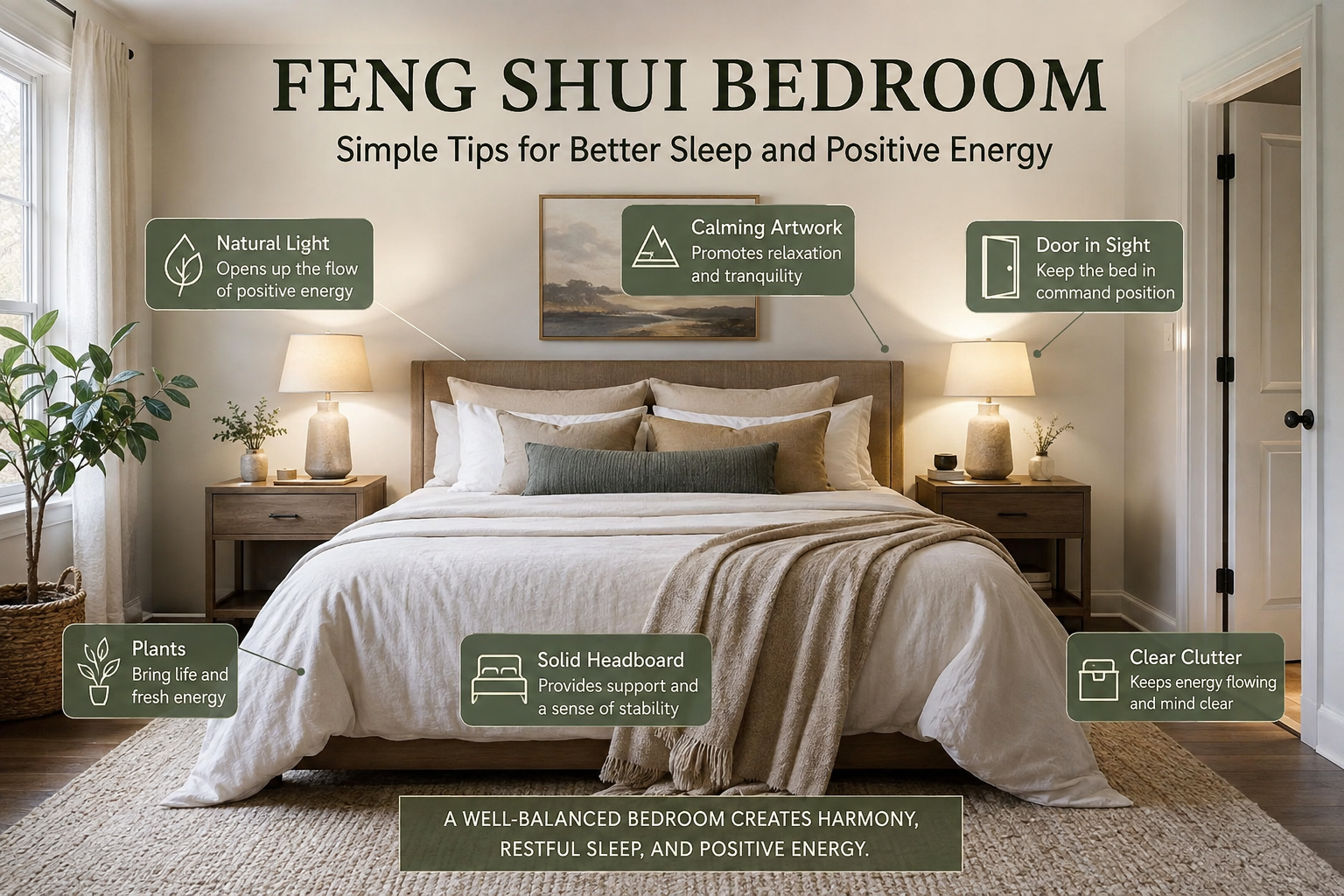
Your bedroom should feel like a place where your mind can slow down, your body can relax, and you can wake up feeling refreshed. A feng shui bedroom uses principles of balance, positioning, simplicity, and intentional design to create that kind of atmosphere.
Feng shui is a traditional Chinese practice concerned with how people interact with their surroundings. In bedroom design, the focus is often on creating a sense of stability, comfort, and harmonious energy. Some recommendations also overlap with modern interior-design and sleep-environment principles, such as reducing clutter, controlling light, and keeping electronics away from the sleeping area.
Whether you have a spacious master bedroom, a small apartment, or a rental where furniture options are limited, you can apply practical feng shui ideas without completely redesigning the room.
What Is a Feng Shui Bedroom?
A feng shui bedroom is arranged with the goal of creating balance, calm, and a supportive environment. Traditional concepts such as qi (chi), yin and yang, balance, and the command position help guide decisions about furniture placement and room arrangement.
The bedroom is generally considered a more restful, yin-oriented space. That means it should feel quieter and less visually stimulating than areas designed for work, socializing, or exercise.
Feng shui isn’t a single universal rulebook. Different schools and practitioners may interpret certain principles differently. Therefore, it’s more useful to understand the reasoning behind a recommendation than to follow rigid rules that don’t work with your actual room.
The Most Important Feng Shui Bedroom Rule: Bed Placement
Bed placement is one of the most important parts of bedroom feng shui. Your bed is the largest piece of furniture in the room and represents rest, so its position has a major visual and practical impact.
What Is the Command Position?
In traditional feng shui, the command position generally means placing the bed where you can see the bedroom door while lying down, without positioning the bed directly in line with the doorway.
Ideally, the head of the bed rests against a solid wall. This arrangement is traditionally associated with support and stability while also giving the room a more grounded appearance.
You don’t need a perfect floor plan to apply this idea. Start with the best available position and work around the limitations of your room.
What If You Can’t Achieve the Ideal Position?
Small bedrooms and awkward layouts can make perfect placement impossible. If you cannot move the bed away from the doorway line, focus on the other elements:
- Use a substantial headboard.
- Keep the area around the bed uncluttered.
- Create a clear walking path.
- Avoid placing large furniture directly beside the bed.
- Use curtains or other design elements to create visual separation where appropriate.
The goal is to make the room feel balanced rather than forcing furniture into an impractical arrangement.
How to Create a Feng Shui Bedroom Layout
A good feng shui bedroom layout should feel natural as soon as you walk through the door. You shouldn’t have to squeeze between furniture or navigate around piles of belongings.
Keep the main pathway open and give the bed enough visual space. If possible, leave accessible space on both sides of the bed. This is particularly useful in a shared bedroom because it creates visual symmetry and makes the room more functional.
Nightstands don’t have to be identical, but they should create a sense of balance. Two similar lamps, for example, can make an uneven bedroom feel more cohesive.
Bed Placement Comparison
| Bedroom arrangement | Feng shui perspective | Practical approach |
| Bed against solid wall with door visible | Generally preferred | Keep this arrangement |
| Bed directly aligned with door | Commonly avoided | Shift the bed if possible |
| Headboard against a window | Less preferred | Use a supportive headboard and window covering |
| One side of bed against wall | Less balanced | Create access on both sides when possible |
| Clutter surrounding bed | Disruptive | Remove unnecessary objects |
| Clear pathways around furniture | Supportive | Maintain open walking space |
Where Should the Dresser Go?
Place the dresser where it doesn’t interfere with movement or make the bedroom feel crowded. If a dresser blocks a doorway, window, or major pathway, it may be better somewhere else.
Large furniture should support the room’s proportions rather than dominate them.
Feng Shui Bedroom Rules: Do’s and Don’ts
A simple list can make bedroom feng shui much easier to apply.
Do
- Choose a supportive headboard.
- Keep the bed in the best command position available.
- Maintain clear pathways.
- Reduce visible clutter.
- Use comfortable, layered lighting.
- Choose colors that create a calm atmosphere.
- Keep both sides of the bed accessible when possible.
- Make the room feel intentional and restful.
Don’t
- Place the bed directly in line with the bedroom door if you can avoid it.
- Let clothing, paperwork, and miscellaneous objects accumulate around the bed.
- Turn the bedroom into a home office if you have another option.
- Overload the room with electronics.
- Use extremely harsh lighting at night.
- Block natural movement through the room.
- Follow a feng shui rule so rigidly that the bedroom becomes uncomfortable.
The best feng shui bedroom is one that feels peaceful and works for the people who use it.
Best Feng Shui Bedroom Colors
Color can dramatically influence the mood of a room. Traditional feng shui incorporates color symbolism through the five elements, while modern bedroom design often focuses on creating a visually calming environment.
Soft, muted shades are generally easier to incorporate than extremely bright colors.
Popular Feng Shui Bedroom Colors
- Warm white
- Cream
- Beige
- Taupe
- Soft green
- Muted blue
- Earth tones
- Gentle pink
- Warm brown
Earthy neutrals can make a bedroom feel grounded, while soft greens and blues can create a quieter visual atmosphere.
Bright red, intense orange, or neon shades aren’t automatically forbidden, but using them throughout the entire bedroom may make the space feel more energetic than restful. If you enjoy stronger colors, consider using them as small accents.
Lighting and Windows in a Feng Shui Bedroom
Lighting is often overlooked when people rearrange a bedroom. A beautiful layout can still feel uncomfortable if the lighting is harsh or poorly positioned.
Use layers of light rather than relying entirely on a bright ceiling fixture. Bedside lamps, wall lights, and adjustable lighting can help create a softer atmosphere in the evening.
Natural light is also valuable. During the day, allow appropriate sunlight into the room while using curtains or blinds for privacy and nighttime darkness.
What If There’s a Window Behind the Bed?
A window behind the bed isn’t always avoidable. If your bedroom has this arrangement, use a sturdy headboard and suitable curtains or blinds to create a greater sense of visual support.
Rather than completely redesigning the room, work with the structure you have.
Mirrors, Electronics, Plants and Other Objects
What you put into your bedroom can be just as important as where you put the furniture.
Can You Have a Mirror in a Feng Shui Bedroom?
Many traditional feng shui recommendations advise against placing a mirror directly opposite the bed. If you’re following this approach, consider placing the mirror on a side wall or inside a wardrobe where it isn’t constantly facing the sleeping area.
From a practical perspective, the main consideration is whether the mirror makes the room feel visually busy or distracting.
Should You Have a TV in the Bedroom?
A television can make the bedroom feel more like an entertainment area than a dedicated sleeping space. Traditional feng shui practitioners may also have concerns about electronics in the bedroom.
If removing the TV isn’t realistic, consider keeping it concealed when you’re not using it and avoiding a bedroom arrangement dominated by screens.
What About Plants?
Plants can add natural texture and soften a bedroom. However, you don’t need to turn the room into an indoor garden. A small number of healthy, well-maintained plants can provide visual interest without creating clutter.
Declutter Your Bedroom for Better Feng Shui
Clutter is one of the easiest things to address because it doesn’t require buying anything.
Start with the surfaces you see every day. Clear your nightstand, put clothes away, remove empty containers, and eliminate objects you no longer use.
Under-bed storage is another area to consider. Traditional feng shui commonly favors keeping the space beneath the bed clear or minimizing what is stored there. Even from a practical design perspective, reducing hidden clutter can make organizing easier.
Try a 15-Minute Bedroom Reset
- Remove rubbish.
- Put clothes away.
- Clear both nightstands.
- Remove unnecessary objects from the floor.
- Organize visible surfaces.
- Reduce unnecessary electronics.
- Straighten the bedding.
Small changes can make a room feel dramatically different without spending money.
Feng Shui Bedroom for Couples and Love
A bedroom shared by two people benefits from visual and functional balance.
If space allows, use two nightstands and create reasonably equal access to both sides of the bed. Matching bedside lamps can reinforce symmetry, but they don’t have to be identical.
You can also choose artwork and decorative objects that feel meaningful to both partners. Avoid turning the bedroom into a storage area for paperwork, unfinished projects, or reminders of stressful responsibilities.
The goal isn’t to guarantee a particular relationship outcome. Instead, create a shared environment that feels comfortable, balanced, and intentional.
Feng Shui for Small or Awkward Bedrooms
You don’t need a large master suite to create a good feng shui bedroom.
Small Bedroom
Prioritize the bed first. Remove unnecessary furniture and maintain enough clearance to move comfortably around the room.
Instead of filling every empty corner, allow some visual breathing room.
Bed Under a Window
If moving the bed isn’t possible, use a solid headboard and appropriate window treatments. The result can still be comfortable and visually balanced.
Bedroom With Multiple Doors
Identify the primary entrance and arrange the bed so the room doesn’t feel like a traffic corridor. Keep pathways open and avoid positioning furniture where doors constantly collide with it.
Rental Bedroom
Renters can still make meaningful changes. Try rearranging movable furniture, improving lighting, adding curtains, reducing clutter, changing bedding, and using a supportive headboard.
10 Common Feng Shui Bedroom Mistakes
Avoiding a few common problems can make a bigger difference than purchasing new décor.
- Putting the bed directly in line with the door.
- Blocking one side of the bed unnecessarily.
- Using an unstable or visually weak headboard.
- Allowing clutter to accumulate.
- Keeping too many electronics nearby.
- Using harsh lighting at night.
- Blocking walking paths.
- Turning the bedroom into a work zone.
- Placing a mirror directly opposite the bed.
- Treating feng shui as a rigid formula instead of adapting it to the room.
A Simple 7-Step Feng Shui Bedroom Makeover
If you’re unsure where to begin, use this process.
Step 1: Find the best available bed position.
Step 2: Create solid support behind the bed with an appropriate headboard.
Step 3: Clear clutter from the floor and major surfaces.
Step 4: Balance the areas on both sides of the bed.
Step 5: Reduce unnecessary electronics.
Step 6: Improve lighting and window coverings.
Step 7: Add calming colors, comfortable bedding, and meaningful décor.
A Practical Example
Imagine a bedroom where the bed faces directly toward the door, one side is blocked by a dresser, clothes cover a chair, and a television dominates the opposite wall.
Instead of replacing everything, move the bed to a position where the doorway remains visible without being directly aligned. Remove the dresser blocking one side, clear the chair, organize the nightstands, soften the lighting, and reduce the visual prominence of the TV.
The result is a more balanced feng shui bedroom without a major renovation.
Feng Shui Bedroom Checklist
Before you finish, ask yourself:
- Can I see the bedroom door from my bed?
- Is my bed directly aligned with the doorway?
- Does my headboard provide a sense of support?
- Can I comfortably access both sides of the bed?
- Are the main pathways clear?
- Is visible clutter under control?
- Is the lighting comfortable at night?
- Are electronics minimized?
- Do the colors feel calming?
- Does the room feel peaceful when I enter?
If you can answer “yes” to most of these questions, you’ve already addressed many of the most important feng shui bedroom principles.
Conclusion
A well-designed feng shui bedroom doesn’t require expensive furniture, a complete renovation, or a perfectly shaped room. Start with the fundamentals: position the bed thoughtfully, create a sense of support, reduce clutter, maintain clear pathways, balance the furniture, and choose an atmosphere that feels calm to you.
Most importantly, treat feng shui as a framework rather than a rigid set of rules. Different traditions offer different interpretations, and every bedroom has practical limitations. The strongest approach combines traditional feng shui principles with thoughtful interior design and your own comfort.
When your bedroom feels organized, balanced, supportive, and genuinely relaxing, you’ve created a space that serves its most important purpose: helping you unwind at the end of the day.
Frequently Asked Questions
What is the most important feng shui rule for a bedroom?
Bed placement is one of the most important considerations. Traditionally, the bed is ideally positioned so you can see the door while lying down without being directly aligned with it, with the headboard supported by a solid wall when possible.
Which direction should my bed face in feng shui?
There isn’t one universally correct direction for every person or every feng shui tradition. Directional recommendations can vary depending on the school of feng shui and the method being used. Focus first on practical placement and the command position.
Should your bed face the door?
Many feng shui practitioners recommend avoiding a bed that sits directly in line with the bedroom door. However, being able to see the door from bed is generally considered desirable. If your layout cannot change, focus on creating support and balance elsewhere.
What is the best color for a feng shui bedroom?
There isn’t one universally best color. Warm neutrals, soft greens, muted blues, creams, and gentle earth tones are popular choices because they can create a calm visual atmosphere. Personal preference and the overall room design should also matter.
Where should I put a mirror in a feng shui bedroom?
If you’re following traditional feng shui recommendations, avoid placing a mirror directly opposite the bed. A side wall or an area where the mirror can be covered or concealed may be preferable.
Is it bad to have a TV in a feng shui bedroom?
Traditional feng shui advice often recommends limiting electronics in the bedroom. From a practical standpoint, reducing screens can also help the room remain dedicated to relaxation and sleep. If you keep a TV, avoid letting it dominate the space.
How do I feng shui a small bedroom?
Start with the bed, because it is the room’s main piece of furniture. Keep pathways clear, remove unnecessary furniture, reduce clutter, and use balanced bedside arrangements. You can create a peaceful feng shui bedroom without having a large space.