
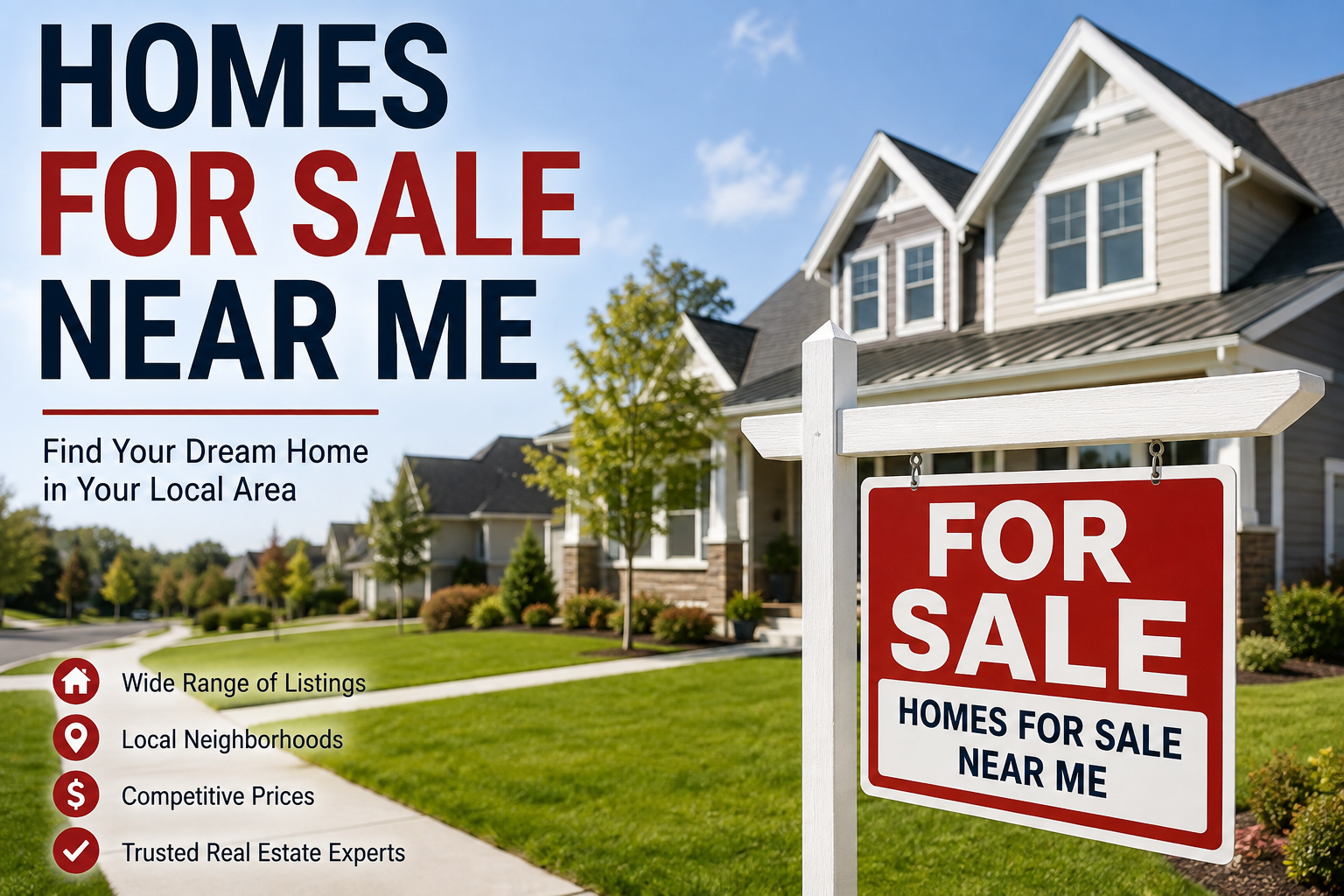
Searching for homes for sale near me is one of the most common ways buyers begin their homeownership journey. Whether you’re purchasing your first house, upgrading to a larger property, or relocating to a new city, finding the right home requires more than browsing online listings. Understanding your budget, researching neighborhoods, comparing financing options, and knowing what to expect throughout the buying process can help you make a confident decision.
This guide walks you through every stage of the home-buying journey, from searching local listings to closing the deal. You’ll also discover expert tips, common mistakes to avoid, and practical strategies that can save both time and money.
What Does “Homes for Sale Near Me” Mean?
When you search for homes for sale near me, search engines and real estate websites use your location to display nearby properties that match your preferences. These listings are typically sourced from Multiple Listing Services (MLS), brokerages, and local real estate agencies.
Modern home search platforms allow you to filter results by:
- Price range
- Number of bedrooms and bathrooms
- Property type
- Square footage
- School district
- Lot size
- Open houses
- New construction
- Move-in-ready homes
Using these filters helps narrow your options and makes your search more efficient.
Where to Find Homes for Sale Near You
There are several reliable sources for discovering available properties.
MLS Listings
MLS databases provide the most up-to-date property information and are widely used by licensed real estate agents. They often include detailed property descriptions, pricing history, and status updates.
National Real Estate Websites
Popular home search websites make it easy to browse listings, compare homes, and schedule tours. They also offer useful features such as mortgage calculators, neighborhood information, and market trends.
Local Real Estate Agencies
Local agents often know about listings before they appear online. They also provide valuable insights into neighborhood conditions and local market activity.
New Construction Communities
If you’re interested in a newly built home, many builders showcase available floor plans, pricing, and incentives directly on their websites.
For Sale By Owner (FSBO)
Some homeowners sell their properties without an agent. These listings may offer negotiation opportunities but often require additional research and legal review.
Comparing Home Search Options
| Home Search Option | Best For | Advantages | Potential Drawbacks |
| MLS Listings | Accurate listings | Frequently updated | Agent access may be required |
| National Real Estate Websites | General buyers | Easy search tools | Listing delays can occur |
| Local Agents | Neighborhood expertise | Personalized guidance | Commission may apply |
| New Construction Builders | Brand-new homes | Modern features | Higher purchase price |
| FSBO Listings | Budget-conscious buyers | Direct negotiation | Less professional support |
Step-by-Step Guide to Buying a Home
Finding the perfect home involves much more than choosing an attractive property.
Determine Your Budget
Review your monthly income, savings, debts, and expected expenses. Consider property taxes, insurance, maintenance, and utility costs alongside your mortgage payment.
Get Mortgage Pre-Approval
Mortgage pre-approval helps determine how much you can afford and shows sellers that you’re a serious buyer.
Define Your Priorities
Create a list of essential features, such as:
- Number of bedrooms
- Home office
- Garage
- Backyard
- School district
- Commute time
Knowing your priorities prevents emotional decision-making.
Search Listings Regularly
The best homes often sell quickly. Set up property alerts and monitor new listings daily.
Tour Multiple Homes
Photos can be misleading. Visiting properties in person allows you to evaluate layout, condition, neighborhood, and natural lighting.
Make a Competitive Offer
Work with your real estate professional to prepare a fair offer based on comparable home sales in the area.
Complete the Inspection
A professional inspection identifies issues that could affect the home’s value or safety before closing.
Close the Transaction
During closing, you’ll finalize paperwork, pay closing costs, and officially become the homeowner.
Choosing the Right Neighborhood
The perfect house in the wrong location may not be the best investment.
When evaluating neighborhoods, consider:
School Quality
Even if you don’t have children, homes in highly rated school districts often maintain stronger resale value.
Safety
Research local crime statistics and visit the neighborhood during different times of the day.
Commute
Calculate travel times to work, schools, and frequently visited locations.
Amenities
Look for nearby grocery stores, parks, restaurants, hospitals, and entertainment.
Future Development
Planned infrastructure improvements or commercial developments can positively impact property values.
Understanding Home Prices
Several factors influence property prices.
These include:
- Local supply and demand
- Mortgage interest rates
- Employment growth
- Population changes
- School districts
- Property condition
- Seasonal buying trends
Understanding these factors helps buyers recognize fair market value.
| Factor | Can Increase Home Value | Can Lower Home Value |
| Excellent Schools | ✓ | |
| Updated Interior | ✓ | |
| Strong Local Economy | ✓ | |
| High Crime Rate | ✓ | |
| Deferred Maintenance | ✓ | |
| Limited Buyer Demand | ✓ |
Mortgage Options Explained
Different loan programs suit different buyers.
Conventional Loans
Ideal for buyers with strong credit and stable income.
FHA Loans
Popular among first-time buyers due to lower down payment requirements.
VA Loans
Available to eligible military service members and veterans.
USDA Loans
Designed for qualifying buyers purchasing homes in eligible rural areas.
Comparing loan options with multiple lenders can significantly reduce your long-term borrowing costs.
Hidden Costs Every Buyer Should Know
Many buyers focus only on the purchase price, but homeownership includes additional expenses.
Common costs include:
- Closing costs
- Property taxes
- Homeowners insurance
- HOA fees
- Moving expenses
- Utility deposits
- Home maintenance
- Emergency repairs
Planning for these expenses prevents financial surprises after moving in.
Features Worth Comparing
When viewing properties, don’t focus solely on cosmetic updates.
Instead, compare:
- Roof age
- HVAC system
- Plumbing
- Electrical system
- Foundation
- Energy efficiency
- Storage space
- Kitchen layout
- Bathroom condition
- Natural lighting
These features have a greater impact on long-term ownership costs.
Home Inspection Checklist
Before purchasing any property, inspect the following:
- Roof condition
- Foundation cracks
- Plumbing leaks
- Electrical panels
- Heating and cooling systems
- Windows and doors
- Mold or moisture damage
- Pest activity
- Attic insulation
- Drainage around the property
A thorough inspection can uncover expensive repairs before closing.
Common Home Buying Mistakes
Many buyers make avoidable mistakes that increase costs.
Avoid these common errors:
- Shopping without mortgage pre-approval
- Ignoring additional ownership expenses
- Buying based only on appearance
- Skipping the home inspection
- Making emotional offers
- Not comparing multiple properties
- Failing to research neighborhoods
Careful planning leads to better long-term satisfaction.
Tips for Finding the Best Deals
Smart buyers often use these strategies:
- Search during slower buying seasons.
- Watch for recent price reductions.
- Be flexible with cosmetic updates.
- Compare similar homes before making an offer.
- Monitor local market trends.
- Act quickly on well-priced listings.
- Work with experienced local professionals.
These techniques can help you secure better value without compromising quality.
Existing Homes vs. New Construction
| Existing Homes | New Construction |
| Usually lower purchase price | Modern layouts and finishes |
| Established neighborhoods | Builder warranties |
| Mature landscaping | Energy-efficient systems |
| Faster move-in | Customization options |
| May require updates | Higher initial cost |
Your ideal choice depends on your budget, lifestyle, and long-term goals.
Is Now a Good Time to Buy?
The answer depends on your financial readiness rather than trying to perfectly time the market.
Buying may be a smart decision if you:
- Have a stable income.
- Possess adequate savings.
- Qualify for favorable financing.
- Plan to remain in the home for several years.
- Have researched your local housing market.
Focusing on affordability and long-term value often produces better results than waiting for the “perfect” market.
Conclusion
Searching for homes for sale near me is about much more than finding an attractive property. A successful purchase involves understanding your budget, comparing neighborhoods, exploring financing options, and carefully evaluating each home’s condition and long-term costs. By approaching the process with research, planning, and expert guidance, you can confidently choose a home that meets your needs today while supporting your future goals. Whether you’re a first-time buyer or an experienced homeowner, taking a thoughtful, informed approach will help you make one of life’s most important investments with confidence.
Frequently Asked Questions
1. How do I find accurate homes for sale near me?
Use reputable real estate platforms, MLS-based listings, and local real estate professionals to access the most current property information.
2. Should I get pre-approved before looking at homes?
Yes. Mortgage pre-approval helps establish your budget and strengthens your offer when competing with other buyers.
3. What should I consider besides the home’s price?
Account for closing costs, taxes, insurance, maintenance, utilities, HOA fees, and future repair expenses.
4. How long does it take to buy a home?
The process typically takes several weeks to a few months, depending on financing, inspections, negotiations, and closing requirements.
5. Are new construction homes better than existing homes?
Both have advantages. New homes offer modern features and warranties, while existing homes often provide better locations and lower purchase prices.
6. How important is the neighborhood?
Very important. Schools, safety, commute times, amenities, and future development all influence your daily life and the property’s long-term value.