Choosing an interior design style can feel surprisingly difficult. You may know that you love warm wood, neutral colors, vintage furniture, or clean lines—but you may not know which style those preferences belong to.
That is where understanding interior design styles helps. A design style gives you a framework for choosing furniture, colors, materials, lighting, textures, and décor while keeping your home visually cohesive.
From modern and Scandinavian to traditional, Japandi, coastal, and eclectic, there is no single style that works for everyone. The best choice reflects your home’s architecture, your lifestyle, and the way you want your space to feel.
This guide explores the most popular styles, explains how they differ, and shows you how to choose and combine them confidently.
What Are Interior Design Styles?
Interior design styles are recognizable approaches to decorating and furnishing a space. Each style has its own combination of colors, furniture shapes, materials, patterns, textures, and decorative details.
Some styles are rooted in specific historical periods, while others have evolved from changing lifestyles and design preferences.
For example, mid-century modern is associated with a particular design era, while contemporary design describes an evolving approach that reflects what feels current.
You also don’t have to commit to one style. Many successful homes combine two complementary aesthetics to create a space that feels personal rather than overly coordinated.
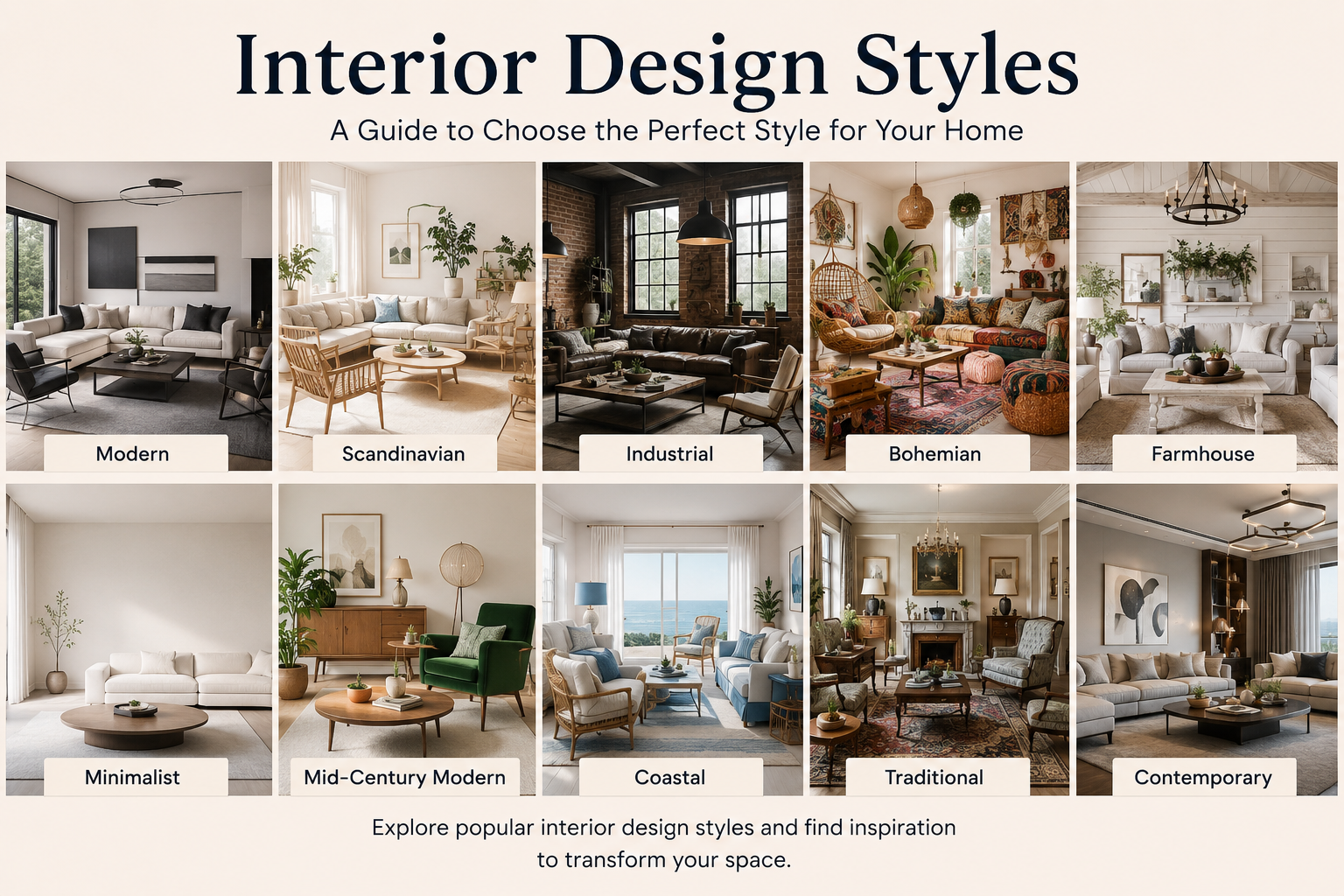
Interior Design Styles at a Glance
| Style | Overall Feel | Common Materials | Typical Colors |
| Modern | Clean and sophisticated | Glass, metal, wood | White, gray, black |
| Contemporary | Current and flexible | Mixed materials | Neutrals with accents |
| Traditional | Classic and elegant | Wood, fabrics | Cream, brown, rich tones |
| Transitional | Balanced and timeless | Wood, stone, metal | Soft neutrals |
| Scandinavian | Light and cozy | Light wood, linen | White, beige, gray |
| Japandi | Calm and organic | Wood, stone, ceramics | Warm neutrals |
| Minimalist | Simple and uncluttered | Wood, glass, stone | Restrained neutrals |
| Industrial | Raw and urban | Metal, brick, concrete | Black, gray, brown |
| Coastal | Relaxed and airy | Rattan, linen, wood | White, blue, sand |
| Bohemian | Layered and expressive | Textiles, rattan, wood | Earthy and vibrant |
| Farmhouse | Warm and welcoming | Reclaimed wood, metal | White, beige, earthy tones |
| Mid-Century Modern | Retro and functional | Teak, walnut, leather | Earth tones, muted accents |
| Eclectic | Personal and collected | Mixed materials | Varied |
| Organic Modern | Natural and refined | Stone, wood, linen | Warm neutrals |
| Maximalist | Bold and layered | Mixed materials | Rich, contrasting colors |
20+ Popular Interior Design Styles Explained
1. Modern Interior Design
Modern design emphasizes clean lines, functional furniture, open spaces, and restrained decoration. Neutral colors and materials such as glass, metal, natural wood, and stone are common.
The goal isn’t to make a room feel empty. Instead, every major element should have a clear purpose.
Try it: Pair a streamlined sofa with a simple rug, sculptural lighting, and one large piece of artwork.
2. Contemporary Interior Design
Contemporary design reflects current tastes and continues to evolve. It often combines clean architecture with curved furniture, layered textures, modern lighting, and carefully selected statement pieces.
Unlike modern design, contemporary interiors aren’t tied to one historical movement.
Best for: Homeowners who enjoy a fresh look and don’t mind updating individual elements over time.
3. Traditional Interior Design
Traditional interiors draw inspiration from classic European design. Symmetry, detailed furniture, rich wood, elegant fabrics, and balanced arrangements are common.
Traditional doesn’t have to mean old-fashioned. A classic sofa, modern artwork, and updated lighting can give the room a more current appearance.
4. Transitional Interior Design
Transitional design sits between traditional and modern. It combines classic proportions with cleaner silhouettes and a more relaxed atmosphere.
This makes it particularly versatile for homes containing both older architectural features and newer furniture.
Example: Traditional molding and a classic wood table paired with a simple contemporary sofa.
5. Scandinavian Interior Design
Scandinavian interiors are known for simplicity, functionality, natural materials, and plenty of light.
Expect pale wood, soft textiles, neutral colors, simple furniture, and cozy details.
The style works especially well in smaller homes because it emphasizes functionality without sacrificing warmth.
6. Japandi Interior Design
Japandi combines Scandinavian practicality with Japanese simplicity. The result is calm, warm, uncluttered, and highly intentional.
Typical elements include natural wood, handmade ceramics, low-profile furniture, soft neutral colors, and plenty of visual breathing room.
Practical tip: Don’t overcrowd a Japandi room with accessories. A few meaningful pieces usually have more impact than a shelf full of décor.
7. Minimalist Interior Design
Minimalism focuses on reducing unnecessary elements and emphasizing function.
Furniture tends to have simple forms, colors remain controlled, and surfaces are kept relatively clear.
However, minimalist design doesn’t mean your home needs to feel sterile. Natural materials, soft lighting, plants, and tactile fabrics can introduce warmth.
8. Mid-Century Modern
Mid-century modern design emerged from the design movements of the mid-20th century and remains popular for its functional furniture and distinctive silhouettes.
Look for tapered legs, organic shapes, warm woods such as walnut or teak, simple upholstery, and carefully used color.
Easy update: Add a vintage-inspired lounge chair or wooden credenza to an otherwise modern room.
9. Industrial Interior Design
Industrial interiors borrow visual cues from warehouses, workshops, and converted factories.
Exposed brick, concrete, black metal, reclaimed wood, open shelving, and statement lighting are common.
Because industrial materials can feel hard, balance them with upholstered furniture, rugs, curtains, and greenery.
10. Modern Farmhouse
Modern farmhouse combines rustic warmth with contemporary simplicity.
Think natural wood, neutral colors, practical furniture, simple hardware, and comfortable textiles.
Avoid turning the room into a collection of farmhouse signs and themed accessories. Authentic materials and useful pieces create a more sophisticated result.
11. Coastal Interior Design
Coastal design creates a relaxed, light-filled atmosphere inspired by the seaside.
White, sandy beige, soft blue, natural wood, linen, and rattan are common choices.
You don’t need obvious nautical decorations. A restrained palette and natural textures can create a coastal feeling without making the room look themed.
12. Bohemian Interior Design
Bohemian interiors are expressive, layered, and highly personal.
Patterned rugs, plants, woven materials, vintage furniture, artwork, and textiles from different influences can work together.
The key is creating visual connections. Repeating a color or material throughout the room helps prevent an eclectic collection from becoming chaotic.
13. Rustic Interior Design
Rustic design celebrates natural, weathered, and imperfect materials.
Reclaimed wood, stone, leather, woven textiles, earthy colors, and handcrafted details help create a comfortable environment.
It works particularly well in cottages, cabins, and homes with exposed architectural materials.
14. Mediterranean Interior Design
Mediterranean design emphasizes warmth, texture, and a connection with outdoor living.
Common elements include terracotta, natural stone, plaster walls, warm neutrals, arches, textured fabrics, and wood.
The style works beautifully when architecture and materials are allowed to take center stage.
15. French Country Interior Design
French country design combines rustic comfort with understated elegance.
Think distressed finishes, soft colors, natural fabrics, antique-inspired furniture, and subtle decorative details.
It is less formal than traditional design while maintaining a refined character.
16. Eclectic Interior Design
Eclectic design intentionally combines pieces from different periods and styles.
A modern sofa might sit beside an antique cabinet, while contemporary artwork hangs above a vintage rug.
The secret is repetition. Use a consistent color palette, material, or visual rhythm to make different pieces feel connected.
17. Maximalist Interior Design
Maximalism embraces abundance rather than restraint. Bold colors, layered patterns, artwork, collections, dramatic lighting, and statement furniture can all play a role.
The difference between maximalism and clutter is intention. Every layer should contribute to the overall composition.
18. Art Deco Interior Design
Art Deco is recognizable through geometric patterns, symmetry, rich colors, metallic accents, and glamorous materials.
Velvet upholstery, brass, dark wood, mirrors, and sculptural lighting can introduce Art Deco character without requiring a complete renovation.
19. Organic Modern Interior Design
Organic modern design combines contemporary simplicity with natural materials and softer forms.
Curved furniture, warm wood, stone, linen, handmade objects, plants, and earthy neutrals are typical.
It is a useful choice for people who like modern interiors but want them to feel warmer and more relaxed.
20. Biophilic Interior Design
Biophilic design emphasizes a stronger connection with nature.
Plants, natural light, organic materials, nature-inspired colors, wood, stone, and views of outdoor spaces are common elements.
Even small changes—such as adding plants and improving natural light—can introduce biophilic principles.
How to Choose the Right Interior Design Style
Don’t choose a style simply because it looks attractive in a magazine or on social media. Think about how you actually live.
Start by saving 10 to 15 rooms you genuinely love. Look for patterns.
Do you repeatedly choose:
- Warm or cool colors?
- Minimal or layered rooms?
- Vintage or contemporary furniture?
- Straight or curved shapes?
- Natural or polished materials?
- Bright or moody interiors?
Your answers can reveal your natural preferences.
Also consider your home’s architecture. A historic property may naturally suit traditional, transitional, or eclectic elements, while an open-plan apartment may work beautifully with modern, contemporary, or industrial design.
Most importantly, consider your lifestyle. A family home with children and pets may require different furniture and materials than a formal entertaining space.
Modern vs. Contemporary vs. Minimalist
These three styles are often confused, but they aren’t interchangeable.
| Feature | Modern | Contemporary | Minimalist |
| Meaning | Historical design movement | Current/evolving style | Design philosophy |
| Furniture | Clean-lined | Current silhouettes | Simple and functional |
| Decoration | Restrained | Flexible | Very limited |
| Main focus | Function and form | Current aesthetics | Intentional simplicity |
| Materials | Wood, glass, metal | Varies | Natural and refined |
Understanding these differences makes it easier to describe what you actually want when planning a room.
How to Mix Interior Design Styles
You don’t need to make every room follow a single design category.
A simple starting point is the 70/30 approach: use one dominant style for roughly 70% of the room and a secondary style for the remaining 30%.
For example, a mostly Scandinavian living room could incorporate mid-century furniture.
You can create cohesion by repeating:
- One or two colors
- Similar wood tones
- A consistent metal finish
- Related textures
- Similar furniture proportions
Another effective technique is combining old and new. A contemporary sofa can work surprisingly well with an antique table or vintage artwork when the colors and proportions make sense.
Applying Interior Design Styles Room by Room
Different rooms have different priorities.
| Room | Elements to Prioritize | Styles to Consider |
| Living room | Sofa, rug, lighting | Modern, transitional, eclectic |
| Bedroom | Bed, textiles, lighting | Japandi, Scandinavian, traditional |
| Kitchen | Cabinets, hardware, surfaces | Modern, farmhouse, Mediterranean |
| Dining room | Table, chairs, lighting | Industrial, traditional, contemporary |
| Bathroom | Tile, vanity, fixtures | Modern, coastal, organic modern |
| Home office | Desk, storage, lighting | Minimalist, Scandinavian, modern |
Rather than copying a complete look, choose the defining elements that work for your room and budget.
Common Interior Design Style Mistakes to Avoid
One of the biggest mistakes is following a trend without considering whether it fits your lifestyle.
Other common problems include:
- Buying a complete matching furniture set
- Mixing too many unrelated styles
- Ignoring the home’s architecture
- Using too many accent colors
- Forgetting the importance of lighting
- Choosing appearance over comfort
- Filling every empty surface with décor
- Copying a showroom instead of adding personality
A successful interior should look intentional but still feel lived in.
How to Define Your Interior Design Style in 5 Steps
Step 1: Collect inspiration. Save rooms that genuinely appeal to you.
Step 2: Find repeated colors. Notice whether your favorites are warm, cool, neutral, dark, or colorful.
Step 3: Identify furniture shapes. Look for recurring silhouettes such as curved, streamlined, ornate, or rustic pieces.
Step 4: Identify materials. Determine whether you gravitate toward wood, stone, metal, glass, linen, leather, or woven textures.
Step 5: Choose a primary and secondary style. For example, your preferences might point toward Japandi with Organic Modern influences.
This approach is more reliable than trying to fit your entire personality into a single design label.
Conclusion
The best interior design styles aren’t necessarily the ones dominating social media or design magazines. The right style is the one that fits your home, lifestyle, budget, and personality.
Start by identifying what you naturally like, choose one dominant direction, and then introduce complementary elements rather than trying to make every piece match.
Whether you prefer the calm simplicity of Japandi, the warmth of farmhouse design, the elegance of traditional interiors, or the individuality of eclectic spaces, thoughtful choices will always matter more than following a label.
FAQs About Interior Design Styles
What are the most popular interior design styles?
Modern, contemporary, traditional, transitional, Scandinavian, Japandi, minimalist, mid-century modern, farmhouse, coastal, industrial, Bohemian, and eclectic styles are among the most widely recognized.
How do I find my interior design style?
Save rooms you love and look for repeated patterns in colors, furniture shapes, materials, and textures. Your lifestyle and home’s architecture should also influence your choice.
What is the difference between modern and contemporary interior design?
Modern design refers to a specific design movement, while contemporary design describes an evolving aesthetic that reflects current tastes.
Can you mix different interior design styles?
Yes. Mixing styles can make a home feel more personal. Choose one dominant style and introduce a secondary style through furniture, artwork, lighting, or accessories.
Is minimalist interior design the same as Scandinavian design?
No. Both value simplicity and functionality, but Scandinavian design generally emphasizes warmth, natural materials, light, and coziness, while minimalism focuses more strongly on reducing visual and physical excess.
What interior design style is best for a small home?
Scandinavian, minimalist, Japandi, and modern styles can work particularly well because they emphasize functionality, clean lines, and efficient use of space.
Which interior design style is timeless?
Traditional and transitional design can provide a timeless foundation, but elements from modern, Scandinavian, and other styles can also remain relevant when they are chosen for quality and personal appeal rather than short-lived trends.