Mid century modern furniture remains one of the most recognizable and adaptable interior design styles. Its clean lines, functional shapes, natural materials, and understated details can make a room feel sophisticated without looking overly formal.
But creating a successful mid century modern interior involves more than buying a sofa with tapered legs or adding a walnut table. The best results come from understanding the design principles behind the style, choosing quality furniture, getting proportions right, and combining vintage-inspired pieces with modern elements.
Whether you’re furnishing a living room, updating a dining area, or looking for authentic vintage pieces, this guide explains how to choose and style mid century modern furniture with confidence.
What Is Mid Century Modern Furniture?
Mid century modern furniture refers to furniture influenced by the design movement that became especially prominent from the 1940s through the 1960s. Designers responded to changing lifestyles and advances in manufacturing by creating furniture that was practical, comfortable, and visually simple.
Instead of heavy ornamentation, the style emphasizes function, proportion, clean silhouettes, and carefully selected materials.
Typical characteristics include:
- Clean, uncluttered lines
- Tapered or splayed legs
- Low-profile silhouettes
- Organic curves and geometric shapes
- Natural wood finishes
- Minimal decoration
- Functional storage
- A mixture of neutral tones and bold accents
The goal isn’t to make every item in a room look retro. A few carefully selected pieces can introduce mid century character while still creating a contemporary home.
A Brief History of Mid Century Modern Furniture
The mid-century movement was influenced by European modernism, Bauhaus principles, Scandinavian design, and postwar American innovation.
New manufacturing techniques made it possible to experiment with materials such as molded plywood, fiberglass, plastics, and tubular metal. At the same time, changing lifestyles created demand for furniture that could fit efficiently into modern homes.
Designers including Charles and Ray Eames, George Nelson, Florence Knoll, Arne Jacobsen, and Hans Wegner helped establish many of the forms associated with the period.
Their influence can still be seen in modern furniture today because the designs focused on solving practical problems rather than simply following short-lived trends.
What Makes Furniture Mid Century Modern?
Recognizing the style becomes easier when you know what details to look for.
Clean Lines and Simple Silhouettes
Mid century furniture generally avoids excessive carving and decorative details. Tables, cabinets, sofas, and chairs tend to have clear, intentional shapes.
Tapered and Splayed Legs
Tapered wooden legs are one of the easiest visual clues. They make furniture appear lighter and less bulky, which works particularly well in smaller rooms.
Organic and Geometric Shapes
The style balances straight lines with curves. You might see a rectangular credenza paired with a rounded lounge chair or an oval coffee table alongside a linear sofa.
Function Comes First
Good mid century design isn’t simply attractive. It is designed to work.
Storage should be accessible, seating should be comfortable, and tables should have practical proportions. This combination of beauty and usefulness is a major reason the style remains relevant.
Best Materials for Mid Century Modern Furniture
Material selection has a major impact on the appearance, durability, and price of furniture.
Walnut and Teak
Walnut is especially popular for its rich, warm appearance and distinctive grain. Teak is another important material, particularly in Scandinavian-influenced furniture.
Oak and Other Woods
Oak can provide a lighter, more contemporary interpretation of the style. Depending on the finish, it can make a room feel brighter while retaining the clean geometry associated with MCM design.
Solid Wood vs Veneer
Don’t automatically assume that solid wood is always the better choice. High-quality veneer was widely used in mid-century furniture and can create beautiful, stable surfaces.
| Material | Appearance | Durability | What to Consider |
| Solid wood | Natural, varied grain | High | Can be expensive and may move with humidity |
| Wood veneer | Consistent grain | Good | Quality depends on construction and finish |
| Plywood | Layered, engineered | Good | Can be strong and lightweight |
| Metal | Sleek and structured | High | Often used for legs and frames |
Look beyond the material label and examine the overall construction.
Types of Mid Century Modern Furniture
Different furniture categories can bring the style into almost any part of your home.
Sofas
Look for clean profiles, simple upholstery, tapered legs, and comfortable proportions. A neutral sofa can act as a foundation for colorful cushions or artwork.
Lounge and Accent Chairs
A sculptural lounge chair can become the focal point of a room. Curved backs and wooden frames are particularly effective.
Coffee Tables
Round, oval, rectangular, and sculptural coffee tables can all work. Choose the shape according to the sofa and available floor space.
Sideboards and Credenzas
These pieces combine storage with strong visual appeal. A wooden sideboard can anchor a dining room or living room while keeping clutter out of sight.
Dining Tables and Chairs
Choose proportions carefully. The table should leave enough room for comfortable movement, while chairs should complement rather than overwhelm its shape.
Dressers, Beds, and Nightstands
For bedrooms, low-profile wooden furniture creates a calm and cohesive atmosphere without making the room feel crowded.
Mid Century Modern Furniture Colors
Classic mid-century interiors often combine warm wood with earthy or energetic accent colors.
Popular choices include:
- Mustard yellow
- Burnt orange
- Olive green
- Teal
- Rust
- Warm white
- Cream
- Brown
- Terracotta
You don’t need to use several bold colors at once.
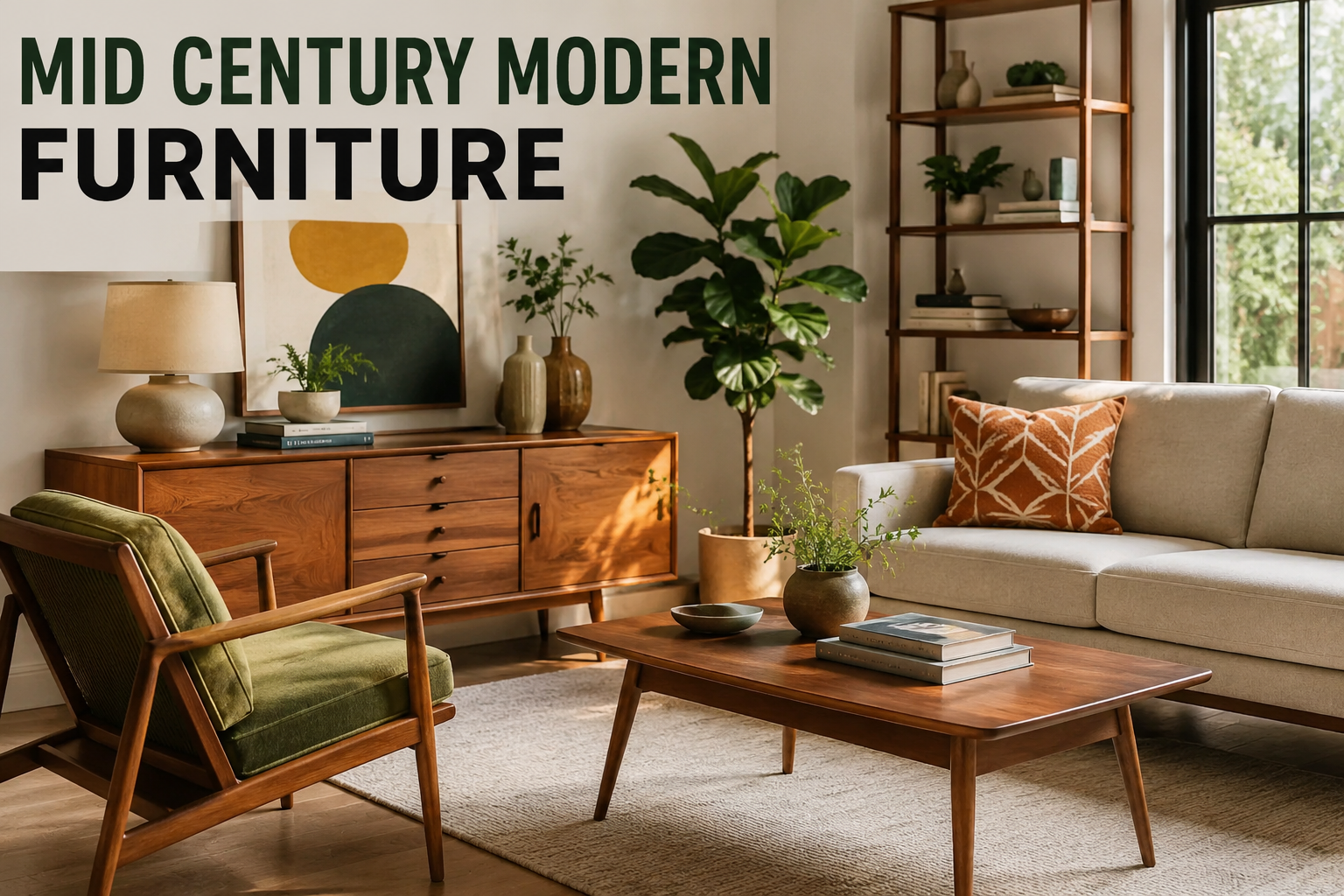
For example, imagine a living room with a walnut sideboard, cream sofa, olive-green accent chair, warm white walls, and a muted geometric rug. The furniture establishes the style while the neutral background keeps the room contemporary.
Vintage vs Modern Mid Century Modern Furniture
One of the biggest decisions is whether to purchase original vintage furniture or choose modern pieces inspired by the period.
| Feature | Original Vintage | Reproduction | Modern MCM-Inspired |
| Authenticity | Highest | Varies | Style-focused |
| Condition | Varies | New | New |
| Availability | Limited | Easier | Usually easy |
| Price | Often higher | Moderate | Wide range |
| Warranty | Often limited | Varies | Usually available |
| Character | Unique | Variable | Consistent |
Original vintage furniture can offer history and craftsmanship, but it may require restoration. New furniture can provide predictable dimensions, fresh upholstery, warranties, and easier maintenance.
For a busy household, modern furniture inspired by MCM design may be more practical. For collectors, original vintage pieces can be more appealing.
How to Choose High-Quality Mid Century Modern Furniture
Good-looking furniture isn’t necessarily well-made. Before buying, inspect the details.
Check the Construction
Look at joints, drawer construction, hardware, leg attachments, and overall stability.
A chair shouldn’t wobble, drawers shouldn’t feel excessively loose, and table legs should remain stable under normal use.
Examine the Finish
For wooden furniture, check the grain and finish carefully. Look for bubbling veneer, deep scratches, water damage, poorly repaired areas, or inconsistent refinishing.
Consider Comfort
For sofas and chairs, style should never be the only consideration.
Check:
- Seat depth
- Cushion firmness
- Back support
- Arm height
- Overall seating position
A beautiful chair that you never want to sit in isn’t a successful furniture purchase.
Measure Before Buying
Measure the room, doorway, hallway, and available floor area before ordering furniture.
A large credenza may look perfect online but overwhelm a small room. Proportion is one of the most important elements of successful interior design.
How to Identify Authentic Vintage Mid Century Modern Furniture
If you’re shopping for vintage furniture, don’t rely solely on a seller describing something as “authentic.”
Look for maker’s marks, labels, construction details, hardware, materials, and proportions. Provenance can also help establish a piece’s history.
However, one label or marking shouldn’t be treated as absolute proof on its own. Reproductions and restored pieces can sometimes contain replacement components.
Ask sellers about:
- Original condition
- Restoration work
- Reupholstery
- Replacement hardware
- Previous ownership
- Available documentation
When a vintage item is unusually expensive, additional research or professional authentication may be worthwhile.
How to Style Mid Century Modern Furniture in Every Room
Living Room
Start with one anchor piece, such as a sofa, lounge chair, or sideboard. Add a simple coffee table, textured rug, floor lamp, and artwork.
Avoid filling every surface with retro accessories. Let the furniture provide most of the visual identity.
Dining Room
A wooden dining table paired with sculptural chairs can establish the style immediately. Add a simple pendant light and a sideboard for storage.
Bedroom
Use a wooden bed frame, matching or complementary nightstands, a low dresser, and warm lighting. Keep decorative accessories restrained.
Home Office
A clean-lined wooden desk, comfortable chair, practical storage, and a simple desk lamp can create a functional MCM-inspired workspace.
How to Mix Mid Century Modern Furniture With Other Styles
You don’t need an entirely MCM home.
MCM + Contemporary
Pair walnut furniture with neutral upholstery, modern lighting, and minimal accessories.
MCM + Scandinavian
Combine lighter woods, natural textiles, simple shapes, and soft neutral colors.
MCM + Traditional
A modern sideboard or lounge chair can create contrast against traditional architectural details.
MCM + Industrial
Wooden furniture works well with black metal, exposed materials, and simple industrial lighting.
The key is balance. Choose a few recognizable MCM pieces instead of making every item in the room match.
Mid Century Modern Furniture for Small Spaces
MCM furniture can work particularly well in apartments and compact rooms because many pieces have raised legs and visually lightweight profiles.
For a small living room, consider a compact sofa, round coffee table, narrow credenza, floor lamp, and one substantial piece of artwork.
Raised furniture allows more visible floor area, which can make a room feel less crowded.
The important factor isn’t simply buying smaller furniture. It’s choosing furniture with proportions appropriate for the room.
Common Mid Century Modern Decorating Mistakes
Making Everything Look Too Retro
A room filled entirely with period-style furniture can feel more like a themed set than a modern home.
Mix contemporary pieces for contrast.
Using Too Many Bold Colors
Choose one or two accent colors and let wood tones and neutrals provide balance.
Ignoring Scale
Even attractive furniture can look wrong when its proportions don’t suit the room.
Choosing Appearance Over Comfort
Furniture should be enjoyable to use, not just photograph well.
Mixing Too Many Wood Tones
Different woods can work together, but uncontrolled variation can make a room feel visually chaotic. Repeat important wood tones to create cohesion.
How to Care for Mid Century Modern Furniture
Wood furniture generally benefits from regular dusting, protection from excessive moisture, and attention to the manufacturer’s care instructions.
Vintage pieces deserve extra caution. Before applying a cleaner or polish, identify the finish and test any product in an inconspicuous area.
For upholstered furniture, regular vacuuming and prompt attention to spills can help extend its useful life. Leather requires care appropriate to its specific finish.
The safest approach is to follow care instructions supplied by the manufacturer or restoration professional rather than applying a generic cleaning method to every material.
Where to Buy Mid Century Modern Furniture
New furniture retailers are useful when you want predictable dimensions, current upholstery choices, warranties, and straightforward returns.
Vintage furniture stores and estate sales can be better options for unique original pieces.
Secondhand marketplaces can also offer good finds, but buyers should carefully verify:
- Dimensions
- Condition
- Materials
- Seller reputation
- Restoration history
- Shipping arrangements
- Return policies
For valuable vintage furniture, research the designer and model before committing to a purchase.
Is Mid Century Modern Furniture Still in Style?
Yes, but its lasting appeal is less about following a trend and more about its design principles.
Clean proportions, practical storage, natural materials, and functional silhouettes work well with contemporary homes. MCM furniture can also blend with Scandinavian, minimalist, industrial, and traditional interiors.
The strongest approach is to use the style selectively rather than trying to recreate a historical showroom.
Mid Century Modern Furniture vs Contemporary Furniture
Mid century modern is rooted in a specific historical design period, while contemporary furniture generally describes current design.
MCM often features recognizable elements such as tapered legs, warm woods, organic forms, and low profiles. Contemporary furniture has no single fixed visual language and can change as design trends evolve.
Understanding this difference makes it easier to decide whether you want authentic historical character or simply a modern interpretation of MCM principles.
Conclusion
Mid century modern furniture works because it balances beauty with purpose. Clean lines, natural materials, thoughtful proportions, and functional design make the style surprisingly easy to adapt to modern homes.
Whether you choose an authentic vintage credenza, a contemporary MCM-inspired sofa, or simply a walnut coffee table, focus on quality, scale, comfort, and how each piece works with the rest of your space. The goal isn’t to recreate the past—it is to use its best design principles to create a home that feels comfortable, functional, and timeless.
Frequently Asked Questions
What is mid century modern furniture?
Mid century modern furniture is associated with the mid-20th-century design movement and is recognized for clean lines, functional forms, natural materials, tapered legs, organic shapes, and minimal ornamentation.
What wood is most common in mid century modern furniture?
Walnut and teak are strongly associated with the style, although oak and other woods are also used. The right choice depends on the desired color, grain, durability, and overall room design.
How can you tell if furniture is truly mid century modern?
Look at its proportions, materials, construction, hardware, silhouette, and any maker’s marks or documentation. A single label shouldn’t be considered definitive proof of authenticity.
Is mid century modern furniture still popular?
Yes. Its functional design, clean lines, natural materials, and adaptable proportions continue to work in contemporary homes.
What colors go with mid century modern furniture?
Warm neutrals and natural wood work well with classic MCM colors such as mustard, olive green, burnt orange, teal, rust, and terracotta.
Is vintage or new mid century modern furniture better?
Neither is universally better. Vintage furniture offers authenticity and character, while new MCM-inspired furniture typically provides predictable condition, current dimensions, warranties, and easier maintenance.
How do you mix mid century modern furniture with other styles?
Start with one or two MCM anchor pieces and combine them with contemporary, Scandinavian, traditional, or industrial elements. Contrast prevents the room from looking overly themed.